

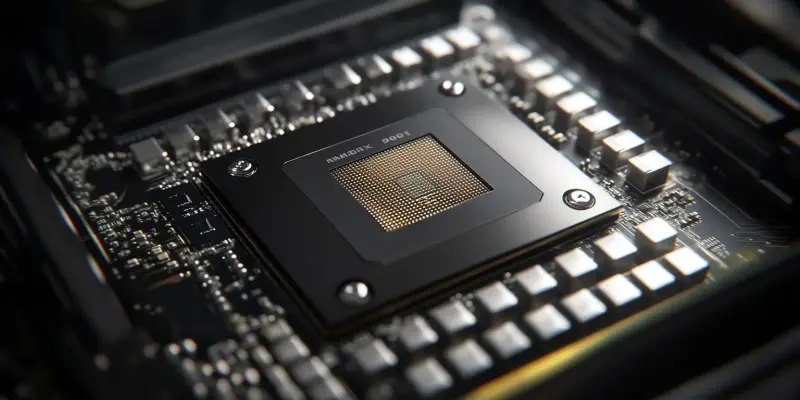
AMD recently decided to adopt the “RX 9000” naming scheme for its upcoming RDNA 4 discrete GPUs and laptop GPUs, deviating from the anticipated RX 8000 convention and triggering curiosity within the tech community. This shift was first observed through a retail listing on Grossbill Pro, and later corroborated by a leak from a source known as “All The Watts!!”. The new RDNA 4 lineup, which AMD is gearing up to release, includes the flagship Radeon RX 9070 XT, aimed to compete with NVIDIA’s GeForce RTX 4080, alongside other models such as the RX 9070, RX 9060, RX 9050, and RX 9040. These GPUs will utilize the Navi 44 and Navi 48 GPU dies, aiming to deliver cutting-edge performance and power efficiency.
Naming Schemes and Market Dynamics
One of the likely reasons behind AMD’s switch to the RX 9000 naming convention could be the integration of the RX 8000 series into their Strix Halo integrated GPUs (iGPUs). The Strix Halo iGPUs, which leverage RDNA 3.5 architecture, are set to include up to 40 Compute Units, encompassing models like the RX 8060S, RX 8050S, and RX 8040S. These iGPUs will be featured in high-end APUs such as the Ryzen AI Max+ Pro 395 and Ryzen AI Max+ 395. By reserving the RX 8000 series for integrated solutions, AMD ensures clear delineation between its discrete and integrated product lines, preventing any potential market confusion.
This strategic differentiation not only enhances product clarity but also allows AMD to create a coherent ecosystem that appeals to various segments. The RX 9000 series is poised to be recognized as the forefront of their discrete GPU lineup, showcasing advancements that distinguish it from previous iterations. Consequently, consumers can easily identify and differentiate the newest generational improvements, fostering better market reception and adoption.
Expanding the RDNA Portfolio
In addition to the RX 9000 series, AMD is set to expand its RDNA 3 portfolio, catering to both desktop and laptop users with new additions such as the Radeon RX 7750 series, RX 7650 series, RX 7750S, RX 7650 GRE, RX 7650M XT, RX 7650M, and RX 7650S. These offerings will provide various options to consumers spanning different needs and performance requirements, reinforcing AMD’s position in the competitive GPU market. As anticipation builds for the official launch at CES 2025, this expansion showcases AMD’s commitment to maintaining a robust and diverse product lineup that addresses different market segments.
AMD’s approach is marked by a proactive strategy to diversify and strengthen its GPU portfolio, ensuring it stays ahead in a fiercely competitive industry. This move also aligns with AMD’s objective to maintain competitive parity with industry giants like NVIDIA, who are slated to release their GeForce RTX 50 “Blackwell” series. The clear segmentation of product lines through naming conventions is a crucial element in this strategy, aiding consumers in making informed decisions based on product hierarchy and performance capabilities.
Strategic Implications and Future Prospects
AMD has opted to use the “RX 9000” naming convention for its upcoming RDNA 4 GPU series, breaking away from the previously expected RX 8000 naming scheme and sparking interest in the tech community. This change was initially noticed through a retail listing on Grossbill Pro and later validated by a leak from the source known as “All The Watts!!”. The new RDNA 4 series that AMD is preparing to launch includes the high-end Radeon RX 9070 XT, which is designed to rival NVIDIA’s GeForce RTX 4080. Other models in the lineup include the RX 9070, RX 9060, RX 9050, and RX 9040. These GPUs will make use of the Navi 44 and Navi 48 GPU dies, which are engineered to deliver top-notch performance and improved power efficiency. As AMD moves in this direction, it hopes to set new benchmarks in graphics technology, catering to the high-performance needs of gamers and professionals alike. With these innovations, AMD aims to compete vigorously in the ever-evolving GPU market.