

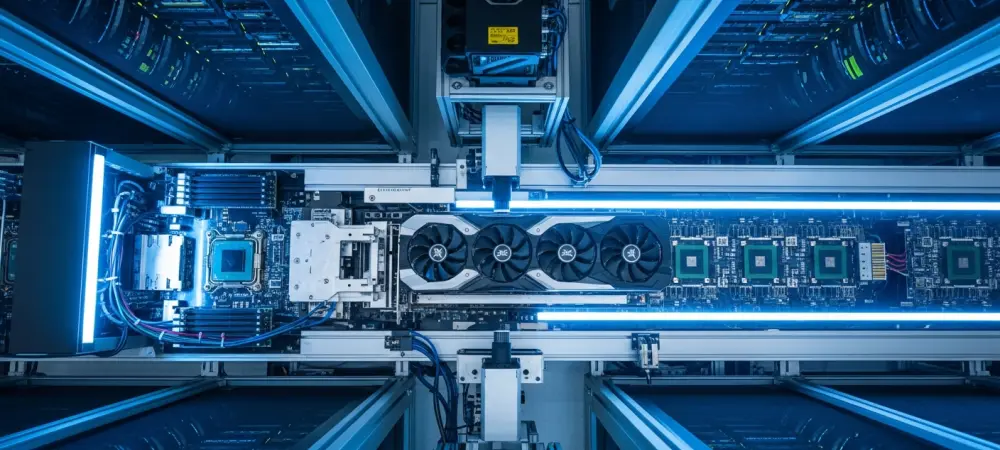
The recent release of the flagship Blackwell-based graphics card has pushed consumer electronics pricing into a territory previously reserved for professional-grade workstations and specialized server hardware. While early rumors suggested a significant price hike, the reality of the market has proven even more severe, with retail listings often exceeding the manufacturer’s suggested retail price by several hundred dollars. This escalation is not merely a result of corporate greed but is deeply rooted in a shifting technological landscape where high-end silicon is no longer just for entertainment. Enthusiasts who once prioritized frame rates in the latest titles now find themselves competing for inventory with small-scale artificial intelligence startups and data center operators. This unprecedented overlap in demand has effectively dismantled the traditional pricing models that governed the industry for years, leaving many dedicated gamers priced out of the top-tier experience.
Market Dynamics: The Convergence of Industrial Demand and Complexity
The primary driver behind this price surge is the insatiable global demand for artificial intelligence processing power, which utilizes the same foundational architecture found in high-end consumer cards. Because the Blackwell architecture scales from local desktops to massive server racks, the silicon allocated for the flagship gaming model is essentially the same high-quality wafer material needed for enterprise-grade accelerators. Manufacturers are incentivized to prioritize high-margin enterprise contracts over the lower-margin consumer market, leading to intentionally limited production runs for retail shelves. Furthermore, the massive 32GB of high-speed memory required for modern generative AI models has placed a strain on global GDDR7 supply chains, driving up the bill of materials for every unit produced. As long as software developers continue to push for larger local models, the “VRAM tax” will remain a permanent fixture of the high-end hardware market, keeping prices at an artificial high.
Beyond the internal chip architecture, the sheer physical complexity of modern top-tier hardware contributes significantly to the spiraling costs seen at checkout. Moving to the cutting-edge 3nm process node at TSMC has significantly increased the price per wafer, a cost that is passed directly to the consumer through higher base pricing. Additionally, the thermal and electrical requirements of these cards have necessitated the use of massive cooling solutions and complex, multi-layered printed circuit boards that are expensive to manufacture and ship. The lack of meaningful competition at the extreme high-end of the market has further emboldened manufacturers to test the upper limits of consumer elasticity. Without a direct rival offering a comparable flagship at a lower price point, the dominant player in the industry has had little reason to restrain pricing or offer better value propositions to the public. This monopoly-like environment ensures that the flagship remains a luxury item.
Navigating this hyper-inflated market required a fundamental shift in how consumers approached hardware acquisition during the height of the scarcity. Many seasoned buyers found that the most effective strategy involved ignoring the initial launch frenzy and focusing on the secondary market for the previous generation of hardware, which still offered substantial performance. Others opted to utilize cloud-based computing services for heavy workloads, effectively bypassing the need for a local four-figure investment in a depreciating asset. The industry eventually saw a correction as mid-cycle refreshes arrived with more efficient production yields, though the initial peak prices served as a wake-call for the entire community. Strategic patience ultimately became the most valuable tool for those looking to upgrade without compromising their financial stability. Future buyers learned to prioritize price-to-performance ratios over the allure of owning the most powerful card on the market at any cost.