

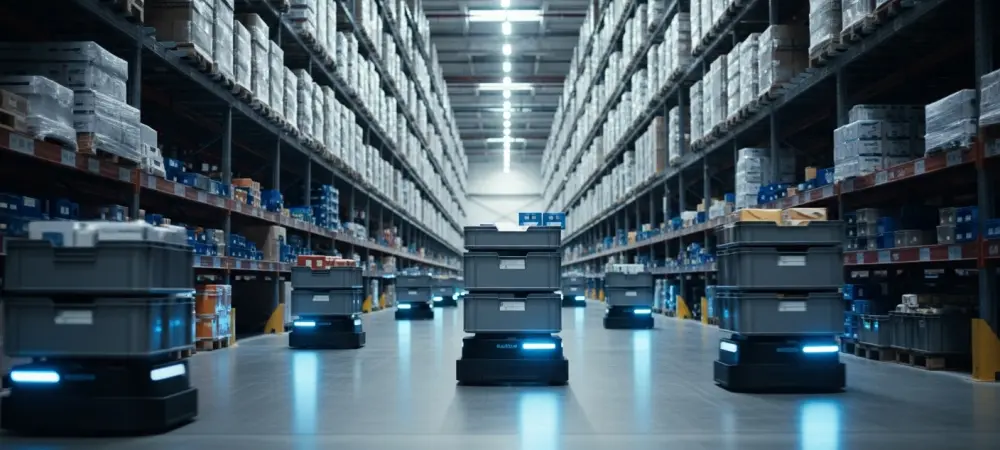
The silent hum of automated systems has grown from a factory floor whisper into a pervasive force poised to redefine the very structure of global commerce, defense, and daily existence. As the threshold of 2025 is crossed, the question of leadership in the robotics revolution is no longer a futuristic inquiry but an urgent assessment of the present, with the answer determining the architects of the next technological age. The competition is not for a single throne but for dominance across a spectrum of newly defined kingdoms, each with its own rules, challenges, and immense rewards for those who master them. Understanding the contenders and their unique strategies is essential to navigating this complex and rapidly accelerating transformation.
Beyond the Assembly Line: Setting the Stage for the Next Automation Era
The journey of robotics has been one of exponential advancement, evolving from the rigid, single-task industrial arms of the twentieth century into today’s sophisticated, intelligent systems capable of perception, learning, and autonomous decision-making. Initially confined to the cages of automotive assembly lines, robots were valued for their brute strength and tireless repetition. However, the fusion of advanced sensors, powerful computing, and artificial intelligence has shattered these confines, giving rise to machines that can navigate unpredictable human environments, collaborate with workers, and execute tasks with a nuance previously thought impossible. This progression has established a new landscape where automation is not merely an optimization tool but a foundational pillar of modern industry, logistics, and security infrastructure. The current era is defined by this shift from programmed automation to genuine autonomy, creating a fertile ground for a new generation of robotic solutions.
Identifying the market leaders in this dynamic environment is a critical endeavor, as supremacy in robotics is inextricably linked to broader strategic advantages on a global scale. For nations and corporations, leadership in automation translates directly into economic strength, enabling more resilient supply chains, enhanced manufacturing productivity, and the creation of entirely new service industries. Furthermore, the deployment of autonomous systems in national security and defense has become a pivotal factor in geopolitical influence, shaping the future of conflict and surveillance. Simultaneously, the profound impact on the future of labor necessitates a clear understanding of which technologies will augment human capabilities and which will displace them, a question that leaders in the field will answer through the systems they design and deploy. The stakes are therefore immense, extending far beyond corporate market share to touch upon the core tenets of economic policy, international relations, and societal structure. The contest for robotics dominance is not being waged on a single front but across a diverse array of critical battlegrounds, each demanding a unique blend of hardware prowess and software intelligence. The traditional factory floor remains a key arena, where established industrial giants are being challenged by more flexible, AI-driven systems. Beyond the factory, the sprawling warehouses and logistics hubs of the world have become a proving ground for autonomous mobile robots (AMRs) that promise to revolutionize fulfillment and distribution. In parallel, the unstructured and often chaotic environments of our cities, construction sites, and public spaces represent the next frontier, where advanced mobility and perception are paramount. From automating last-mile delivery to conducting hazardous inspections, the companies that conquer these complex domains will profoundly shape how we live and work, making each of these battlegrounds a crucial theater in the broader revolution.
Profiling the Frontrunners: Contenders for the Robotics Crown
The Industrial Titans: Dominance Through Scale and Precision
The foundation of the modern robotics industry was laid by industrial titans such as FANUC, ABB, and Yaskawa, whose leadership is a testament to decades of engineering excellence and deep-seated integration within global manufacturing. These companies built their empires by perfecting the industrial robot arm, delivering unparalleled precision, speed, and reliability to the world’s largest and most demanding production lines. Their strategy has long been centered on achieving dominance through scale, producing hundreds of thousands of units that form the backbone of sectors like automotive and electronics manufacturing. Their value proposition is built on trust and a proven track record; for a corporation investing billions in a new factory, the unwavering performance of these machines is not a feature but a prerequisite for operation. This incumbency grants them enormous influence, as their technology platforms have set the de facto standards for industrial automation, creating a powerful ecosystem of integrators, software, and peripheral equipment.
A look inside a modern automotive plant or a smartphone assembly facility reveals the deep entrenchment of these industrial leaders. Case studies from these sectors illustrate how their technology enables mass production on a scale previously unimaginable. FANUC robots, with their iconic yellow arms, perform high-speed welding and assembly with sub-millimeter accuracy, while ABB’s systems master complex tasks like painting and material handling, ensuring a flawless finish on millions of vehicles. Yaskawa’s Motoman division provides the robotic muscle for everything from semiconductor manufacturing to food processing, demonstrating versatility across a wide range of applications. This widespread adoption is not just about the hardware; it is about the comprehensive solutions they offer, including sophisticated controllers, simulation software, and global service networks that ensure maximum uptime. Their technology does not just participate in global manufacturing—it underpins the entire system, making them formidable and deeply rooted players in the automation landscape.
Despite their commanding position, these massive incumbents face a formidable challenge that will define their trajectory through 2025 and beyond. Their strength in hardware and mechanical engineering is being confronted by a new paradigm where software, artificial intelligence, and data analytics are becoming the primary drivers of value. The critical question is whether these industrial giants can innovate at the pace of agile, software-driven competitors that are unburdened by legacy systems and decades of established corporate culture. While they are actively investing in AI and IoT integration, their core business models are centered on selling hardware. In contrast, emerging players are often built around data and intelligence, offering robotics-as-a-service (RaaS) models and highly specialized AI algorithms. The ability of the titans to pivot from being world-class machine builders to becoming leading-edge technology and software companies will ultimately determine if they can maintain their crown or risk being outmaneuvered by nimbler rivals.
The AI-Powered Vanguard: Winning Niches with Specialized Intelligence
In stark contrast to the broad-spectrum approach of the industrial giants, a new breed of contender is emerging from the vanguard of artificial intelligence. Companies like Vecna Robotics and Anduril are not attempting to compete on scale or hardware ubiquity; instead, they are leveraging sophisticated AI and machine learning to solve specific, high-value problems in industries where data-driven decision-making provides an overwhelming competitive advantage. Their strategy is to carve out defensible niches by developing specialized intelligence that commodity hardware cannot replicate. Vecna Robotics, for instance, focuses its AI on orchestrating entire fleets of autonomous mobile robots within complex logistics environments, optimizing workflows in real time. Anduril applies a similar philosophy to national defense, building an AI-powered operating system that fuses sensor data from autonomous systems to provide unparalleled situational awareness. This approach redefines the robot as a vessel for intelligent software rather than just a mechanical actuator.
The real-world applications of this specialized intelligence are already demonstrating a profound impact. In the logistics sector, Vecna’s AI orchestration engine, Pivotal, analyzes real-time data from robots, human workers, and warehouse management systems to dynamically assign tasks and optimize routes, drastically improving throughput and efficiency in distribution centers. This goes beyond simple automation, creating a self-improving ecosystem that learns from operational patterns. In the high-stakes arena of national defense, Anduril’s Lattice platform integrates data from autonomous drones, sensor towers, and underwater vehicles to detect and track threats that would be invisible to human operators alone. This use of AI transforms disparate hardware into a cohesive, intelligent network, showcasing how machine learning can create a decisive edge in complex, dynamic situations. These examples highlight a shift where the value lies not in the robot itself, but in the intelligence that guides it.
However, the specialized models pursued by the AI-powered vanguard come with inherent risks and strategic questions about their long-term scalability. By focusing intensely on niche applications like warehouse orchestration or border security, these companies achieve exceptional performance but may limit their total addressable market. The deep, domain-specific expertise required to build their AI systems is not easily transferable to other industries, which could slow their expansion compared to the more generalized platforms of the industrial titans. The central question for this category of leader is whether their focused, “inch-wide, mile-deep” approach can eventually scale to challenge the “mile-wide, inch-deep” dominance of the incumbents. Their path to broader leadership depends on their ability to either expand their specialized intelligence to adjacent markets or prove that their chosen niches are so critical and lucrative that they can become dominant players in their own right.
The Mobility Mavericks: Conquering the Unstructured World
For decades, robotics has been largely confined to the flat, predictable surfaces of factories and warehouses. Spotlighting a radical departure from this norm is the pioneering work of companies like Boston Dynamics, whose innovations in legged locomotion are fundamentally redefining what is possible for robots operating in the human world. Their machines, which move with an uncanny, bio-inspired agility, are designed to conquer the unstructured environments—stairs, curbs, uneven terrain, and cluttered spaces—that have traditionally been off-limits to automated systems. This mastery of dynamic mobility represents a technological leap that opens up a vast new landscape of potential applications. The strategy of these mobility mavericks is not to optimize tasks in a controlled setting, but to build platforms that can adapt and navigate the complex, messy reality of the world outside the factory cage.
The conversation around these advanced mobile platforms is now moving decisively beyond viral videos of dancing robots toward tangible, real-world value. Boston Dynamics’ quadrupedal robot, Spot, is already being deployed for practical applications such as automated inspection in hazardous industrial environments like power plants and construction sites, where it can gather data from locations that are dangerous or inaccessible to humans. It is also being explored for public safety roles, providing remote reconnaissance in emergency situations. Meanwhile, their Stretch robot, while wheeled, incorporates sophisticated perception to autonomously unload trucks and containers, addressing a major bottleneck in warehouse logistics with a flexibility that fixed infrastructure cannot match. These use cases demonstrate a clear commercial path, proving that advanced mobility is not just a scientific curiosity but a powerful tool for solving concrete business problems.
Despite their undeniable technological brilliance, a persistent debate surrounds the ultimate market position of these highly mobile platforms. The core question remains: are these technologically sophisticated solutions still in search of a mass-market problem, or do they represent the inevitable future of robotics? While their applications in niche industrial inspection and logistics are proving valuable, the cost and complexity of these systems have so far limited their widespread adoption. Critics question whether legged locomotion is a necessary feature for the majority of commercial tasks, suggesting that simpler, more cost-effective wheeled robots may suffice. The future success of the mobility mavericks will depend on their ability to either identify a “killer app” where their unique capabilities are indispensable or drive down the cost and complexity of their technology to a point where it becomes a viable alternative to conventional automation for a broader range of customers.
The Collaborative Crusaders: Integrating Robots into Human Spaces
A growing and profoundly influential segment of the robotics revolution is focused on bridging the gap between machines and people. This movement is spearheaded by the collaborative crusaders, companies developing robots designed not to replace human workers but to work alongside them in shared spaces. This field of human-robot interaction is bifurcated, with one major branch focusing on “cobots” for the factory floor and the other exploring personal assistants for consumer and commercial environments. Cobots, with their advanced safety sensors and intuitive programming, are designed to augment human workers by taking over repetitive or ergonomically challenging tasks, freeing people to focus on more complex, value-added work. On the other hand, personal cargo bots like those from Piaggio Fast Forward aim to integrate seamlessly into everyday life, assisting individuals by carrying goods in urban settings. This entire category is defined by a deep focus on safety, usability, and the psychology of human-machine interaction.
The design philosophies behind these two branches of collaborative robotics reveal different visions for our automated future. The creators of industrial cobots prioritize productivity and safety within a professional context. Their goal is to create a tool that enhances the capabilities of a skilled worker, making them more efficient and reducing the risk of injury. The user interface is designed for quick programming by factory technicians, and the machine’s movements are predictable and non-threatening. In contrast, the design of consumer-facing assistants like Piaggio’s gita is governed by user experience and social acceptance. These robots must navigate crowded public spaces, interact non-verbally with their users, and project a friendly, helpful demeanor to gain public trust. Their success is measured not just by task completion, but by the quality of the human-robot relationship they foster.
Achieving widespread adoption for either type of collaborative robot requires overcoming significant and distinct hurdles. For industrial cobots, the challenge lies in demonstrating a clear return on investment and integrating seamlessly into existing workflows without extensive disruption. For consumer-facing assistants, the barriers are even higher, involving complex issues of public safety, data privacy, and navigating the unpredictable social dynamics of public spaces. All collaborative crusaders, regardless of their target market, must earn public trust. This requires flawless safety records, intuitive interfaces, and a clear articulation of their benefit to society. The company best positioned to lead this space will be the one that not only masters the technical challenges of safe and reliable operation but also excels in the art of designing a machine that humans are willing to accept as a partner, whether on the assembly line or the city sidewalk.
Navigating the Revolution: A Strategic Blueprint for Adoption
A synthesis of the current competitive landscape reveals a crucial insight: leadership in the robotics revolution of 2025 is not a monolith. There will not be a single winner, but rather a spectrum of leaders defined by distinct categories of excellence. The industrial titans will likely continue to command the world of large-scale, high-precision manufacturing, leveraging their immense scale and trusted reputation. The AI-powered vanguard is set to dominate specialized, data-intensive niches where their intelligent software provides an unbeatable edge, such as in automated logistics and defense. Meanwhile, the mobility mavericks are positioned to conquer the unstructured world, creating new markets in automated inspection and public safety. Finally, the collaborative crusaders will lead the charge in integrating robots safely and effectively into human-centric environments. Understanding these distinct categories is the first step for any organization looking to engage with the automation era.
This segmented view of leadership provides a clear and actionable blueprint for business leaders seeking to adopt robotic solutions. The critical first step is to move beyond a general desire for “automation” and instead conduct a thorough analysis of the organization’s core operational needs. Is the primary challenge one of achieving massive scale and repeatable precision in a controlled environment? If so, a partnership with an industrial titan is the most logical path. Is the key problem an intensely complex logistical workflow that requires real-time optimization? Then a specialist from the AI vanguard would be the ideal choice. Does the work involve navigating hazardous or difficult-to-access terrain? A platform from a mobility maverick is likely the only viable solution. By accurately identifying the nature of the problem, leaders can align their needs with the correct category of robotics provider, avoiding costly mismatches between technology and application.
Ultimately, the most successful integration of robotics will come from choosing a scalable ecosystem over a standalone product. A single robot solving a single task can provide incremental benefits, but a platform that can grow with the business and integrate with other systems delivers transformative value. When selecting a partner, organizations should look beyond the immediate capabilities of the hardware and evaluate the broader platform: the software that controls it, its ability to connect with existing enterprise systems, the quality of data it generates, and the provider’s roadmap for future development. The strategic goal should be to invest in a robotics ecosystem that can adapt to changing needs and scale across multiple operations. This long-term perspective ensures that an initial investment in automation becomes the foundation for a more resilient, efficient, and intelligent enterprise for years to come.
The Dawn of 2025: A Glimpse into Our Automated Future
As the robotics revolution accelerates, it has become evident that it is a multi-front phenomenon, with a diverse array of leaders shaping different facets of the modern world. There is no single company poised to dominate the entire field; rather, distinct champions have emerged in specialized domains. The industrial giants continue to power global manufacturing, the AI specialists are optimizing complex supply chains, the mobility pioneers are unlocking automation in previously inaccessible environments, and the collaborative innovators are redefining the partnership between humans and machines. This specialization ensures that the impact of robotics will be broad and deep, touching nearly every industry and aspect of society in unique and powerful ways. The landscape of 2025 is not one of a single victor, but of a powerful ecosystem of complementary leaders pushing the boundaries of what is possible.
The long-term implications of this technological race are profound and will continue to unfold for decades. The advancements being pioneered now are set to fundamentally reshape global supply chains, making them more resilient, responsive, and localized. Workforces will undergo a significant transformation, with a growing emphasis on skills related to managing, maintaining, and collaborating with intelligent robotic systems, necessitating a major shift in education and training. Societal norms will also adapt as autonomous systems become more integrated into public spaces and daily life, raising new questions about safety, privacy, and ethics. The current technological push is not merely creating new tools; it is laying the groundwork for a new economic and social paradigm.
Ultimately, the analysis of the robotics landscape showed that the true leaders who emerged by 2025 were not simply those who built better, faster, or stronger machines. Instead, leadership was defined by the ability to successfully architect the complex and evolving relationship between humans and robots. They were the companies that understood that technology alone was insufficient and that widespread adoption depended on trust, usability, and a clear value proposition for people. These leaders created systems that augmented human capabilities, solved tangible problems, and integrated seamlessly into the fabric of society. Their greatest achievement was not just in advancing the state of automation, but in thoughtfully designing its place within the human world for the decade to come.