

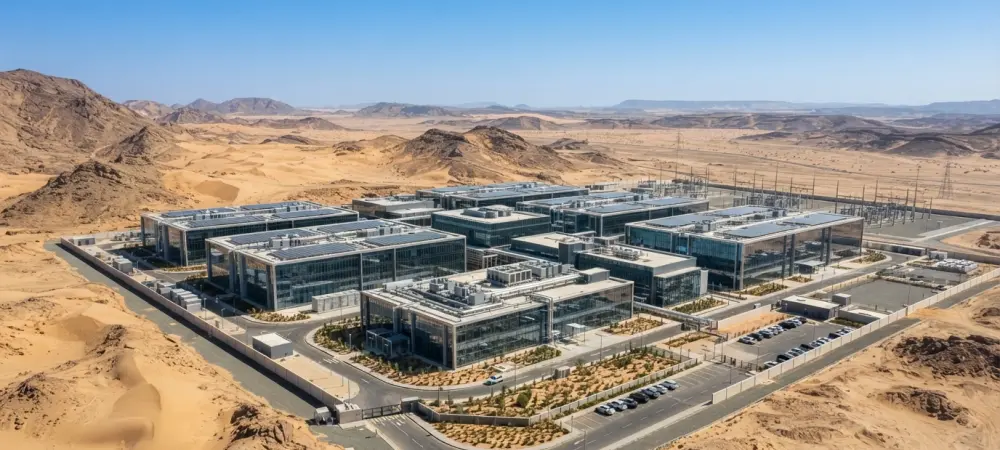
The massive desert landscapes of the Arabian Peninsula are no longer merely defined by their subterranean oil reserves but by the humming silicon hearts of hyperscale data centers that now power a new era of global intelligence. This technological transformation marks a pivotal moment in history as the region’s two largest economies compete to become the dominant digital hub of the Middle East. Both Saudi Arabia and the United Arab Emirates (UAE) are currently executing massive economic pivots, aggressively transitioning away from their historical reliance on hydrocarbons to build a future rooted in artificial intelligence (AI) and cloud services. By leveraging immense sovereign wealth and virtually unlimited energy supplies, these nations are attempting to create a “flywheel effect” where digital infrastructure attracts global investment, fosters domestic innovation, and drives productivity across all industrial sectors.
This digital arms race is defined by high-stakes investments in infrastructure that serve as the fundamental engine for economic diversification. The strategy involves more than just building server farms; it is about establishing a technological foundation that ensures long-term relevance in a global economy increasingly defined by data. Consequently, the development of these hubs has become a matter of national priority, with both nations positioning themselves as the primary gateway for technology firms looking to access the burgeoning markets of the Middle East, Africa, and South Asia.
The Strategic Shift Toward Digital Infrastructure
At the heart of the Saudi expansion is the Public Investment Fund (PIF), which has launched the HUMAIN initiative to scale AI infrastructure significantly between 2026 and 2030. This effort is supported by critical national players like stc and DataVolt, which provide the telecommunications backbone and the technical expertise required to manage massive power requirements. Saudi Arabia is focusing on creating a vertically integrated ecosystem where the government, telecommunications firms, and dedicated infrastructure providers work in tandem to secure data sovereignty and promote local industrial growth through localized computing power.
In contrast, the United Arab Emirates has cultivated a more international and specialized approach to its digital infrastructure. The nation relies heavily on G42 and its subsidiary, Khazna Data Centers, to spearhead its AI ambitions, while Moro Hub, a subsidiary of the Dubai Electricity and Water Authority (DEWA), focuses on integrating green energy into data center operations. The UAE’s strategy is exemplified by the “Stargate UAE” project, an ambitious 5GW campus designed to provide the high-density computing power necessary for the most demanding AI workloads. This approach emphasizes global connectivity and provides a highly efficient environment for international tech giants to house their regional operations.
Comparative Metrics of the Data Center Boom
Infrastructure Capacity and Expansion Pipelines
As of 2026, the scale of operational capacity remains incredibly tight between the two competitors. Saudi Arabia currently maintains a slight lead with 274MW of operating data center capacity, while the UAE follows closely with 257MW. However, the momentum of growth reveals a more complex story of acceleration. By the end of 2027, the UAE is projected to add 151MW of new capacity to its existing footprint, significantly outpacing Saudi Arabia’s planned addition of 127MW during the same period. This aggressive expansion suggests that the UAE is prioritizing rapid scaling to potentially overtake Saudi Arabia in the near-term capacity rankings.
The diverging paces of these expansion pipelines highlight different national philosophies regarding market saturation and demand. Saudi Arabia’s growth is steady and closely tied to its massive internal market and strict data residency requirements, which mandate that certain types of information remain within the Kingdom. Meanwhile, the UAE is building with an eye toward becoming a global transit hub for data, constructing capacity that far exceeds its domestic population’s needs to serve the wider international community. This competition ensures that the region remains the most active data center market in the world throughout the 2026 to 2030 window.
Economic Costs and Construction Efficiency
Efficiency in capital expenditure has emerged as a significant differentiator between these two markets, with the UAE demonstrating a more cost-effective model for infrastructure development. Currently, the estimated cost of data center construction in the UAE sits at approximately $11 million per MW, benefiting from a mature logistics ecosystem and established supply chains for specialized hardware. Saudi Arabia, on the other hand, faces higher entry costs, with projects averaging around $13 million per MW. These higher costs in the Kingdom often reflect the logistical complexities of developing facilities in more remote locations and the sheer scale of the greenfield projects being undertaken.
Despite the higher price tag, Saudi Arabia’s investment is often seen as a long-term play for complete digital independence. The Kingdom is willing to absorb higher initial costs to ensure that its infrastructure is integrated into the broader Vision 2030 urban development projects. Conversely, the UAE’s lower construction costs make it an attractive destination for private equity and global cloud providers who are sensitive to initial capital requirements. This pricing gap forces Saudi operators to focus on high-value, government-backed contracts, while UAE providers can compete more aggressively on price in the international market.
Strategic Projects and Technical Ambitions
Flagship projects in both nations illustrate their contrasting technical objectives and visions for the future. The UAE is pushing the boundaries of high-density computing with the “Stargate UAE” project, which aims to provide unprecedented levels of power for AI training and inference. This 5GW facility represents a move toward hyper-scale centralization, positioning the UAE as the “brain” of the regional AI economy. This project is specifically designed to accommodate the next generation of power-hungry GPUs, ensuring the UAE remains at the cutting edge of technical performance for global clients like Microsoft and OpenAI.
Saudi Arabia’s ambitions through HUMAIN and DataVolt are focused more on the broad integration of technology into the national fabric. Rather than just building a singular massive hub, the Kingdom is distributing its capacity to support the digital transformation of its traditional industries, including oil and gas, manufacturing, and logistics. This approach prioritizes data sovereignty, ensuring that sensitive information remains under national control while using AI to optimize the efficiency of the Kingdom’s core economic drivers. The Saudi model focuses on making AI a tool for internal domestic excellence, whereas the UAE model seeks to provide a global service platform.
Strategic Challenges and Economic Considerations
The aggressive expansion in both nations faces significant hurdles, with geopolitical risk remaining a primary concern for long-term viability. Recent regional tensions have highlighted the physical vulnerability of digital infrastructure, forcing both nations to divert significant resources toward cyber resilience and physical security for their data hubs. Furthermore, the “subsidized profit” dilemma remains a critical economic risk; when entities like the PIF or UAE state authorities provide land and electricity at preferential rates, the true market competitiveness of these centers is difficult to gauge. This leads to questions about whether these facilities can remain profitable if government support is eventually scaled back.
Environmental constraints also play a major role, as the extreme desert temperatures require sophisticated and water-intensive cooling systems. In a region where water scarcity is a constant challenge, the reliance on traditional cooling methods is becoming increasingly expensive and unsustainable. Additionally, the rapid obsolescence of AI hardware means that the specialized GPUs housed in these multi-million-dollar facilities may become outdated long before the initial capital investment is fully recovered. This creates a cycle of constant reinvestment that could strain even the deepest sovereign wealth funds if the expected demand for AI services does not materialize as projected.
Conclusion and Strategic Recommendations
The competition between Saudi Arabia and the United Arab Emirates was not merely about who could build the most megawatts, but who converted that capacity into a self-sustaining digital economy. Saudi Arabia provided a massive, legally integrated environment that favored firms focused on the Kingdom’s internal growth and data residency. Meanwhile, the UAE emerged as the more cost-effective partner for global tech giants seeking high-density processing power and international connectivity. The strategic landscape favored those who diversified their cooling technologies and secured long-term contracts with credible global providers rather than relying on speculative demand. Future investors and developers should have focused on the implementation of liquid cooling and modular designs to mitigate the high costs associated with desert operations. The path forward required a transition from government-led infrastructure spending to a market-driven model where digital hubs operated as independent, profitable entities. For global cloud providers, the choice between the two nations depended on whether they prioritized access to the Saudi domestic market or the UAE’s international logistical advantages. Ultimately, the successful projects were those that avoided the trap of building “subsidized white elephants” by ensuring that every megawatt of capacity was backed by tangible, high-value AI workloads. This era of construction set the stage for a region that no longer just exported energy, but processed the data that fueled the modern world.