

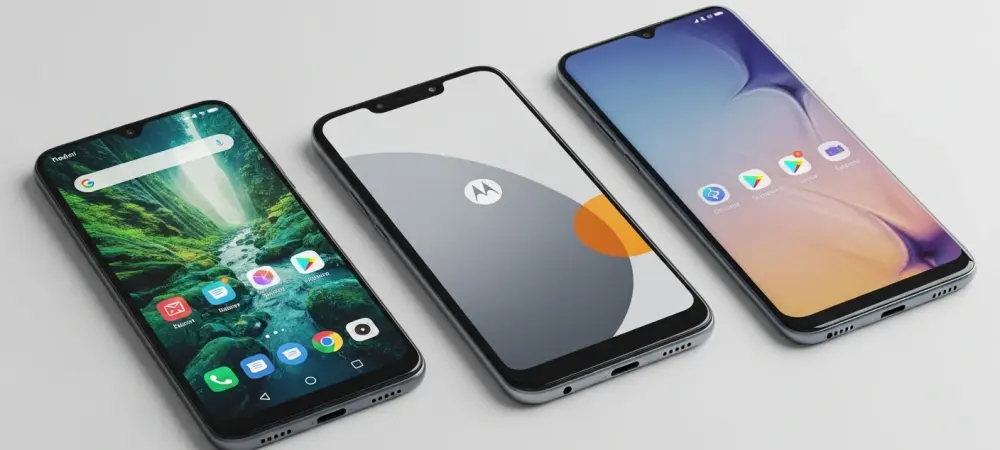
The rapid acceleration of mobile innovation in the Indian market has reached a critical juncture where consumers no longer have to compromise on flagship features while shopping within the mid-range price bracket. This shift has created a high-stakes environment where long-standing market leaders are forced to defend their territory against disruptive new entrants that offer specialized hardware at aggressive price points. As digital lifestyles become more demanding, the criteria for a “winning” device have expanded beyond mere processing speed to include extreme durability, multi-day endurance, and prolonged software viability. This roundup investigates the latest offerings from three major players, providing a comprehensive look at how these manufacturers are attempting to capture the attention of a more discerning and value-conscious consumer base.
Decoding the Seismic Shift in India’s Mid-Tier Smartphone Arena
The current landscape of the Indian smartphone market is undergoing a fundamental transformation as manufacturers move away from generic “all-rounder” devices toward highly specialized hardware profiles. The recent introduction of the Redmi Turbo 5 has acted as a catalyst for this change, challenging the established balance of power held by the Motorola Edge 70 Pro and the Samsung Galaxy A37 5G. Industry analysts observe that the mid-range segment is no longer just a stepping stone to premium models but has become a destination for users who require top-tier specifications in specific categories like battery density or display brightness.
This intense rivalry is fueled by a diversifying consumer base that values different aspects of technology depending on their professional and personal needs. While some buyers prioritize the brand prestige and ecosystem stability offered by Samsung, others are increasingly drawn to the raw engineering prowess and “spec-sheet” dominance typical of the Redmi and Motorola philosophy. This shift toward niche-focused engineering allows manufacturers to target specific user segments more effectively, but it also makes the purchasing decision more complex for the average user who must now weigh very different sets of pros and cons.
As pricing structures remain volatile, the definition of value is being rewritten to include the total cost of ownership over several years rather than just the initial sticker price. With the entry-level cost for these sophisticated devices hovering around the Rs. 38,000 mark, the stakes for making the right choice have never been higher. This competitive environment ensures that even the most conservative brands must innovate rapidly to stay relevant, resulting in a surplus of high-quality options that would have been unthinkable in the mid-tier segment just a few cycles ago.
A Comparative Breakdown of Hardware Evolution and Consumer Value
The evolution of hardware in the mid-range sector is currently moving at a pace that rivals the flagship category, with specific focus on internal efficiency and external resilience. Experts note that the gap between a high-end device and a mid-range contender has narrowed significantly, particularly in areas like RAM speeds, storage protocols, and biometric security. This convergence is most evident when comparing the silicon choices of Redmi, Motorola, and Samsung, where the move toward highly efficient 4nm and 5nm chipsets has become the baseline expectation for any device priced above the entry level.
Furthermore, the integration of advanced artificial intelligence at the hardware level is beginning to influence how these phones manage heat and power. Each manufacturer approaches these technical challenges with a different set of priorities, leading to distinct user experiences even when the raw benchmarks appear similar. By examining the specific hardware innovations in battery technology, display panels, ruggedness, and software longevity, a clearer picture emerges of which brand truly aligns with the diverse requirements of the modern Indian consumer.
Powerhouse Longevity: Redefining Endurance with High-Capacity Battery Cells
The conversation surrounding mobile endurance has been radically altered by the arrival of high-density battery cells that exceed the traditional 5,000mAh standard. The Redmi Turbo 5 has effectively reset expectations by incorporating a massive 7,540mAh battery, a move that provides a significant buffer for heavy users who cannot always rely on proximity to a power outlet. In contrast, Motorola has opted for a slightly more conservative 6,500mAh cell, while Samsung continues to utilize a 5,000mAh capacity. This divergence represents a fundamental disagreement on whether users value the physical thinness of a device over its ability to last through a second or third day of heavy use. Charging speeds have also become a defining metric of performance, with Redmi leading the charge via its 100W wired fast-charging system. This technology is designed to replenish even a massive battery in a fraction of the time it takes for traditional chargers, though it raises questions about long-term thermal management and battery health. Motorola follows closely with a 90W standard, offering a respectable balance of speed and capacity. Samsung, however, maintains its conservative 45W charging limit, which, while slower, is often marketed as a safer approach to preserving the chemical integrity of the battery over a multi-year lifecycle.
Technical enthusiasts often point out that sheer capacity is only one part of the endurance equation, as software optimization plays a vital role in power consumption. While the Redmi and Motorola units rely on massive cells to brute-force their way to long battery life, Samsung focuses on the efficiency of its Exynos 1480 chipset and One UI background management. Nevertheless, for users who engage in high-drain activities such as mobile gaming or long-duration video recording, the physical advantage of a 7,540mAh or 6,500mAh battery remains difficult to overcome through software alone.
The Aesthetics of Display Tech: Balancing Peak Brightness with Visual Fluidity
Visual technology in the mid-range segment has reached a peak where outdoor legibility and motion clarity are no longer reserved for the most expensive handsets. The Motorola Edge 70 Pro pushes this boundary the furthest with a 144Hz refresh rate, providing a level of smoothness that is particularly noticeable during fast-paced gaming or system navigation. Coupled with a staggering 5,200 nits of peak brightness, Motorola’s display is designed to combat even the harshest direct sunlight, addressing one of the most common complaints among smartphone users in high-glare environments.
Redmi has chosen to compete on resolution and pixel density, introducing a “1.5K” AMOLED panel on the Turbo 5 that offers a sharper image than the standard Full HD+ displays found on many competitors. By providing 1,268 x 2,756 pixels and 3,500 nits of brightness, Redmi targets users who consume high-definition media and want a more immersive viewing experience. This focus on resolution over extreme refresh rates suggests a strategy aimed at movie enthusiasts and social media browsers who value clarity and detail over the hyper-fluidity of a 144Hz screen.
Samsung remains a formidable competitor in this space despite having lower peak brightness and resolution numbers on paper. The Galaxy A37 5G utilizes the Super AMOLED+ technology that has made the brand a leader in color accuracy and deep contrast levels. While it may not reach the blinding brightness of the Motorola or the pixel count of the Redmi, its calibration and viewing angles are often cited by professionals as being more reliable for photo editing and color-sensitive work. This highlights a clear choice for the consumer: the raw, cutting-edge specs of the newer brands versus the refined, tried-and-true visual quality of the market leader.
Hardware Ruggedness and Environmental Protection in Modern Device Engineering
The trend toward environmental resistance has evolved from a luxury feature into a necessity for users living in varied climates and demanding work environments. The Redmi Turbo 5 introduces a disruptive IP69K rating, which provides a level of protection against high-pressure, high-temperature water jets that is traditionally found only in specialized ruggedized hardware. This engineering choice reflects a growing demand for devices that can survive more than just a brief immersion in water, appealing to outdoor workers, travelers, and anyone whose daily routine involves exposure to the elements.
Motorola and Samsung have not ignored this demand, providing IP68 and, in Motorola’s case, IP69 ratings that ensure a high degree of protection against dust and water. However, the distinction between IP68 and the more stringent IP69K is significant for those who require ultimate peace of mind. While an IP68 rating allows for prolonged immersion in deep water, the addition of the “K” designation signifies that the internal components are sealed against the kind of forceful spray that might occur during cleaning or extreme weather events. This level of ruggedness represents a new frontier for mainstream consumer electronics.
The physical construction of these phones also plays a role in their perceived durability, with choices between glass, plastic, and vegan leather finishes affecting both the hand-feel and impact resistance. Motorola’s ultra-slim 6.99mm profile and lightweight design prioritize ergonomics and pocketability, which may be more attractive to urban users. Conversely, the heavier, more robust build of the Redmi Turbo 5 suggests a device meant for endurance and physical resilience. This contrast in engineering philosophies forces buyers to decide whether they prefer a sleek, premium-feeling accessory or a sturdy tool that can withstand significant physical stress.
Software Lifecycle Strategies: Future-Proofing Versus Immediate Performance Gains
A significant divergence in manufacturing philosophy is visible in how each brand handles the long-term utility of their software ecosystems. Samsung has positioned itself as the leader in longevity by promising six years of major operating system upgrades and security patches for the Galaxy A37 5G. This commitment effectively extends the useful life of the device, making it a more sustainable investment for those who do not wish to upgrade their phone every two or three years. This focus on the “long game” is a key differentiator that justifies its higher initial price point for many conservative buyers. Redmi offers a compelling middle ground with four years of OS upgrades and six years of security updates, ensuring that the Turbo 5 remains relevant through most of this decade. This strategy recognizes that while hardware may remain capable, software security is the primary concern for users who handle sensitive data or banking on their mobile devices. Motorola, however, trails the competition in this area, offering only three years of OS updates. While this may be sufficient for users who prefer to upgrade their hardware more frequently, it represents a potential drawback for those seeking a device that maintains its resale value and modern feature set over a long period.
Ultimately, the choice between these software strategies depends on whether the user prioritizes the “now” or the “next.” The MediaTek Dimensity chipsets used by Redmi and Motorola provide incredible immediate performance, making them ideal for high-end gaming and multitasking today. In contrast, the Exynos 1480 in the Samsung is designed for a balance of power and efficiency that may age better under the weight of six years of software updates. This comparative analysis suggests that power users might favor the immediate raw speed of the newer chipsets, while long-term investors will gravitate toward the stability and security of the Samsung ecosystem.
Strategic Buyer Recommendations Based on Specific User Priorities
To identify the ultimate winner in this mid-range battle, one must categorize user needs into distinct personas. For the “Endurance Enthusiast” who spends hours away from a charger and frequently operates in tough environments, the Redmi Turbo 5 is the most logical choice. Its combination of a massive 7,540mAh battery, 100W charging, and an IP69K ruggedness rating provides a level of independence and peace of mind that its competitors cannot match. This device is specifically engineered for those who treat their smartphone as a reliable utility rather than just a lifestyle accessory. For the “Social Creator” and the “Aesthetic Purist,” the Motorola Edge 70 Pro offers a more refined and visually striking package. Its 144Hz display and 5,200 nits of peak brightness make it a joy to use for media consumption, while its high-resolution 50MP selfie camera caters directly to those who document their lives for digital platforms. The slim form factor and premium display quality prioritize the immediate user experience, making it a favorite for those who value style and high-performance visuals over multi-day battery life or decade-long software support. Finally, for the “Legacy Loyalists” and “Pragmatic Investors,” the Samsung Galaxy A37 5G remains the gold standard. Despite its slower charging and smaller battery compared to its rivals, the promise of six years of updates and the presence of expandable storage via a microSD slot offer a unique kind of value. This phone is designed for the user who wants a familiar interface, a reliable camera, and the certainty that their device will remain secure and functional for the better part of a decade. While the upfront cost is higher, the total cost of ownership over six years may actually be lower than that of its competitors.
Synthesizing the Value Proposition: Finding the Ultimate Mid-Range Champion
The intense competition between Redmi, Motorola, and Samsung demonstrated that there was no longer a single, objective “best” phone for every user. Instead, the market offered a specialized selection of tools that catered to different philosophies of mobile use. The Redmi Turbo 5 disrupted the existing hierarchy by proving that extreme battery life and ruggedness could be achieved without a flagship price tag. This forced the established players to lean even harder into their respective strengths, whether it was Motorola’s focus on display fluidity and thinness or Samsung’s unparalleled commitment to long-term software security.
Consumers who examined these devices found that the “winner” was defined by their own daily habits and priorities. Those who looked for immediate performance and high-density hardware were drawn to the innovations provided by Redmi and Motorola, while those who valued ecosystem stability and longevity saw the premium price of the Samsung as a justified investment. The rivalry highlighted the fact that mid-range engineering had finally reached a level of maturity where specific hardware features could compete directly with much more expensive flagship models.
In the end, the evolution of these three devices showed that the power of choice shifted entirely to the buyer. Whether the goal was to survive a weekend trek with the Turbo 5’s massive battery, enjoy a high-frame-rate movie on the Edge 70 Pro, or maintain a secure digital hub for six years with the Galaxy A37, the options were more robust than ever before. To move forward, users were encouraged to evaluate their regional service availability and actual daily screen-on-time requirements to ensure their chosen device remained a functional asset for years to come. Test-driving the physical ergonomics of each handset was recommended, as the substantial weight differences between the 204g Redmi and the 183g Motorola significantly impacted long-term comfort and daily usability.