

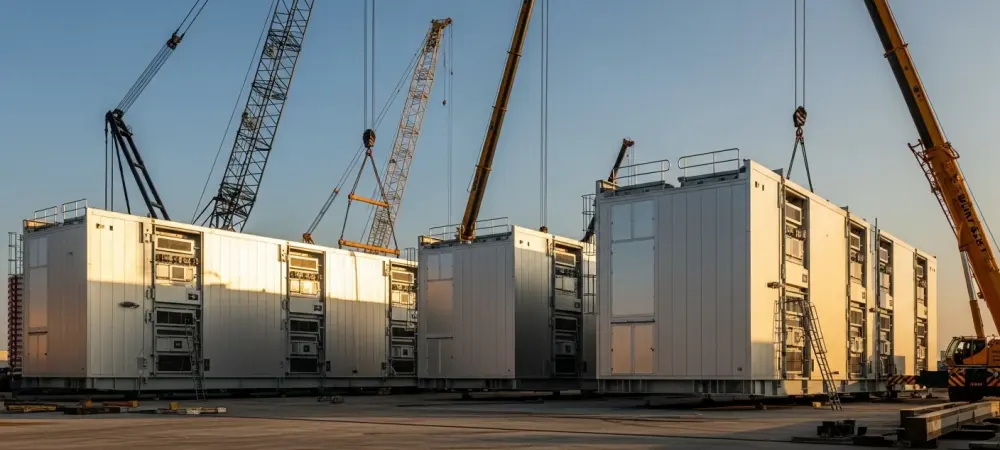
The rapid expansion of African digital sovereignty hit a literal and metaphorical wall when a multi-million dollar data center project in the heart of Lagos transformed into a tangled web of litigation and structural decay. What began as a bold $35 million blueprint to bolster Nigeria’s internet backbone has dissolved into a $15.5 million legal war in the English High Court. At the center of this storm is Medallion Data Centers, a subsidiary of the global titan Digital Realty, and its former primary contractor, InfraPartners. The dispute serves as a sobering reminder that even the most advanced modular designs can crumble under the weight of logistical mismanagement and financial instability.
A High-Stakes Failure in Nigeria’s Digital Infrastructure
The ambitious plan to expand Nigeria’s digital footprint took a sharp turn toward the courtroom when a construction project devolved into a bitter legal battle. What was intended to be a state-of-the-art modular facility in Lagos has instead become a cautionary tale of structural defects and financial collapse. At the heart of the dispute is a fundamental breakdown between a global data center giant and its primary contractor, raising questions about how such a massive industrial undertaking could go so spectacularly wrong.
Industry observers watched with concern as the project, once hailed as a milestone for regional tech growth, stalled amid allegations of professional negligence. The facility was meant to represent the next generation of infrastructure, yet it now sits as a shell of unmet promises. This failure highlights the inherent risks of complex cross-border construction, where the distance between manufacturing and assembly can create insurmountable gaps in quality control and accountability.
The Strategic Importance of the LKK2 Project
As Africa’s digital economy accelerates, the demand for reliable data storage and processing power has made Lagos a critical hub for international investment. The LKK2 project, a 1.96MW capacity facility, was designed to meet this demand through a sophisticated modular construction process involving manufacturing in Romania and assembly in Nigeria. Because data centers serve as the backbone for everything from banking to telecommunications, the failure to deliver this infrastructure on time impacts more than just the immediate stakeholders; it threatens the broader timeline of regional digital connectivity.
The modular approach was initially seen as a masterstroke of efficiency, intended to bypass traditional local construction delays. By pre-fabricating components in a controlled European environment, the developers hoped to ensure a level of precision that is often difficult to achieve on-site. However, the strategic significance of the site meant that any delay would ripple through the local economy, stalling the digital transformation of businesses that had already reserved space within the anticipated facility.
Anatomy of a Failed Construction Partnership
The original June 2024 contract between Medallion Data Centers and InfraPartners set a rigorous timeline for a January 2025 completion, highlighting the complexities of international modular logistics. The project began to unravel when the initial modules arrived at the Lekki site late and in the wrong sequence, disrupting the delicate assembly process required for high-tech facilities. This logistical disarray proved fatal to the construction schedule, as engineers were forced to work around missing components that were essential for structural integrity. Critical physical defects soon emerged, leading to a “stop works order” triggered by severe water ingress. This created life-threatening hazards by allowing moisture to seep into areas containing live electrical components, a situation that is utterly unacceptable in the high-voltage environment of a data center. Beyond physical delays, the partnership collapsed due to InfraPartners’ alleged inability to pay subcontractors, leading to a September 2025 crisis where labor and resources were nearly withdrawn from the site.
Evidence of Operational and Financial Collapse
Engineering reports and court filings detail the transition from a standard construction project to a hazardous environment characterized by substandard workmanship and safety risks. Medallion alleges that the contractor explicitly admitted it lacked the financial resources to meet its obligations, failing to provide any viable recovery plan to salvage the project. This admission of insolvency marked the end of professional trust, turning a collaborative effort into a defensive legal maneuvers aimed at mitigating further loss. Following the contract termination in late 2025, Medallion was forced to hire alternative firms to rectify defects, a move that forms the basis for their claim for damages and repayment of lost funds. As the case moves through the English High Court, both Digital Realty and InfraPartners have maintained a strict “no comment” policy, leaving the legal filings to tell the story of the project’s demise. The lack of transparency has only fueled speculation regarding the depth of the financial mismanagement that plagued the site.
Key Takeaways for Managing Large-Scale Infrastructure Contracts
Project managers recognized that phased auditing of modular logistics was essential to ensure prefabricated components were delivered in the precise order needed for assembly. It became clear that strict financial oversight of prime contractors was required to verify that progress payments actually reached subcontractors. This measure prevented total work stoppages and ensured that the workforce remained motivated and equipped. Rigorous weatherproofing and safety protocols were established as non-negotiable standards for all future developments. Developers realized the necessity of clear contingency frameworks and “step-in rights” that allowed them to take control if a contractor entered a state of financial emergency. These protective layers ensured that regional digital connectivity projects remained resilient against the operational failures of a single partner.