

The anticipation surrounding the mobile industry’s high-end segment has reached a fever pitch as detailed specifications for the upcoming Oppo Find X10 series began circulating through supply chain leaks this week. The latest flagship family, expected to debut in the Chinese market during the second half of 2026, aims to solidify the manufacturer’s position against global competitors through a multi-tiered product strategy. The lineup appears to be divided into three distinct versions: a standard Find X10, a Pro model, and a Pro Max variant designed for enthusiasts who demand maximum screen real estate. While the standard version reportedly utilizes a 6.59-inch display, the Pro model scales up to a 6.78-inch 1.5K panel, maintaining a balance between one-handed usability and immersive media consumption. Interestingly, the Pro Max might leverage the existing high-performance panel from the previous Find X9 Ultra, suggesting that the brand is prioritizing proven display quality and peak brightness over experimental resolutions for its top-tier device. This strategy reflects a broader trend of refined iterative hardware improvements rather than radical departures from established design successes.
Hardware Performance: The Trade-off Between Power and Cost
Internal processing capabilities for the entire Find X10 series will likely be anchored by MediaTek’s latest Dimensity 9600 chipset, a component manufactured on a cutting-edge 2nm process. This move indicates a significant leap in power efficiency and computational performance, especially as mobile AI tasks become more demanding for everyday users. Although earlier rumors suggested a tiered chipset approach, current consensus implies that even the base model will benefit from this high-end silicon. Industry insiders suggest that the move to LPDDR6 RAM and UFS 5.0 storage was ultimately deemed unfeasible because the component costs were projected to match the price of the chipset itself. Consequently, the series is expected to retain LPDDR5X and UFS 4.1 standards. While these specifications remain highly capable for 2026 standards, the decision highlights the economic pressures facing manufacturers as they navigate the rising costs of advanced semiconductor fabrication.
Imaging Innovation: A New Benchmark for Mobile Photography
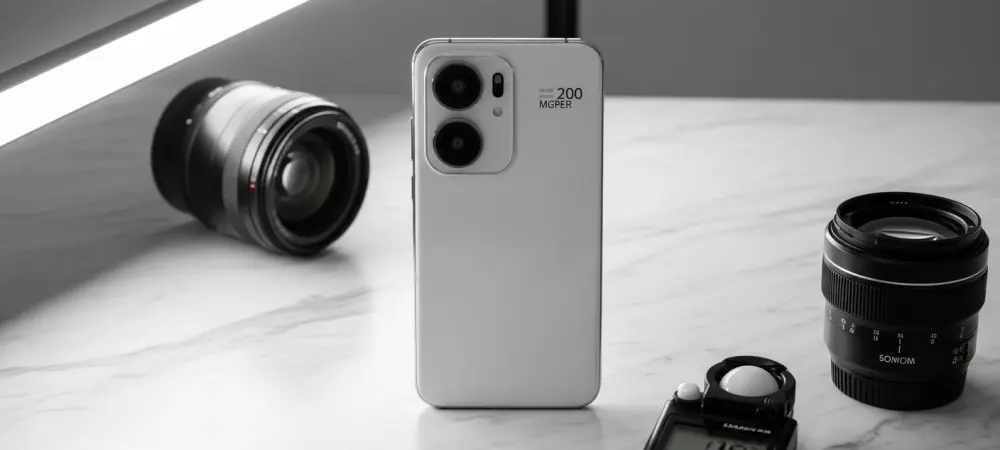
Photography served as the primary battleground where the Find X10 Pro sought to distinguish itself from its predecessors and contemporary rivals alike. The decision to implement a dual 200-megapixel rear camera configuration represented a substantial commitment to high-resolution imaging, pairing a 1/1.3-inch primary sensor with a periscope telephoto lens of identical physical size. This symmetry in sensor hardware allowed for more consistent color science and detail retention across different focal lengths, addressing a common pain point for mobile photographers. Consumers who monitored these developments closely understood that such hardware required sophisticated image signal processing to manage the massive data throughput. Potential buyers were advised to consider how these imaging advancements would influence their storage needs, given the likely absence of UFS 5.0 speeds. In the end, the strategic focus remained on delivering professional-grade optics within a consumer-ready chassis. These leaks provided a roadmap for the brand’s direction, emphasizing that true innovation was found in the balance of sensor size, software optimization, and realistic manufacturing costs.