

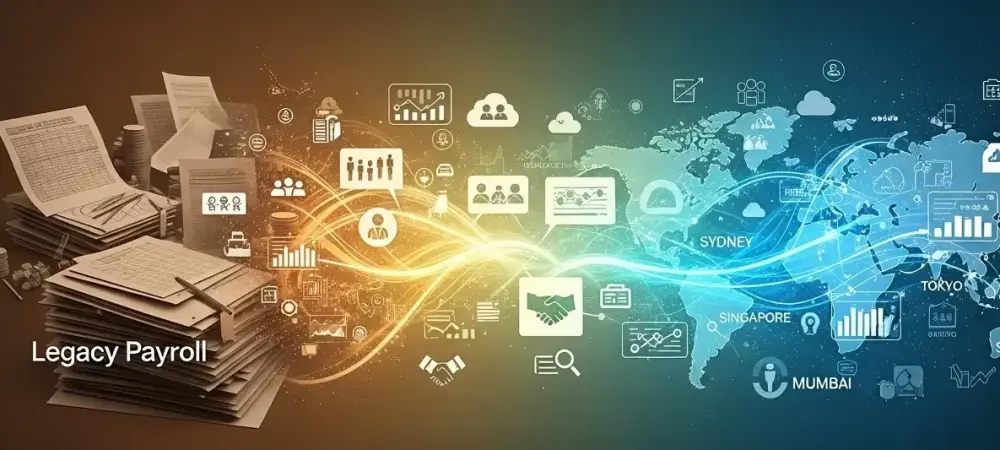
Global organizations operating across the Asia-Pacific region are currently witnessing a profound metamorphosis where payroll functions are shedding their reputation as stagnant cost centers to emerge as dynamic engines of corporate strategy. This evolution represents a departure from the historical reliance on manual spreadsheets and fragmented legacy systems that long characterized regional operations. In a landscape defined by rapid economic shifts and diverse labor regulations, the ability to harness payroll data as a source of intelligence has become a defining characteristic of market leaders. The shift toward a sophisticated, tech-enabled payroll framework is no longer a luxury for multinational corporations but a fundamental requirement for navigating the complexities of the modern workforce.
Adopting contemporary best practices in this domain is essential for managing the intricate web of regional compliance requirements and the volatility of the current economic environment. This modernization involves a transition away from reactive processing toward a model that prioritizes data visibility, integrated ecosystems, and regional consistency. By focusing on these core areas, organizations can transform their payroll operations from a back-office burden into a vital source of workforce intelligence. This guide explores the strategic methodologies required to achieve this transformation, highlighting the importance of a unified data strategy and the implementation of advanced technological frameworks that support both global standards and local nuances.
The Business Case: Why Transformation Is Essential
Maintaining organizational stability in a volatile market requires more than just operational competence; it demands a payroll function that serves as a cornerstone of corporate resilience. When payroll is optimized through best practices, it provides a safeguard against the financial and reputational risks associated with non-compliance and administrative errors. Significant cost savings are achieved not merely through the reduction of manual labor but through the elimination of overpayments, tax penalties, and the hidden costs of inefficient workflows. A transformed payroll system acts as a reliable foundation, ensuring that the organization can weather economic fluctuations without compromising its most critical operational pillar.
Beyond the balance sheet, a modernized payroll function significantly strengthens the employer brand and fosters deep trust within the workforce. In an environment where talent acquisition and retention are increasingly competitive, the reliability and transparency of compensation are paramount. Employees expect a digital-first experience that provides clear visibility into their earnings and tax obligations. When an organization demonstrates precision and security in its payroll delivery, it sends a powerful message about its commitment to its people. This trust becomes a strategic differentiator, enhancing employee engagement and positioning the company as an employer of choice across the diverse markets of the Asia-Pacific region.
Actionable Best Practices: Modernizing APAC Payroll
Establishing a Single Source of Truth: The Power of Data Integration
Breaking down data silos is the first critical step toward achieving a strategic payroll function, as fragmented information remains the greatest barrier to executive-level insight. Many organizations still struggle with a patchwork of disparate legacy systems and conflicting reports from various regional vendors, which obscures the true cost of labor. Consolidating these isolated data points into a unified platform allows for a holistic view of the workforce. This integration enables leadership to identify trends, manage headcount costs more effectively, and ensure that personnel decisions are based on accurate, real-time information rather than outdated approximations.
The implementation of such a platform requires a rigorous focus on standardized data definitions and the creation of a robust governance model to maintain data integrity. Without a common language for payroll data across different countries, comparisons and regional aggregations remain unreliable. Establishing clear ownership of data and implementing strict internal controls ensure that the information remains consistent and auditable. This governance framework provides the necessary confidence for HR and finance leaders to utilize payroll metrics in high-level strategic planning, turning what was once a transactional record into a powerful analytical tool.
Navigating Regulatory Complexity: The Global Core and Local Expertise Model
Managing the staggering diversity of labor laws and tax regulations across the Asia-Pacific region requires a sophisticated operational strategy that balances regional consistency with local precision. A “global core, local expertise” model allows organizations to standardize their primary processes and data structures at a regional level while relying on localized knowledge to handle country-specific nuances. This hybrid approach ensures that while the organization maintains a unified reporting structure, it remains agile enough to adapt to sudden regulatory changes in markets like China, India, or Vietnam. Such a model effectively mitigates the risk of compliance failures that often plague decentralized or purely globalized systems.
Successfully implementing this model involves embedding local regulatory logic directly into the technological framework to automate compliance wherever possible. This reduces the burden on local teams and minimizes the potential for human error in interpreting complex statutory requirements. By leveraging platforms that offer localized support and real-time updates on labor law changes, organizations can maintain a proactive compliance posture. This strategy not only prevents costly penalties but also allows payroll professionals to shift their focus from manual compliance checks to higher-level oversight and strategic advisory roles within the regional leadership team.
Driving Efficiency: The Intelligent Payroll Ecosystem
An intelligent payroll ecosystem is defined by its ability to integrate seamlessly with HR, finance, and time-tracking systems, enabling a frictionless flow of data across the enterprise. This level of connectivity eliminates the need for manual data entry and reconciliation, which are frequent sources of error and delay. When these systems communicate in real-time, organizations gain access to predictive analytics that can forecast labor costs and identify potential budgetary variances before they occur. This integration transforms payroll from a historical reporting function into a forward-looking advisory service that supports more accurate financial forecasting and workforce planning.
The role of automation in this ecosystem extends far beyond simple task replacement; it empowers payroll teams to engage in sophisticated strategic oversight. By automating routine calculations and standard reporting, payroll professionals are freed to investigate anomalies, optimize tax strategies, and contribute to enterprise-wide digital transformation initiatives. This shift allows the payroll function to provide deeper insights into labor productivity and workforce dynamics. As a result, the payroll department evolves into a critical partner for the C-suite, providing the data-driven evidence required to support complex organizational changes and long-term growth strategies.
Strategic Recommendations: Insights for HR Leadership
The shift toward a strategic payroll model became a prerequisite for sophisticated workforce planning as organizations recognized the limitations of traditional, siloed approaches. Chief People Officers and HR Directors who prioritized this transformation found themselves better equipped to handle the complexities of a multi-market regional footprint. Evaluating technological readiness was not just about software procurement but involved a comprehensive assessment of security frameworks and data ownership protocols. Leaders who successfully navigated this transition focused on building cross-functional alliances between HR, finance, and IT, ensuring that payroll transformation was viewed as an enterprise-wide priority rather than a departmental upgrade.
Organizations with a significant presence in Asia-Pacific realized that the path to transformation required a deliberate investment in both technology and talent. It was determined that the most successful strategies were those that emphasized data transparency and regional scalability from the outset. Strategic focus was placed on moving away from fragmented vendor relationships toward partnerships that offered integrated solutions and deep local regulatory knowledge. These actions allowed leadership to gain a level of visibility that was previously unattainable, providing the foundation for more agile and informed decision-making. By the time these models were fully operational, the payroll function had established itself as a cornerstone of corporate governance and a vital asset for long-term organizational resilience.