

Dominic Jainy brings a wealth of experience from the front lines of systems architecture and emerging technologies to the conversation about the next generation of mobile hardware. As manufacturers push the boundaries of what defines a “budget-friendly” device, Dominic’s perspective on how software and silicon interact provides a unique lens through which to view the upcoming iQOO Z11 series. This discussion explores the implications of high-refresh-rate displays in the entry-level segment, the technical weight of running cutting-edge operating systems on modest RAM, and the strategic decisions behind component reuse in an increasingly competitive market.
The MediaTek Dimensity 6300 chipset features two performance cores at 2.40GHz and six efficiency cores. How does this specific octa-core architecture impact multitasking for budget users, and what performance gaps does the Mali-G57 MC2 GPU bridge for mobile gaming compared to older entry-level hardware?
This specific configuration is expertly designed to handle the heavy lifting of modern applications while sipping power during idle moments. With two performance cores running at 2.40GHz, the device can manage immediate bursts of activity, such as opening a heavy social media app or processing a high-resolution photo, without the noticeable lag that plagued older budget devices. The six efficiency cores clocked at 2.00GHz take over for background tasks, ensuring that multi-core scores like the 1,776 seen on Geekbench translate to a smooth and responsive long-term usage experience. On the gaming side, the Mali-G57 MC2 GPU provides enough graphical muscle to move away from the stuttering frames seen on older entry-level hardware, allowing for a more stable experience in competitive titles. It effectively bridges the gap between basic mobile functionality and a genuine entertainment experience for price-conscious consumers who still want to play popular games.
Early benchmarks indicate that upcoming budget smartphones are already testing with Android 16 and 8GB of RAM. What technical hurdles do manufacturers face when optimizing a next-generation operating system for mid-range hardware, and how does this software longevity influence a consumer’s purchasing decision?
Launching a budget device with Android 16 is a bold move that requires intense optimization to ensure the system doesn’t overwhelm the hardware’s limited resources. Manufacturers must strip away heavy background processes to keep the 8GB of RAM available for the user, especially since newer operating system versions often demand more memory overhead for security and integrated AI features. When a consumer sees a device running the latest operating system right out of the box, it fundamentally changes their perception of the phone’s lifespan, making a sub-Rs. 20,000 investment feel much more secure. This longevity is a massive selling point in today’s market, as it suggests the phone won’t become obsolete or lose app compatibility within just a year or two of purchase. It effectively turns what might have been a “temporary” budget phone into a long-term daily driver for many people.
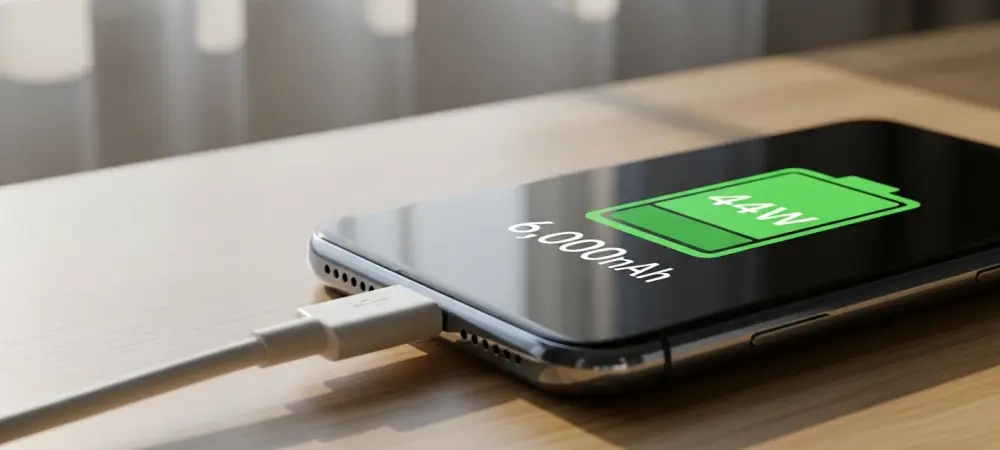
Transitioning from a 15W charging standard to 44W wired fast charging is a significant jump for high-capacity batteries. What are the implications for long-term battery health when charging a 6,000mAh cell at these higher speeds, and how must internal thermal management systems evolve to compensate?
Moving from 15W to 44W is a transformative shift that drastically reduces the downtime for a massive 6,000mAh battery, which is a major win for user convenience. However, this higher wattage generates significantly more heat during the charging cycle, which can degrade the lithium-ion chemistry faster if the thermal environment is not managed correctly. To protect the battery’s health, engineers have to implement more sophisticated thermal sensors and heat dissipation materials to keep the internal temperature within a safe range during those fast-charging bursts. This evolution is necessary because a hot battery not only loses its maximum capacity over time but can also throttle the phone’s overall performance during use to prevent overheating. It is a delicate balancing act between giving the user the convenience of a quick top-up and ensuring the hardware survives for several years of daily charging cycles.
The latest budget-friendly models often feature 6.74-inch LCD screens with 90Hz refresh rates and 50-megapixel primary sensors. How do these specific display and camera specifications meet the demands of modern social media users, and where are the most common hardware trade-offs made to keep prices low?
A 6.74-inch screen provides the large, immersive canvas that people crave for scrolling through endless video feeds and editing photos on the go, while the 90Hz refresh rate makes every interaction feel more fluid than the standard 60Hz. The 50-megapixel main sensor is the star of the show here, allowing users to capture detailed shots that look great on social platforms without needing a flagship device. However, to keep costs down, manufacturers often make strategic trade-offs by choosing LCD panels instead of more expensive AMOLEDs and using lower-resolution secondary sensors like a 2-megapixel depth lens. You might also see a more modest 5-megapixel selfie camera, which serves the basic need for video calls while prioritizing the majority of the production budget for the primary rear camera experience. It is all about putting the money where the user will see and appreciate it most frequently while trimming the fat in areas that are less critical for daily engagement.
When a new smartphone retains the same processor as its predecessor, such as the Dimensity 6300, which secondary features are most critical to upgrade? Please explain the strategic importance of differentiating “Lite” models from standard and “x” variants within the same product family.
If the processor remains unchanged, the manufacturer’s focus must shift to tangible “quality of life” improvements like faster charging, more generous RAM, or a better software experience to justify a new release to the public. We see this with the potential jump to 44W charging, which offers a much better day-to-day user experience than the 15W found on the older Z10 Lite. Strategically, iQOO uses the “Lite” branding to capture the absolute entry-level price point, while the “x” and standard variants offer more premium features for those with a slightly higher budget to spend. This tiered approach allows a brand to dominate multiple price brackets under a single family name, making the technology accessible to everyone from students to power users. It ensures that no matter the budget, there is a device that feels modern and capable within that specific, trusted product lineup.
What is your forecast for the iQOO Z11 series?
I expect the iQOO Z11 series to become a new benchmark for value in the competitive Indian market, particularly if the Lite model maintains a price point well below Rs. 20,000 while offering 8GB of RAM and 5G connectivity. The inclusion of Android 16 right out of the gate—or very early in the product’s lifecycle—will likely force competitors to reconsider their own software update schedules for their budget hardware. We will see the series successfully bridge the gap between “cheap” phones and “performance” phones by focusing on high-capacity 6,000mAh batteries and much faster charging speeds than we have seen previously. Ultimately, the Z11 series will likely solidify the brand’s reputation as one that doesn’t compromise on core usability and power, even when the final price tag is kept incredibly low for the consumer.