

The traditional conflict between the escalating power demands of artificial intelligence and the global necessity for environmental preservation is finding a groundbreaking resolution in the industrial heart of West Yorkshire. As the United Kingdom navigates the complexities of a digital-first economy, the approval of a 5.6-megawatt datacentre in Bradford marks a pivotal shift in how urban infrastructure accommodates high-performance computing. Situated strategically near the intersection of Listerhills Road and Thornton Road, this facility is not merely a warehouse for servers but a functional component of the city’s thermal economy. The project is expected to undergo a 24-month development phase, with completion slated for the end of 2028. This development arrives at a time when the sheer heat generated by AI workloads has become a liability for operators, yet Deep Green has reimagined this byproduct as a valuable resource for a city seeking to decarbonize its heating systems through modern engineering and local civic integration.
Integrated Thermal Solutions for Urban Energy
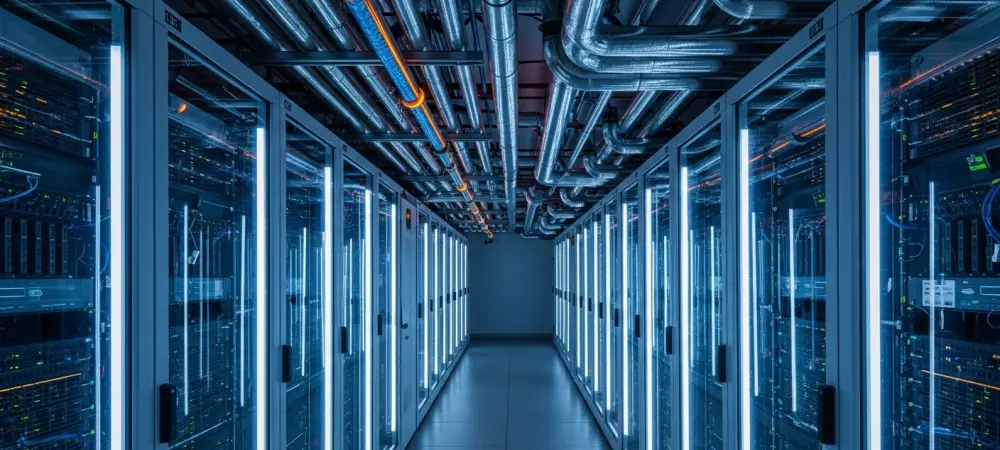
The architectural and engineering philosophy behind the Bradford site revolves around a sophisticated “heat reuse” model that challenges the standard practice of venting thermal energy into the atmosphere. By utilizing a closed-loop cooling system, the facility captures the intense heat generated by high-density AI and high-performance computing racks before it can dissipate. This thermal energy is then transferred directly into the Bradford Energy Centre, an evolving network designed to provide sustainable heating across the city center. This technical synergy ensures that the water used in the cooling process remains within a controlled cycle, significantly reducing the environmental footprint typically associated with evaporative cooling towers. The ability to harness these high temperatures is essential for modern data processing, as the concentration of power in AI-specific hardware often leads to thermal thresholds that would overwhelm traditional air-cooled environments without expensive and wasteful ventilation.
Building upon this technological foundation, the connection to the Bradford Energy Network represents a rare alignment of private infrastructure and public utility. The project utilizes a network of pre-laid underground pipes, which were strategically installed during recent pedestrianization efforts to minimize future disruption to the city’s streets. This thermal highway allows the datacentre to supply heat to a variety of critical municipal structures, including the historic Bradford City Hall and multiple buildings within the local university and college campuses. For these institutions, the arrangement offers a consistent and low-carbon alternative to traditional gas boilers, which are increasingly seen as incompatible with national net-zero targets. The seamless integration of a high-tech facility into the existing urban fabric demonstrates that the digital economy does not have to exist in a vacuum, but can instead serve as a literal engine for regional development and local comfort.
Redefining Efficiency Through Circular Computing
The core philosophy of this project is described as a “use electrons twice” strategy, an approach that maximizes the utility of every kilowatt-hour consumed by the facility. In a typical scenario, electricity is used once for computation and the resulting heat is treated as a waste product that must be removed at an additional energy cost. By capturing this thermal output for district heating, the Bradford facility effectively doubles the productivity of its energy intake. Industry projections suggest that by 2028, the density of AI server racks will reach levels where a single unit generates heat equivalent to approximately 200 electric ovens operating simultaneously. Without a viable method for heat recovery, the environmental impact of such density would be prohibitive. This project serves as a practical demonstration of circularity, proving that the massive energy consumption required for machine learning and data analytics can be mitigated by repurposing its thermal byproduct.
While many regions in the United Kingdom have struggled to implement large-scale heat-recycling schemes due to a lack of existing district heating networks, Bradford stands as a notable exception. The foresight to install the necessary piping before the datacentre’s inception has removed one of the most significant financial and logistical barriers to entry for green energy projects. This proactive urban planning ensures that the facility is not just a consumer of local resources but a contributor to the city’s resilience. The Bradford project is distinguished from other developments in London or Greater Manchester by its specific focus on municipal integration and the sheer scale of the heat transfer involved. By aligning the needs of the tech sector with the goals of local government, the development creates a symbiotic relationship where the growth of digital services directly supports the decarbonization of the physical environment, establishing a new standard for future infrastructure.
Civic Impact and the Future of Digital Infrastructure
The development of this high-density colocation capacity is specifically tailored to meet the needs of public sector bodies, commercial enterprises, and academic researchers who are increasingly reliant on data-intensive workloads. As West Yorkshire continues to position itself as a hub for postgraduate AI research and technological innovation, the presence of such a facility provides the necessary localized infrastructure to support sophisticated modeling and simulations. Regional leadership has emphasized that this project is a critical component of the broader ambition to achieve net-zero status while simultaneously fostering a high-skill economy. The facility acts as a magnet for tech-driven investment, ensuring that the computational power required for the next generation of software development is available within the region. This proximity reduces latency and provides local organizations with more control over their data processing requirements within a sustainable framework. Looking toward the future of urban development, the Bradford model suggests that the next generation of datacentres must be designed with their surroundings in mind. Developers should prioritize locations where existing or planned district heating networks can absorb thermal waste, turning a potential environmental burden into a community asset. For cities planning new infrastructure, the lesson from Bradford is clear: integrating utility corridors for heat during initial construction phases is a vital prerequisite for attracting sustainable tech investment. Future projects should also explore the potential for integrating renewable energy sources directly into these thermal loops, further reducing the reliance on the grid. As the demand for AI processing continues to surge, the industry must adopt these circular models to maintain public trust and regulatory compliance. The Bradford site is not just a single facility but a blueprint for how digital growth can be harmonized with the pressing need for environmental responsibility in a modern world.
The Bradford datacentre project reached its final planning approval stages after rigorous environmental assessments that confirmed its viability as a primary heat source for the city. Engineers successfully calibrated the heat exchange systems to match the specific requirements of the Bradford Energy Network, ensuring that the transition from construction to operation would be seamless. Regional authorities finalized the agreements for the thermal supply to the university and city hall, marking a significant milestone in local energy policy. These collaborative efforts established a framework that allowed the project to proceed with the full backing of both the tech sector and the municipal government. The successful coordination between private developers and public infrastructure planners demonstrated that complex energy challenges could be solved through integrated design. This historical milestone in Bradford’s development has since provided the empirical data necessary for other municipalities to begin planning similar hybrid energy and data facilities.