

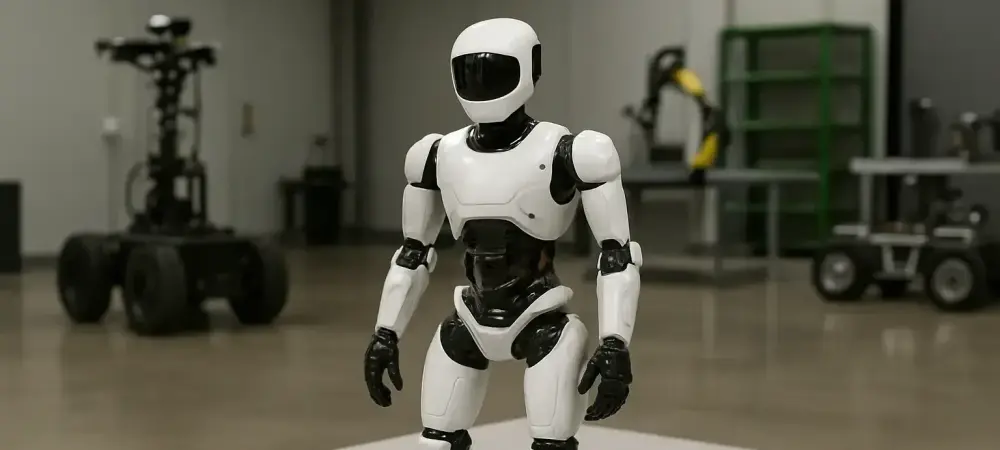
Imagine a world where robots don’t just follow pre-programmed instructions but can think, sense, and act in real-time, seamlessly interacting with their surroundings as naturally as humans do. This isn’t a distant dream but a tangible reality being shaped by NVIDIA, a titan in the tech industry. Through a groundbreaking initiative, the company has unveiled a transformative approach to robotics powered by artificial intelligence, marking a significant shift in how machines operate in physical spaces. Dubbed “Physical AI,” this innovation promises to redefine industries, from manufacturing to daily household tasks, by equipping robots with unprecedented capabilities. NVIDIA’s latest advancements signal a pivotal moment in technology, where the boundary between digital intelligence and physical action blurs, opening doors to a future brimming with potential. As this development unfolds, it’s clear that the impact on society and the economy could be profound, setting the stage for a deeper exploration of what this means for robotics.
Unveiling the Era of Physical AI
At the heart of NVIDIA’s latest breakthrough lies the concept of Physical AI, a revolutionary step beyond earlier AI paradigms like Perception and Generative AI. This new era focuses on endowing robots with motor skills and real-time reasoning, enabling them to interpret their environment and perform complex tasks autonomously. Unlike previous models that excelled in data analysis or content creation, Physical AI empowers machines to physically engage with the world, whether it’s a robotic arm assembling components in a factory or a humanoid assistant navigating a cluttered room. Demonstrations of this technology have showcased robots making logical decisions based on visual input, such as correctly handling objects in dynamic settings. NVIDIA’s vision, articulated by its leadership, positions this as the next frontier, where machines not only think but also act with precision. This shift could unlock vast economic opportunities, potentially transforming how industries operate and integrate automation over the coming years.
Competition and the Future of Robotics
While NVIDIA leads with its Physical AI initiative, the robotics landscape is fiercely competitive, with other industry giants carving their own paths. Companies like Tesla, with its Optimus robot already deployed in industrial and service roles, and Amazon, rapidly expanding its robotic workforce, are pushing boundaries in automation. NVIDIA counters this rivalry with strategic platforms like Omniverse and advanced world models that accelerate robotic development, aiming to maintain a competitive edge. This broader industry trend points to a robotics revolution set to redefine everyday life and industrial processes within the next decade, from 2025 onward. Looking back, the strides made by NVIDIA and its peers in integrating cognitive and physical capabilities in machines have laid a robust foundation. The focus now shifts to scaling these innovations, ensuring accessibility, and addressing ethical considerations as robots become ubiquitous. As this field evolves, collaboration and innovation will be key to shaping a future where technology serves humanity effectively.