

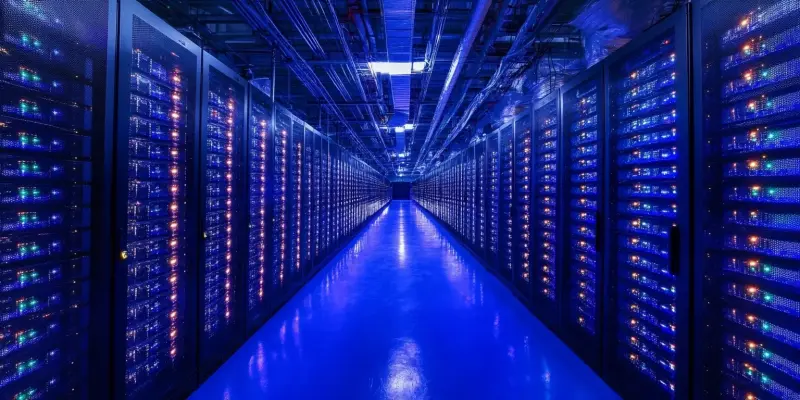
The growing demand for scalable, sustainable, and reliable IT infrastructure across Europe has prompted NorthC DataCenters to unveil plans for two new data centers in Frankfurt and Berlin, Germany over the next two years. These strategic developments highlight the increasing need for advanced data management solutions in a highly digitized world. NorthC’s move signals the company’s intent to address this demand through significant investments in cutting-edge infrastructure.
Strategic Developments in Frankfurt
NorthC’s plans for Frankfurt include the construction of a new data center that will start with a 1.5MW capacity and has the potential to scale up to 10.5MW. This comes as a supplement to a prior project announced for January 2024, which will begin with a 3MW capacity and may eventually extend to 5MW. These expansions underscore the importance of Frankfurt as a central hub for data center operations in Europe. The city’s strategic location and robust connectivity make it a critical point for data transfers across the continent.
The introduction of additional capacity in Frankfurt is expected to cater to regional and local customer needs, providing reliable and scalable solutions. Furthermore, NorthC’s commitment to sustainability ensures that these new facilities will incorporate green technologies aimed at reducing carbon footprints. This focus aligns with broader industry trends that emphasize environmentally friendly practices as a cornerstone of modern IT infrastructure.
Berlin’s Modernization and Regional Connectivity
In Berlin, an existing building will be converted into a state-of-the-art data center with an initial capacity of 3MW, scalable to 8MW. This development marks a significant step in reinforcing the city’s digital infrastructure. Berlin’s growing reputation as a tech hub necessitates such enhancements, and NorthC’s investment will likely bolster its attractiveness to technology firms and other businesses that rely heavily on robust data services.
Moreover, NorthC is set to introduce its successful Region Connect platform to Germany. This platform, which has already proven effective in the Netherlands and Switzerland, facilitates seamless data transfers and cooperation among regional markets. By bringing this platform to Germany, NorthC aims to streamline data management processes and enhance regional collaboration, offering a considerable advantage to businesses operating within these regions.
Broader Implications and Future Expansion Plans
Due to the increasing need for scalable, sustainable, and reliable IT infrastructure throughout Europe, NorthC DataCenters has announced plans to construct two new data centers in Germany—specifically in Frankfurt and Berlin—within the next couple of years. These efforts underscore the escalating demand for advanced data management capabilities in an ever more digitized world. The company’s strategic expansion reflects a commitment to meeting this demand through substantial investments in state-of-the-art infrastructure.
The digital age has brought about an explosion of data, requiring companies to adopt more sophisticated and robust data management solutions. NorthC’s new projects are a direct response to the pressures of the digital ecosystem, aiming to provide the necessary infrastructure to support the growing data needs of businesses across Europe. By establishing these facilities in key German cities, NorthC aims to enhance its presence in the European market and deliver unparalleled service. The investments made by NorthC reveal their dedication to future-proofing IT infrastructure against the backdrop of rapid technological advancements.