

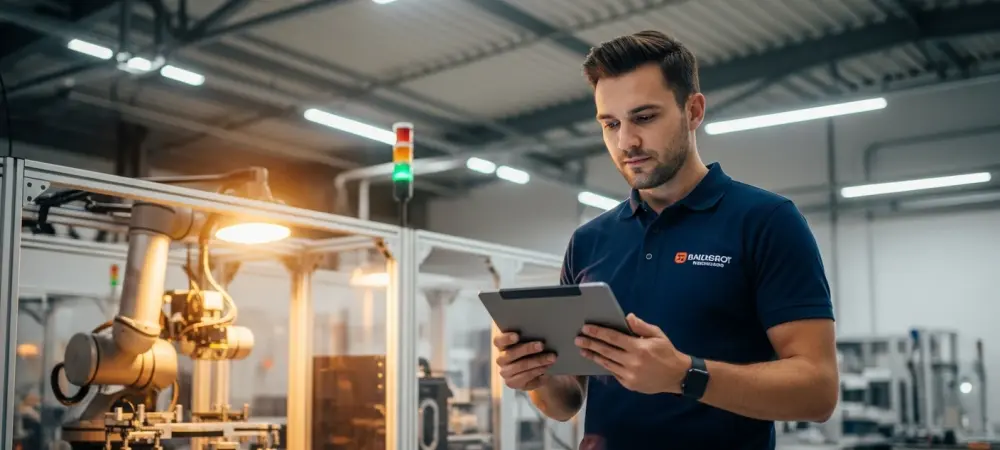
The transformation of the factory floor from a series of static assembly lines into a truly fluid and self-correcting ecosystem represents the most significant leap in production technology since the introduction of the steam engine. The days when industrial robots were sequestered behind heavy steel cages, performing the same repetitive weld for decades, have effectively vanished. Today, the manufacturing landscape is defined by a dynamic environment where machines no longer just follow instructions—they perceive, learn, and adapt in real-time. High-speed processing and intuitive software have turned what used to be clunky machinery into sophisticated, self-aware colleagues capable of operating alongside human workers with unprecedented precision.
The Shift Toward an Autonomous Industrial Workforce
This transition represents more than a simple upgrade in hardware; it is a fundamental reimagining of the workforce. Current robotic systems are equipped with advanced neural networks that allow them to handle variability that would have paralyzed previous generations of equipment. Whether it is a robotic arm adjusting its grip to accommodate a fragile food item or a mobile unit navigating a crowded warehouse, the emphasis has moved toward total autonomy. This shift ensures that the industrial sector is no longer limited by rigid programming, allowing for a level of flexibility that supports high-mix, low-volume production schedules.
Modern machines are now designed to function as integral members of a team rather than isolated tools. They utilize a combination of edge computing and cloud-based intelligence to share data across the factory floor, identifying bottlenecks before they cause delays. As these machines become more capable of making localized decisions, the need for constant human supervision decreases. This evolution allows the human element of the workforce to focus on high-level orchestration and creative problem-solving, leaving the precision-heavy and hazardous tasks to their mechanical counterparts.
Why the Modern Pivot Matters for Global Manufacturing
The urgency behind these technological shifts is fueled by a perfect storm of economic and social pressures that have redefined the global market. Manufacturers are currently grappling with a persistent global labor shortage and the rising costs of operational downtime that can cripple a business in days. To stay competitive, companies moved beyond the heavy-duty automotive applications of the past. The focus shifted toward making automation viable for food production, logistics, and small-scale shops that previously found robotics too expensive or complex to manage.
This pivot is essential for maintaining supply chain resilience in an unpredictable economic climate. By integrating flexible robotics, businesses can pivot their production lines almost instantly to meet shifting consumer demands. This adaptability is the key differentiator for companies looking to survive in a market where speed to market is everything. Moreover, the push for localizing production—bringing manufacturing closer to the end consumer—has made small-scale, highly efficient robotic cells a necessity for urban micro-factories and regional distribution hubs.
The Democratization of AI-Driven Deployment
Artificial Intelligence moved from a buzzword to a fundamental component of robotic hardware that defines the current industrial era. The democratization of these systems allows workers without coding backgrounds to deploy sophisticated robots using natural language and voice commands. This change has stripped away the specialized barriers that once kept automation out of reach for smaller enterprises. Today, an operator can simply describe a task or demonstrate a movement, and the robot’s AI interprets those actions into a functional program.
Safety and efficiency have reached new heights through adaptive spatial awareness. Modern vision systems enable robots to detect human presence and recalculate motion paths in three-dimensional space in real-time, eliminating the need for restrictive physical safety barriers. Furthermore, the widespread adoption of digital twins and virtual commissioning allowed manufacturers to perfect their systems in a digital realm. By simulating entire production lines virtually, companies ensured that every movement was optimized before a single piece of hardware was bolted to the floor, virtually eliminating the risk of costly physical installation errors.
Scalable Automation and the Economics of Ownership
The industry moved away from rigid, high-cost installations in favor of agile systems that grow alongside a business. This shift is particularly beneficial for small and medium-sized enterprises that require a faster return on investment. Modern automation is now modular, allowing companies to start with a single robotic cell and expand their capabilities as demand increases. This “plug-and-play” approach to hardware has turned automation into a scalable utility rather than a monolithic capital expense.
Intuitive teaching methods have played a massive role in this economic transformation. Using force-sensing technology, operators can lead a robot through a task by hand, allowing the machine to learn through physical guidance rather than manual coding. When evaluating these systems, decision-makers looked past the initial price tag to prioritize the Total Cost of Ownership. By focusing on energy efficiency, predictive maintenance schedules, and long-term reliability, manufacturers successfully de-risked their investments. This holistic view of value ensured that the machinery remained an asset throughout its entire lifecycle rather than becoming a maintenance burden.
Open Ecosystems and the Academic Bridge
The current state of robotics thrives on physical AI—the blend of high-level machine learning with mechanical movement. This was achieved through a move away from proprietary silos toward collaborative, open-source environments. By adopting standard programming languages like Python and the Robot Operating System, manufacturers made their hardware compatible with a global library of AI models. This interoperability allowed different brands of robots and sensors to work together seamlessly, creating a unified language for the modern factory.
This open approach also served to close the persistent skills gap that once hindered industrial progress. Aligning industrial hardware with the languages taught in universities ensured that new engineers stepped onto the factory floor and were productive on day one. This academic bridge has created a steady pipeline of talent capable of pushing the boundaries of what autonomous systems can achieve. The partnership between industrial giants and technology leaders was the catalyst for unlocking true autonomy, ensuring that hardware and software evolved in tandem.
Strategies for Transitioning to Ready Systems
To navigate this landscape, successful organizations adopted a framework that prioritized flexibility and long-term value over short-term savings. Businesses performed comprehensive audits for low-skill tasks, identifying repetitive or physically demanding roles—such as palletizing or sorting—that could be automated. This allowed human workers to move into value-added positions, increasing overall morale and productivity. Investing in modular hardware became the standard for future-proofing operations against sudden market shifts or technological breakthroughs.
The focus remained on interoperability and the selection of equipment that supported open-source platforms. By ensuring that new machinery could communicate with existing infrastructure, companies avoided the trap of being locked into a single vendor’s ecosystem. Leaders in the field recognized that robots were not isolated tools but interconnected components of a larger, smarter ecosystem. The most successful organizations were those that integrated these technologies with a clear vision for scalability and human-machine collaboration. As the industrial renaissance matured, it became clear that the integration of AI and flexible robotics was the only path toward sustainable growth in a complex global economy. All strategic decisions were directed toward building a resilient architecture that could withstand the demands of a high-speed, data-driven world. This proactive stance ensured that manufacturers were not just reacting to change but were actively defining the future of production. Managers evaluated the success of these systems by their ability to adapt to new products without requiring extensive downtime or re-engineering. The workforce of the past was successfully transformed into a tech-savvy collective that thrived on the synergy between human creativity and mechanical precision. By the time the current operational standards were fully established, the gap between small shops and massive factories had narrowed significantly. Every participant in the value chain benefitted from the increased transparency and efficiency provided by these autonomous systems. In the end, the move toward specialized, intelligent automation proved to be the defining characteristic of a new industrial age.