

Introduction
Whispers from supply chains rarely travel in straight lines, but this season they circle one name with uncommon persistence: Vivo’s X500 Pro line and its bid to bend mobile imaging toward LOFIC-fueled range without abandoning the premium ladder. Early signals point to a calculated evolution beyond the X300 series, with sizing, sensors, and silicon all positioned to clarify who each phone is for and why it matters now.
The goal here is to unpack the most credible questions raised by these rumors and answer them in plain language. Readers can expect a concise tour of the lineup logic, camera direction, chipset divergence, and market timing, along with the trade-offs that keep an Ultra tier relevant.
Key Questions or Key Topics Section
Is Vivo Really Skipping X400 for an X500 Family This Year?
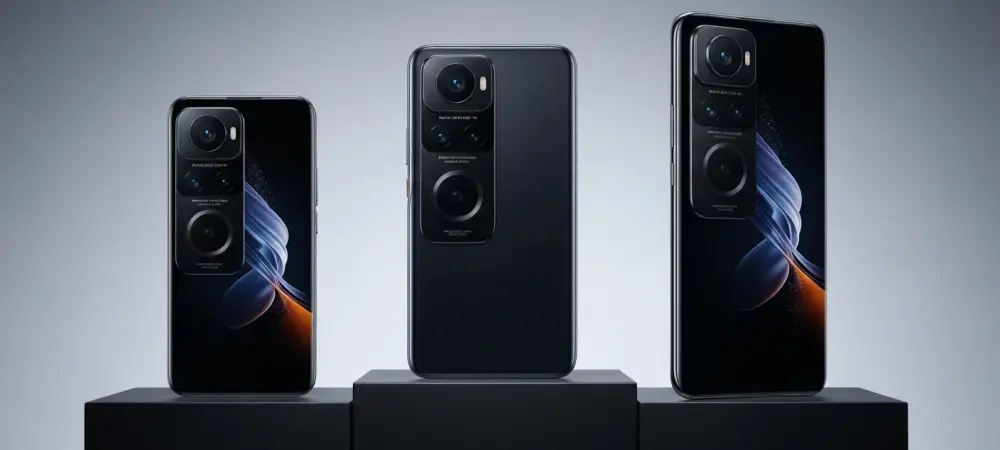
Several supply chain trackers suggest a direct jump from X300 to X500, a tactic that signals a generational reset rather than a minor refresh. Skipping a number also keeps attention fixed on new naming symmetry across the range, which helps marketing cut through crowded launch cycles. The window points to late this year, aligning with Vivo’s established cadence for premium updates. Expect an X500, an X500 Pro, and a larger X500 Pro Max, with the Pro acting as successor to the X300 Pro while leaving room above for an Ultra-class option.
Why Split the Pro Into Two Sizes?
Size segmentation has become standard because it lets brands frame choice without diluting cachet. By offering roughly 6.4-inch and 6.9-inch Pro tiers, Vivo can court users who want one-handed balance or immersive screens, while steering enthusiasts toward higher-memory or larger-battery upsells. Moreover, a two-size Pro clarifies feature distribution. The bigger model can host more robust cooling and larger optics modules, whereas the smaller one emphasizes ergonomics. That separation reduces overlap and keeps the step-up story clean at retail.
Will the X500 and X500 Pro Share the Same Chipset?
Rumors indicate a sharper split than before, with the standard X500 and the Pro no longer sharing a single SoC. This creates a clearer performance ladder that justifies price gaps and opens room for specialized tuning, from image pipelines to sustained gaming thermals. Practically, that means the Pro line can push higher AI throughput and camera processing without being tethered to the baseline model’s constraints. It also gives Vivo flexibility to source best-fit silicon per tier, a strategy Apple and Xiaomi have used to good effect.
What’s the Camera Direction for the Pro Models?
Signals point to a main sensor that succeeds the X300 Pro’s 1/1.28-inch 50 MP Sony LTY-928 rather than jumping to the X300 Ultra’s 1/1.12-inch 200 MP Sony LYT-901. That choice preserves a meaningful advantage for the Ultra while still enabling real upgrades on the Pro. Supporting lenses could be more ambitious. A 50 MP ultrawide paired with a 200 MP telephoto has been floated, which would strengthen reach and detail without turning the Pro into an Ultra clone. Meanwhile, the Ultra is expected to retain a multispectral sensor for truer color and metering.
Is LOFIC HDR Coming, and Why Does It Matter?
A noted Weibo leaker, Smart Pikachu, claims the new Zeiss system will adopt LOFIC tech, the same class of low-noise, overflow-integrating capacitors that boosted dynamic range on Xiaomi’s 17 Ultra. If accurate, this moves image quality beyond raw megapixels and toward richer highlight retention. LOFIC can mitigate clipping in scenes with brutal contrast, like sunsets or stage lighting, while keeping shadows cleaner. Combined with Zeiss color work, this would reinforce Vivo’s identity in computational photography: less about headline resolution, more about believable tone and texture.
How Do These Choices Fit Market Logic?
Vivo appears to be threading the needle between trickle-down innovation and purposeful restraint. LOFIC and a stronger tele stack attract enthusiasts to the Pro tier, yet the Ultra still keeps signature advantages such as a larger primary and multispectral aids for color accuracy. This mid-curve positioning mirrors broader industry trends. Flagships segment by size and sensor philosophy, not just by price, and the winners build coherent stories that shoppers can grasp in seconds. On that metric, the rumored X500 family reads as disciplined rather than diffuse.
Summary or Recap
The X500 lineup is framed to skip X400, land this year, and split the Pro into two sizes that balance ergonomics and ambition. A chipset fork should cement a visible performance hierarchy, giving the Pro room for heavier AI and imaging workloads without compromise. Camera rumors favor a refined 50 MP-class main over a 200 MP leap, signaling respect for the Ultra’s tier. LOFIC’s potential debut under the Zeiss banner would shift the conversation toward dynamic range and color fidelity, aligning Vivo with the sensor trends that matter most. For deeper exploration, look to company announcements, Sony sensor white papers, and Zeiss color science explainers.
Conclusion or Final Thoughts
Taken together, the leaks pointed to a strategy that elevated the Pro without erasing the Ultra, leaned into two practical sizes, and prioritized LOFIC-driven range over megapixel theater. The clearest next step had been to watch for certification databases and camera samples that confirmed sensor choices and SoC bins, since those usually surfaced weeks ahead of retail. Shoppers weighing upgrades would have benefited from noting which features truly changed daily photos: dynamic range handling, telephoto stability, and color accuracy. With that checklist, the X500 family’s tiers made sense at a glance, and the decisions around size, silicon, and sensors felt less like marketing and more like a roadmap.