

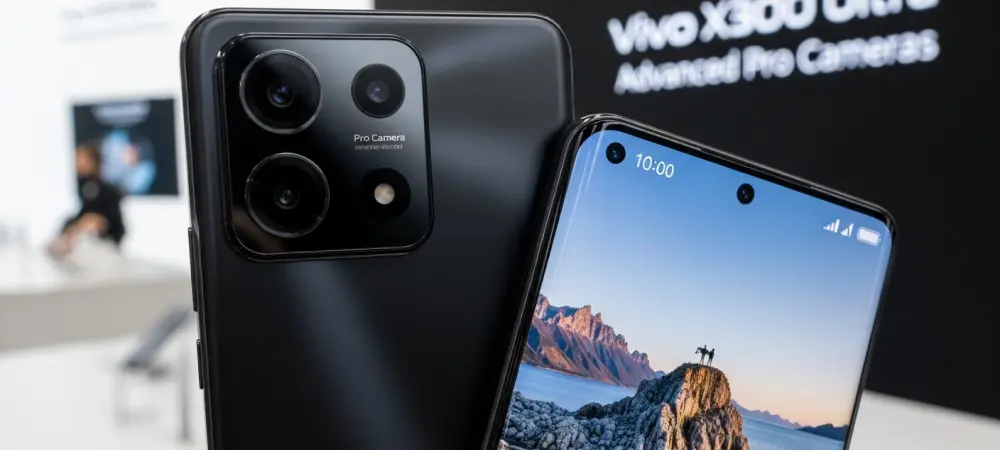
The boundary between a pocket-sized mobile device and a professional cinema camera has finally dissolved with the international arrival of the most ambitious imaging flagship to date. While the industry has long relied on software tricks to compensate for thin hardware, the Vivo X300 Ultra introduces a fundamental shift toward true optical integrity. This launch signifies more than just a new product; it represents a commitment to high-fidelity photography that refuses to compromise on clarity for the sake of convenience.
The End of the Digital Zoom Compromise
For years, mobile users accepted “hybrid zoom” as a necessary evil, often dealing with the muddy textures and artifacts born from digital cropping. The X300 Ultra disrupts this reliance on software interpolation by prioritizing native focal lengths that provide professional-grade precision. By moving away from mere snapshots, the device positions itself as a serious alternative for those who value the tangible depth of glass over the synthetic sharpening of an algorithm.
This transition is fueled by the “Triple Primary” philosophy, which treats every lens as a main sensor rather than a secondary accessory. Instead of a single high-quality wide lens paired with inferior telephoto modules, this system ensures that fixed focal lengths are the new gold standard. This architectural choice empowers photographers to frame their shots with the confidence that the resolution remains consistent across every perspective.
Bridging the Gap: Mobile Mobility and DSLR Performance
The global expansion of the X Series marks the transformation of a domestic powerhouse into a worldwide imaging authority. Mobile-first content creators and professional photographers have long sought a device that offers the agility of a phone without the technical limitations of traditional mobile sensors. This flagship meets those demands by integrating hardware-level optical stabilization that was previously reserved for bulky dedicated camera bodies.
Capturing the frantic energy of street photography or the unpredictable movements of wildlife requires more than just a fast shutter; it demands physical stability. The inclusion of advanced mechanical stabilization allows users to track subjects with fluidity, ensuring that the final output is free from the micro-jitters that often ruin professional-tier shots. It is this marriage of portability and performance that redefines what a handheld tool can achieve in the field.
Engineering the Ultimate Optics: Three Lenses, Zero Compromise
At the heart of this system lies an 85mm telephoto powerhouse featuring a massive 200MP sensor. This hardware is capable of 60fps autofocus tracking, a feat that allows it to lock onto fast-moving subjects with uncanny accuracy. For those requiring even more reach, the system supports external optical extenders, enabling a staggering 400mm focal length that retains native quality without the degradation inherent in digital magnification.
Complementing the telephoto is a 35mm standard lens designed to maximize light intake through an expansive sensor surface area. This specific focal length is favored for its cinematic low-light performance, producing a natural bokeh that mimics full-frame sensors. Meanwhile, the 14mm ultra-wide perspective addresses the chronic issue of edge distortion, utilizing specialized lens geometry to keep architectural lines straight and landscape horizons perfectly flat.
A Cinema-Grade Production Suite in Your Pocket
The capabilities of the device extend far into the realm of professional videography, supporting 4K recording at 120fps for breathtaking slow-motion sequences. Filmmakers can leverage flexible Log formats, which preserve a high dynamic range for intensive color grading in post-production. This level of control ensures that mobile footage can be seamlessly integrated into high-end commercial or narrative workflows without looking out of place.
Such intensive processing requires a sophisticated backbone, provided here by the Snapdragon 8 Elite Gen 5 and a dedicated liquid cooling system. These components work in tandem to prevent thermal throttling during long filming sessions or high-bitrate exports. Furthermore, the 6600mAh battery and 100W rapid charging system ensure that the creative process is never interrupted by the need for a power outlet, supporting sustained professional use.
Optimizing the Professional Workflow: The X300 Ecosystem
To truly bridge the gap toward a professional workstation, an optional video rig accessory kit provides tactile control and enhanced cooling. This rig transforms the smartphone’s form factor into something more familiar to cinematographers, offering mounting points for external lights and microphones. By providing physical buttons and dials, the ecosystem allows for precise adjustments that are often difficult to execute on a traditional touchscreen interface.
Integrating this hardware into a professional suite is further simplified by the device’s file management system, which handles high-speed subject tracking data and massive Log files with ease. Whether capturing the split-second action of a sporting event or the subtle nuances of a nature documentary, the 3-degree optical stabilization provides a level of reliability that was once impossible. This ecosystem ultimately prioritized the user’s ability to move from capture to final edit with minimal friction.
The global debut of the X300 Ultra established a new trajectory for the industry, where hardware innovation finally caught up to creative ambition. By prioritizing optical excellence over digital shortcuts, the device offered a glimpse into a future where the best camera is truly the one that is always present. The shift toward specialized imaging ecosystems suggested that the next generation of visual storytelling would be defined by those who embraced professional tools in a mobile format.