

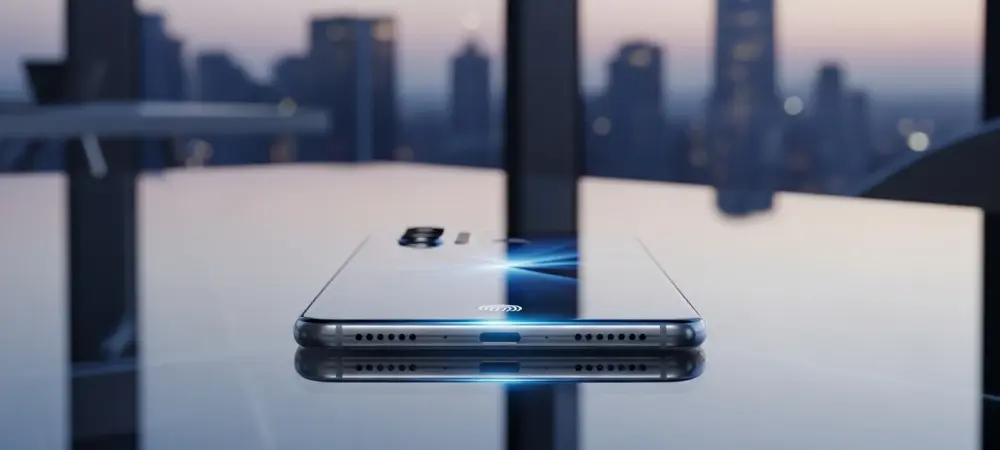
The modern mobile user spends more time hunting for available wall outlets than enjoying the high-resolution displays and lightning-fast processors they paid for. While most flagship smartphones struggle to push past the 5,000mAh barrier, Vivo has shattered expectations by packing a staggering 7,200mAh “Blue Ocean” battery into its latest mid-range offering. The Vivo S60 isn’t just an incremental update; it is a direct response to the “low battery anxiety” that plagues modern users, pairing unprecedented longevity with a biometric security system usually reserved for the most expensive devices on the market.
A Massive Leap in Mobile Endurance and Security
This release signifies a turning point where the distinction between premium and accessible hardware begins to blur. For years, consumers accepted that a mid-range price tag meant compromising on the most sophisticated internal components. However, by integrating a battery that exceeds most modern laptops in capacity alongside a cutting-edge sensor, Vivo repositioned the S60 as a tool for extreme utility rather than just a secondary option for the budget-conscious.
Redefining the Mid-Range Value Proposition
The smartphone industry has hit a plateau where performance gains are often marginal, leading consumers to prioritize practical utility over raw processing power. The Vivo S60 addresses this shift by focusing on two critical pain points: power management and biometric efficiency. By migrating high-end features like ultrasonic scanning technology down from the flagship tier, Vivo is challenging the industry standard and forcing a conversation about what “mid-range” should actually look like in an era of high-drain applications and sensitive mobile data.
Instead of chasing synthetic benchmark scores that offer little real-world benefit, the engineering team focused on how a device survives a rigorous forty-eight-hour cycle. This philosophy shifts the value of a phone away from its processor speed and toward its reliability in the field. When a device can last through a weekend of travel without a charger, it becomes a more valuable asset than a faster phone that dies by sunset.
Exploring the Blue Ocean Battery and 3D Ultrasonic Tech
The heart of the S60 is its 7,200mAh “Blue Ocean” cell, which provides a significant capacity boost over the previous generation’s 6,500mAh battery. To keep this massive reservoir usable, the device supports 90W wired fast charging, ensuring that downtime remains minimal despite the higher capacity. This balance of density and speed suggests that Vivo solved the thermal issues typically associated with high-capacity lithium cells, allowing for a slim profile that belies its massive energy storage.
Complementing the power specs is the debut of the 3D ultrasonic fingerprint scanner in this segment. Unlike traditional optical sensors that take a 2D photo of a print, this tech uses sound waves to map ridges, offering a lightning-fast 0.1-second recognition time. This hardware choice provides a more consistent experience when the environment is less than ideal, such as when a user has wet or dirty fingers, which frequently baffles standard optical scanners.
Sophisticated Power Management and Premium Glass Engineering
According to Vivo Product Manager Han Boxiao, the S60 was designed for high-end utility, featuring the “Global Direct Drive Power Supply 2.0” to manage heat during heavy use and charging. The software side was bolstered by “Micro Electric Wizard 2.0,” a specialized utility that preserved active tasks and data when the battery hit its final percentage. This failsafe ensured that even at the very end of a charge cycle, the user did not lose critical progress on a document or a background download.
Physically, the device moved away from plastic-heavy mid-range builds, opting for “unibody cold-carved glass” and a sleek silver frame. This signaled a move toward a more premium aesthetic that matched its advanced internal hardware. By using higher-quality materials, the manufacturer created a tactile experience that felt substantial, reinforcing the idea that a high-capacity battery did not require a bulky or unattractive chassis.
How the Vivo S60 Changes the Daily User Experience
For the average consumer, the integration of these features translated into a workflow that was no longer tethered to a wall outlet or slowed down by finicky security. Users could expect multi-day battery life even under heavy workloads, while the ultrasonic scanner provided a seamless entry point into the device that felt instantaneous. The practical combination of high-speed 90W charging and intelligent thermal management meant the phone handled demanding tasks without the performance throttling or overheating issues that often affected high-capacity handsets.
Moving forward, other manufacturers will likely face pressure to adopt similar battery densities and biometric standards to remain competitive. This shift toward prioritizing physical endurance over marginal software features could lead to a new category of “marathon” devices. Future iterations might explore solar integration or even more efficient solid-state battery chemistries to further extend the time between charges, ultimately making the traditional wall plug a relic of the past.