

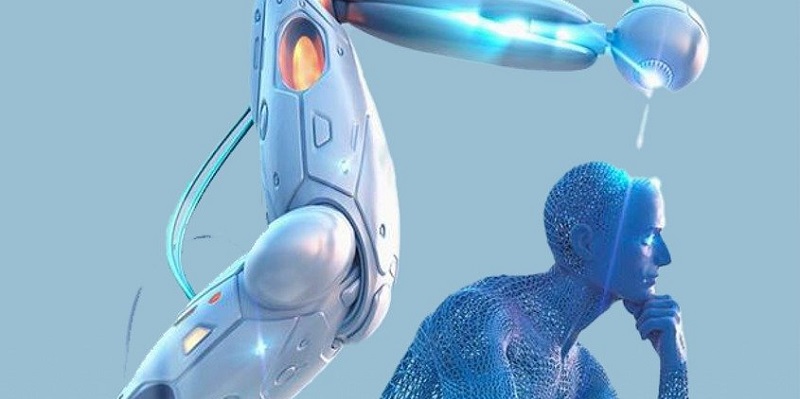
Artificial intelligence has revolutionized numerous industries by providing technology with the ability to mimic human intelligence. In this article, we will delve into the various capabilities of AI, with a specific focus on generative AI. By exploring its applications, speed, efficiency, as well as its integration into mainstream platforms, we will showcase how AI is transforming industries and becoming an indispensable tool in creative fields.
Definition and Explanation of Artificial Intelligence (AI)
Artificial intelligence is a technology that has the capability to perform tasks that typically require human intelligence. Through sophisticated algorithms, AI can analyze large volumes of data, identify patterns, and provide valuable insights for decision-making processes.
The Capabilities of AI
AI possesses an array of capabilities that make it invaluable in numerous industries. Firstly, AI can spot patterns among vast amounts of data, enabling businesses to gain valuable insights and make data-driven decisions. Moreover, AI can provide management with potential opportunities for expansion, thanks to its ability to process and analyze extensive data sets. Additionally, AI enhances data analytics by offering greater accuracy and speed. Traditional analyses can be time-consuming and prone to human error, but AI algorithms can process large quantities of data with unparalleled precision, allowing for more efficient and informed decision-making. Furthermore, AI can automate complex, multi-step tasks to help individuals and businesses accomplish more in a shorter span of time. This eliminates routine manual work, freeing up resources for higher-value and strategic activities.
Speed and Efficiency of AI
AI’s capacity for finishing tasks with extraordinary speed, utilizing technologies like machine learning, has revolutionized industries across the board. The automation of processes that traditionally required human intervention allows for faster and more efficient completion of tasks. This increase in productivity enables businesses to respond swiftly to market changes and stay ahead of the competition. Moreover, AI’s ability to automate multi-step tasks saves significant time and effort for individuals and organizations. By streamlining workflows and minimizing manual intervention, AI significantly enhances productivity and enables resources to be allocated to more critical areas.
AI in the Mainstream
One application that has catapulted AI into the mainstream is AI-based chat and the chatbots it powers. These technologies have transformed customer experiences by providing personalized, efficient, and round-the-clock support. From e-commerce to customer service, AI-powered chat has become an essential tool for businesses worldwide. Furthermore, AI’s integration into various applications, ranging from virtual assistants to recommendation systems, has brought its benefits to the forefront. AI’s capacity to understand user preferences and behaviors has led to highly tailored and efficient experiences across platforms, improving user satisfaction and engagement.
Generative AI in Creative Fields
While AI has been transforming industries, generative AI is gaining traction in creative fields. It is used to augment the work of writers, graphic designers, artists, and musicians, rather than replacing it. By leveraging generative AI, these creative professionals can automate repetitive tasks, access new design possibilities, and spark innovative ideas. The collaboration between human creativity and generative AI generates remarkable results. Moreover, generative AI is proving to be an indispensable tool for product design, particularly in the early creative stages. Designers can utilize generative AI to explore countless design variations rapidly, helping them identify the most promising directions. This accelerates the ideation and prototyping processes, ultimately leading to more innovative and refined products.
In conclusion, artificial intelligence, with its various capabilities, has revolutionized industries by providing technology that mimics human intelligence. AI’s ability to spot patterns, provide insights, and automate complex tasks has led to increased productivity and efficiency. Moreover, the integration of AI into mainstream applications, as exemplified by AI-based chat, has brought its benefits to the masses.