

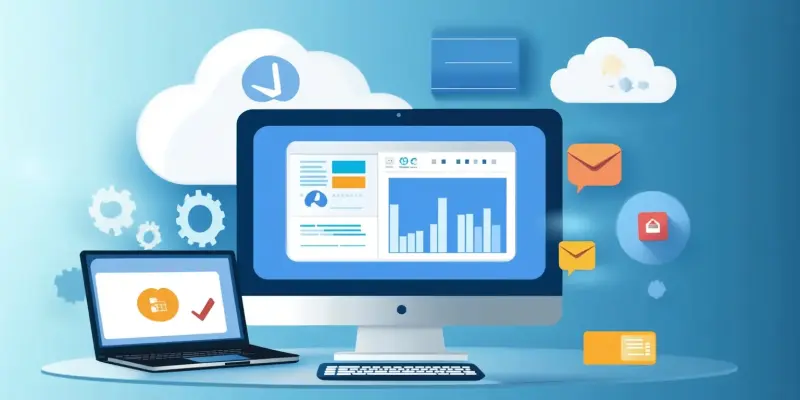
In today’s fast-paced business environment, C-suite executives are constantly seeking ways to enhance operational efficiency and drive growth. One of the most effective tools at their disposal is cloud-based ERP (Enterprise Resource Planning) solutions. These systems integrate various business processes and provide real-time insights that are crucial for making informed decisions. By addressing the pressing challenges faced by executives, cloud ERP solutions can transform the way businesses operate, ultimately leading to sustainable growth and increased profitability. This article delves into the importance of these systems, with a focus on Microsoft Dynamics 365 Business Central, in addressing the critical challenges faced by executives and driving strategic business success.
Key Challenges Faced by C-Suite Executives
C-suite executives often grapple with data silos and fragmentation, which hinder cross-departmental collaboration and real-time decision-making. Disparate systems create isolated pockets of information, making it difficult to achieve a unified view of the organization’s operations. This lack of integration can lead to inefficiencies and missed opportunities, as executives are unable to access the comprehensive data needed to make well-informed decisions. Additionally, the process of consolidating information from various sources can be time-consuming and error-prone, further complicating the decision-making process.
Ensuring compliance and safeguarding sensitive data are significant concerns for CFOs and CIOs. Fragmented systems complicate the task of maintaining regulatory compliance and protecting against security risks. With different departments using their own systems and processes, it can be challenging to ensure that all data is securely managed and that compliance requirements are consistently met. This can expose organizations to potential legal and financial penalties, as well as damage their reputation. Furthermore, the increasing complexity of regulatory requirements adds to the burden on executives, who must continuously monitor and adapt to new rules and guidelines.
Why Cloud ERP is a Game-Changer for Executives
For executives focused on finance, operations, and growth, cloud ERP systems offer real-time visibility, automation, and scalability. These features significantly improve decision-making and overall business success. Modern cloud ERP systems, equipped with AI, provide dashboards that deliver real-time insights into company financials, operations, sales, and customer interactions. This instant access to data allows executives to identify trends, spot inefficiencies, and make proactive decisions that drive growth.
With live data access, executives can proactively address inefficiencies and revenue leaks. Predictive analytics and automated reporting further enhance well-informed decision-making. By leveraging advanced algorithms and machine learning, cloud ERP systems can predict future trends and provide actionable insights, enabling executives to make strategic decisions with confidence. Additionally, the automation of routine tasks frees up valuable time for executives to focus on high-value activities, such as strategic planning and innovation.
Enterprise-Wide Data Access & Unified Collaboration
Cloud ERP solutions eliminate data silos, providing a unified source of truth for the entire organization. Centralized access to financial, operational, and supply chain data reduces IT dependency and fosters improved collaboration across departments. With all data housed in a single system, employees can easily access the information they need, when they need it, without having to rely on IT support. This not only improves efficiency but also empowers employees to take ownership of their work and contribute to the organization’s success.
Integration with tools like Microsoft Teams in Business Central enhances communication and teamwork, enabling seamless cross-departmental collaboration. By integrating familiar tools and platforms, cloud ERP systems ensure that employees can work together effectively, regardless of their location. This is particularly important in today’s remote and hybrid work environments, where collaboration and communication are essential for maintaining productivity and morale. Furthermore, the ability to access real-time data and collaborate on projects in real-time can lead to faster decision-making and more agile responses to changing market conditions.
Enhanced Financial Oversight & Regulatory Compliance
Cloud ERP systems offer precise financial control through automated compliance tracking for tax, regulatory, and audit requirements. By automating these processes, organizations can ensure that they consistently meet compliance requirements, reducing the risk of penalties and legal issues. AI-powered forecasting aids in managing cash flow, accounts payable, and receivables, ensuring robust financial oversight. This not only improves financial stability but also provides executives with the insights they need to make strategic decisions about resource allocation and investment.
Support for multi-entity and multi-currency operations is particularly valuable for global businesses, simplifying the management of complex financial structures. By consolidating financial data from multiple entities and currencies into a single system, cloud ERP solutions provide a comprehensive view of the organization’s financial health. This enables executives to identify opportunities for cost savings, streamline financial reporting, and ensure that all entities operate in compliance with local regulations. Additionally, the ability to manage diverse financial operations within a single system reduces the administrative burden on finance teams, allowing them to focus on more strategic tasks.
AI & Automation to Boost Operational Efficiency
Automation of repetitive tasks minimizes manual errors and optimizes workflows across finance, HR, and supply chain processes. By automating routine tasks, cloud ERP systems reduce the risk of human error and improve overall efficiency. This not only saves time but also allows employees to focus on more valuable activities, such as strategic planning and innovation. Furthermore, automated processes can be easily scaled to accommodate changing business needs, ensuring that organizations remain agile and responsive to market conditions.
AI alerts and predictive analytics help preempt operational bottlenecks, allowing executives to focus on strategic, high-value decisions. For instance, cloud ERP can automatically flag financial discrepancies or detect supply chain delays, ensuring smoother operations and quicker resolution of issues. By leveraging advanced analytics and machine learning, cloud ERP systems can identify potential problems before they escalate, enabling organizations to take proactive measures to mitigate risks. This not only improves operational efficiency but also enhances overall business resilience.
Cost Efficiency & Scalability for Growth
In the fast-paced business world today, C-suite executives are always on the lookout for ways to improve operational efficiency and drive growth. One of the most powerful tools they can use is cloud-based ERP (Enterprise Resource Planning) solutions. These systems bring together various business processes and provide real-time insights that are essential for making well-informed decisions. By tackling the pressing challenges executives face, cloud ERP solutions can revolutionize business operations, leading to sustainable growth and boosted profitability. This article explores the significance of these systems, specifically highlighting Microsoft Dynamics 365 Business Central, in overcoming the critical obstacles executives encounter and propelling strategic business success. With features like financial management, sales automation, and customer service, Dynamics 365 Business Central offers comprehensive tools that simplify business processes and enhance productivity. This ultimately contributes to a more agile and resilient enterprise poised for long-term success.