

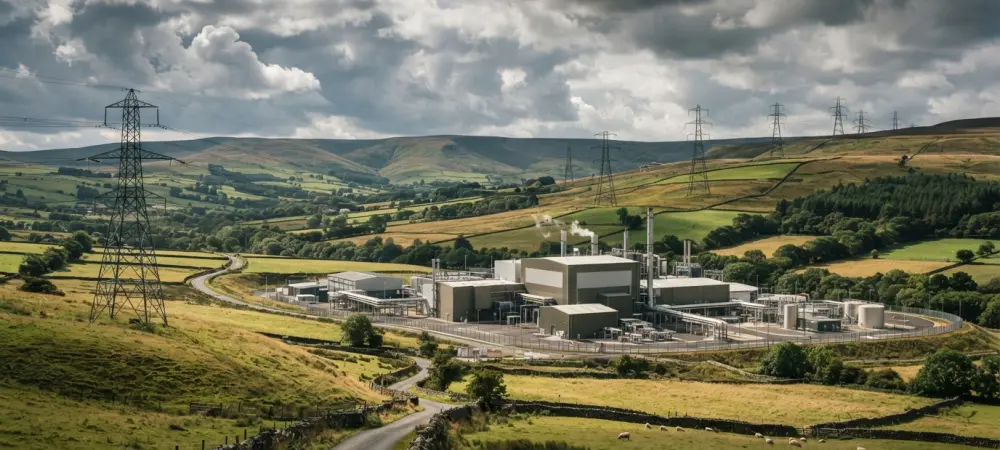
The United Kingdom stands at a technological crossroads as the 2026 Autumn Budget unveils a comprehensive data center covenant designed to reconcile the insatiable appetite for artificial intelligence with the rigid physical constraints of a legacy electrical grid. This policy shift, spearheaded by the Chancellor, represents a calculated gamble to trade priority infrastructure access for social and economic concessions from global technology giants. By elevating data centers to the status of critical national infrastructure, the government intends to solve a perennial bottleneck that has left dozens of multi-billion-dollar projects languishing in planning queues for years. This strategic realignment aims to transform the nation into a global hub for high-capacity computing while addressing the environmental and local concerns that have previously stalled industrial growth.
The Strategic Framework for AI Infrastructure
Scaling to Meet the 6GW Ambition
The current landscape reveals an aggressive push to secure 6 gigawatts of AI-ready capacity by 2030, a goal that requires a massive increase from existing levels. Government strategists argue that this expansion is not merely an economic preference but a strict requirement for national sovereignty, ensuring that sensitive data from the NHS and the armed forces remains within domestic jurisdictions. To facilitate this, the Department for Business, Innovation, Science and Trade has identified a specific category of strategic developments that will receive fast-track consideration. These projects are characterized by their immense scale, often exceeding 100 megawatts, and are designed to provide the foundational compute power necessary for next-generation generative models. This acceleration moves toward a centralized model of infrastructure management where the state exerts greater control over the location and utility consumption of private facilities. The trend suggests a pivot away from the fragmented planning of the past in favor of a directive approach that prioritizes nationwide connectivity over regional autonomy. This shift is particularly visible in the way grid connections are now being treated as a finite national resource to be allocated based on strategic value rather than the chronological order of application. Moreover, the focus on large-scale facilities aims to consolidate energy demand into areas where the grid can be most efficiently reinforced, reducing the overall complexity of national power distribution.
The Five Tests: A Model for Strategic Development
To manage this transition effectively, the government has introduced a five-fold criteria system that acts as a gatekeeper for expedited grid access. Under this framework, a developer must first prove economic responsibility by funding a disproportionate share of the necessary energy infrastructure upgrades, thereby insulating domestic consumers from rising utility costs. This is followed by a requirement for tangible community investment, which mandates that projects provide direct financial support for local area improvements, such as public parks or transit enhancements, rather than relying solely on business tax revenue.
Furthermore, the standards for environmental stewardship and labor growth demand that facilities implement advanced cooling technologies to minimize water usage while creating high-skill apprenticeship programs. The final test focuses on national security, requiring developers to harden their digital defenses and provide guarantees regarding data residency within the UK. This “quid pro quo” approach attempts to turn large-scale industrial projects into engines of social mobility and environmental progress, though the effectiveness of these requirements remains a point of intense scrutiny among policy analysts. By linking planning permissions to these social outcomes, the state seeks to build a broader consensus for industrial expansion.
Perspectives from Industry Leaders and Advocates
The reaction from the technology sector has been one of cautious pragmatism, with many executives noting that policy announcements do not inherently solve the physical shortages of transmission lines and substations. While the industry welcomes the recognition of data centers as vital infrastructure, there is a pervasive concern that the government is overpromising on grid priority while the actual construction of electrical hardware remains years behind schedule. Industry leaders argue that without a massive, state-backed investment in the physical grid, the covenant remains a theoretical framework rather than a practical solution. They emphasize that the speed of AI evolution waits for no one, and any delay in physical infrastructure could cede the UK’s competitive advantage to more agile European neighbors.
On the other side of the debate, social advocacy groups and legal organizations like Foxglove have categorized the covenant as a non-binding gesture that allows corporations to circumvent environmental regulations. Critics highlight the fact that the agreement is largely voluntary, lacking the legal teeth to ensure that promised local jobs or carbon-neutral goals are actually met once construction begins. This skepticism is bolstered by the historical tendency of large-scale tech projects to consume massive amounts of energy while employing relatively small permanent staffs. This has led to accusations that the social contract is being signed on behalf of communities that have little say in the process. Consequently, the tension between economic necessity and local accountability continues to define the discourse surrounding digital expansion.
The Future of UK Data Sovereignty and Grid Resilience
Looking ahead toward 2030, the tension between AI development and energy resilience is expected to drive a surge in unconventional power solutions. Developers are increasingly exploring on-site generation, including natural gas turbines and small modular reactors, to maintain uptime in regions where the grid is nearing its maximum capacity. While this ensures the reliability needed for high-stakes AI training, it presents a significant obstacle to the nation’s decarbonization targets, potentially setting the stage for a conflict between industrial growth and climate commitments. The demand for “always-on” power is forcing a rethink of how green energy is integrated into the industrial heartlands of the country.
Regional dynamics are also shifting as authorities in Scotland and other areas move to pause developments until national guidelines can be refined to prevent the kind of grid overheating observed in neighboring regions. This suggests that the UK may see a more geographically dispersed strategy where data centers are incentivized to move away from the saturated Southeast toward northern regions with better access to renewable energy sources. Such a relocation would align with the government’s reindustrialization goals, yet it requires substantial upgrades to the long-distance transmission network. The success of this regional