

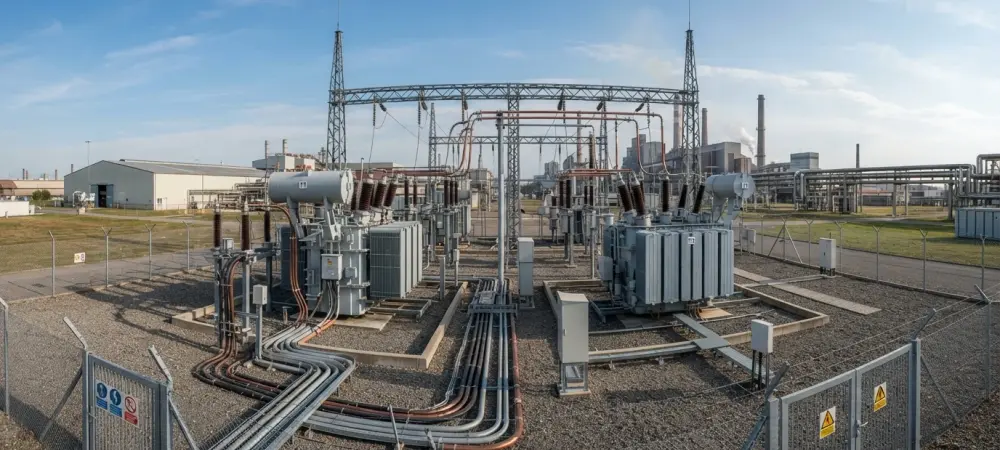
The insatiable hunger of modern artificial intelligence for electricity has pushed global infrastructure to a breaking point, forcing technology giants to abandon their reliance on traditional utility grids in favor of massive, localized power plants. This rapid expansion of generative AI is colliding with the physical limits of an aging electrical architecture, creating a fundamental shift in how digital infrastructure is powered. As data centers transition from passive consumers of municipal energy to active, on-site producers, a critical regulatory battleground has emerged. The trend toward “behind-the-meter” power generation is no longer just a technical workaround for grid congestion but a complex legal pivot that challenges existing environmental frameworks and municipal oversight.
The Rise of On-Site Generation and “Mobile” Power
Adoption Statistics and Grid Friction
Data center operators are increasingly bypassing traditional utility connections, which currently face backlog delays of several years, in favor of immediate on-site solutions that offer autonomy. This movement is a direct response to the massive scale of modern AI facilities that require hundreds of megawatts to remain competitive in a high-stakes market. When a regional grid cannot provide the necessary load within a commercial timeframe, companies are forced to become their own power companies. This trend is characterized by a pivot toward modular, trailer-mounted gas turbines that act as a bridge to fill the “power gap” created by infrastructure stagnation and the slow pace of utility-scale interconnection.
Current market data indicates that the reliance on these modular solutions is accelerating as the lead times for permanent substation upgrades extend into the late 2020s. While these systems were once reserved for emergency backup or peak shaving, they are now being deployed as primary baseload sources. This shift reflects a broader industry realization that waiting for the traditional grid is no longer a viable business strategy for the most advanced compute clusters. Consequently, the deployment of industrial-scale turbines has become a standard line item in the fast-track development of the latest artificial intelligence infrastructure.
Real-World Application: The xAI Colossus Case Study
The deployment of 27 gas-fired turbines at the xAI Colossus project in Southaven, Mississippi, serves as a primary example of using “temporary” infrastructure to fast-track massive operations. This facility was designed to support the Colossus 2 data center, which demands nearly 500 megawatts of capacity to function at peak performance. By utilizing high-capacity, trailer-mounted units like the GE TM 2500, the project created a makeshift industrial power plant capable of rivaling the output of small utility stations. This strategy allowed the operator to circumvent the multi-year bureaucratic hurdles typically associated with traditional grid upgrades and permanent power plant construction.
The technical configuration of this site demonstrates the sheer scale of modern on-site generation, utilizing a mix of SMT-130 and M35 turbines alongside the GE units. However, this “behind-the-meter” strategy has sparked significant controversy regarding the environmental footprint of such a dense concentration of combustion equipment. Critics argue that the facility operates as an independent power producer without the same level of public scrutiny or environmental permitting required of permanent utility providers. This case has become a focal point for the industry, illustrating both the potential of mobile generation to solve immediate energy needs and the legal risks inherent in bypassing traditional permitting channels.
Expert Insights on Regulatory Interpretations
Legal and industry experts emphasize that the physical portability of power equipment does not necessarily provide a shield against federal environmental regulations. Elizabeth K. Whitney and Neil Osnato have pointed out that judicial interpretations are increasingly focusing on the function and duration of use rather than the presence of wheels on a turbine. If a unit is not self-propelled and performs its primary industrial function while remaining stationary for extended periods, it frequently falls under federal “stationary source” definitions. This distinction is critical because stationary sources are subject to far more stringent emissions monitoring and permitting requirements than mobile sources like trucks or ships. Judicial opinions from the U.S. District Court for the Northern District of Mississippi suggest that state-level agency exemptions may not provide ultimate protection from federal Clean Air Act litigation. In recent proceedings, the court indicated that a letter of exemption from a state agency, such as the Mississippi Department of Environmental Quality, does not override federal mandates if the facility meets the criteria for a major stationary source of pollution. This development highlights a growing disconnect between state-level attempts to attract high-tech investment and federal requirements to protect air quality. Companies that rely solely on state-level assurances may find themselves vulnerable to private lawsuits initiated by community organizations or environmental advocacy groups.
Furthermore, national security experts and the Department of Justice have noted the growing tension between environmental compliance and the strategic necessity of maintaining a lead in the global AI race. Some federal perspectives suggest that the urgency of developing domestic AI capabilities might eventually conflict with local environmental standards, potentially leading to a clash between national defense priorities and traditional regulatory frameworks. While national security can sometimes influence regulatory leniency, the courts have remained wary of granting a “free pass” to private companies based on the perceived importance of their technology. This creates an unpredictable legal landscape where technological speed and legal stability are in constant competition.
The Future of On-Site Power and Environmental Compliance
The Environmental Protection Agency is moving toward a formalized “temporary-turbine” subcategory set for implementation this year, in 2026, which will impose strict limits on these systems. Under this new framework, a turbine can only be classified as temporary if it adheres to a strict 24-month residence limit and meets specific nitrogen oxide emission caps. This regulation is designed to close the “loophole” where companies claim portability to avoid the permanent installation of Best Available Control Technology. This shift marks the beginning of an era where the flexibility of modular power must be balanced with the same level of environmental accountability as a traditional brick-and-mortar power plant. Future developments in the sector will likely see a move away from unregulated “temporary” setups toward fully permitted, modular microgrids that incorporate advanced pollution controls. The industry is beginning to recognize that while on-site generation offers a solution to grid delays, it introduces operational risks that could result in forced shutdowns or heavy civil penalties if compliance is ignored. To mitigate these risks, developers are increasingly looking at hybrid systems that combine natural gas turbines with battery storage and carbon capture technology. This evolution toward “green modularity” represents the next phase of data center infrastructure, where sustainability is integrated into the site planning from the first day of development.
The necessity of balancing rapid AI development with long-term environmental sustainability is becoming a core competency for data center developers. As community awareness grows, the “move fast and break things” mentality is being replaced by a more measured approach to industrial-scale energy production. Facilities that fail to account for the impact of their emissions on local air quality face not only legal setbacks but also significant reputational damage that can hinder future expansion. Therefore, the path forward for the industry involves a transparent permitting process that acknowledges the permanence of these power solutions, even if they arrive on the back of a trailer.
Summary and Forward-Looking Conclusion
The landscape of data center power was fundamentally reshaped as courts and federal agencies harmonized their definitions of stationary and mobile energy sources. The era of utilizing regulatory loopholes for portable power equipment largely came to an end when legal precedents established that functional use outweighed physical portability. Developers who successfully navigated this transition were those who integrated comprehensive air-quality permitting into their earliest infrastructure plans. This proactive stance allowed them to avoid the costly litigation and operational pauses that plagued earlier “fast-track” projects. It became clear that the strategic value of artificial intelligence did not provide an automatic exemption from established environmental standards.
The industry moved toward the adoption of permitted modular microgrids, which provided a reliable alternative to the congested traditional grid while maintaining compliance with federal nitrogen oxide caps. This shift improved the relationship between data center operators and their host communities, as transparency in emissions reporting became a standard practice. Large-scale on-site generation remained a vital tool for growth, but it was no longer viewed as a temporary workaround. Instead, it was recognized as a permanent industrial responsibility that required the same rigor as any other utility-scale operation. By prioritizing environmental accountability, the tech sector ensured that the power required for the future of intelligence did not come at the expense of local health and safety.