

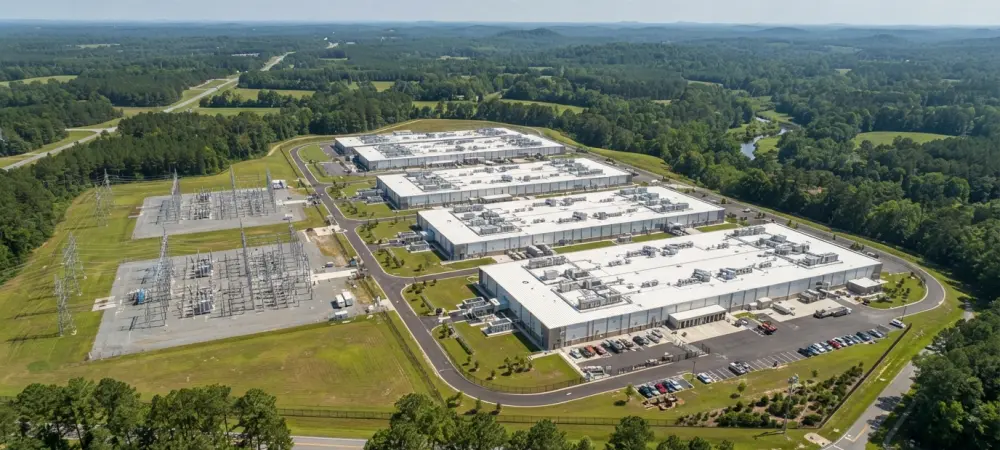
Transitioning from the volatile cryptocurrency market to stable AI infrastructure provides AIB with a twelve-year guaranteed lease term from its primary tenant. This strategic pivot reflects a broader industry realignment where digital infrastructure providers are moving away from the unpredictability of digital assets toward the high-demand world of generative artificial intelligence and high-performance computing. Situated on a 16-acre parcel in Moore, South Carolina, the facility known as CLT1 represents a significant redevelopment of what was once a specialized Bitcoin mining operation. AIB, previously operating under the name BlockchAIn Digital Infrastructure, de-energized its local cryptocurrency mining rigs in June 2024 to prepare for this billion-dollar transition. By repurposing an existing industrial footprint, the company aims to meet the intensive cooling and power requirements of its primary client, the Amsterdam-based AI cloud provider Nebius, while navigating a complex regional landscape for data development.
Regional Integration: Technical and Economic Impacts
The proposed infrastructure for the CLT1 project is engineered to support approximately 50MW of critical IT capacity, underpinned by a robust long-term agreement for 65MW of utility supply from local providers. This level of power density is essential for the advanced GPU clusters required by Nebius to facilitate massive scale machine learning tasks and neural network training. According to the development timeline, AIB intends to deliver two distinct 25MW data halls, with the initial phase scheduled for completion by the fourth quarter of 2027. This phased approach allows the developers to manage the logistical complexities of installing liquid cooling systems and specialized electrical distribution networks tailored for AI workloads. Unlike traditional server farms, these high-performance environments require significant upfront engineering to handle thermal loads far exceeding those of legacy mining operations. This transition effectively leverages existing substation connections to drastically reduce the time-to-power metric.
Beyond the technical specifications, the CLT1 redevelopment carries a substantial economic footprint, with total investment between AIB and Nebius projected to reach $1.2 billion. This capital injection is expected to revitalize the local industrial corridor by creating at least 28 permanent, full-time positions for technicians, engineers, and facility managers. Furthermore, the development agreement includes a commitment to Spartanburg County in the form of $12.6 million in community benefit payments distributed over the twelve-year lease term. These funds are designated to support local infrastructure and public services, offering a tangible incentive for the region to support large-scale digital hubs. The scale of this investment demonstrates the high valuation of prime power-connected land in the technology market. By transforming a dormant mining site into a productive AI campus, the project serves as a blueprint for how legacy industrial properties can be transitioned into the core infrastructure of the digital economy.
Success for the CLT1 facility required navigating a rigorous local regulatory environment, particularly after Spartanburg County implemented a one-year moratorium on new data center developments. The project moved forward by securing an exemption based on its industrial brownfield status, setting a precedent for future repurposing efforts. This transition illustrated a pivotal industry trend where “time-to-power” emerged as the most valuable commodity in the race for artificial intelligence supremacy. Enterprises that successfully secured existing electrical capacity found themselves years ahead of competitors waiting for new grid interconnections. For developers, the lesson was clear: identifying underutilized sites with established utility access provided a faster route to market than greenfield developments. The sector prioritized environmental mitigation and proactive community engagement to maintain necessary public support throughout the construction phase. By establishing shared economic benefits, the initiative created a sustainable path for expansion.