

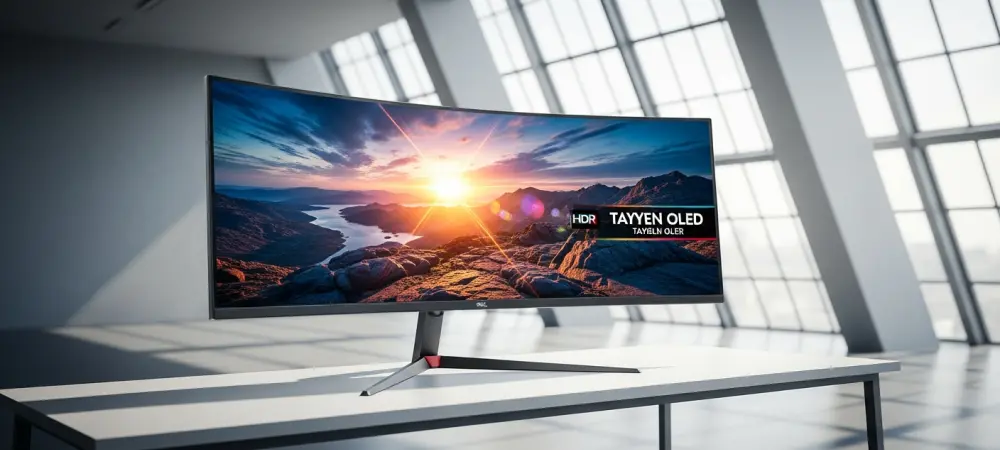
The long-standing architectural struggle between the ink-like shadows of organic light-emitting diodes and the high-octane brilliance of localized backlighting has finally reached a definitive resolution. For years, the gaming community remained divided, forced to choose between the unmatched contrast ratios of OLED panels and the searing, daylight-piercing brightness of Mini-LED systems. This binary choice has long been the primary friction point for enthusiasts seeking the ultimate visual experience. However, a revolutionary shift toward multi-stack architecture is currently dismantling these traditional barriers, offering a synthesis of performance that was once deemed physically impossible within the constraints of organic materials.
This technological leap is far more than a minor iterative update; it represents the most significant advancement in display engineering since the commercial integration of Quantum Dots. By fundamentally reimagining the internal structure of the panel, manufacturers have addressed the twin Achilles’ heels of the medium: peak luminance and long-term durability. The transition to tandem OLED technology is effectively future-proofing the high-end monitor market, ensuring that the next generation of visual media can be displayed with the intensity it requires without the looming fear of permanent image retention or aggressive dimming.
The following analysis explores the industry-wide pivot from traditional single-stack configurations to the more robust multi-stack designs that are currently setting new benchmarks for quality. By examining the emergence of penta-stack panels and the successful implementation of this technology in flagship hardware like the Alienware AW3426DW, it becomes clear how these developments are reshaping the expectations of both competitive gamers and creative professionals. As the market moves away from compromised solutions, the industry is entering a “post-limitation” era that promises to redefine the standards of visual fidelity for the coming decade.
The Evolution of Multi-Layer Display Architecture
Market Growth and the Shift Toward High-Luminance Standards
Recent industry data highlights a dramatic surge in consumer demand for display panels that can reliably exceed the 1,000-nit threshold without compromising the health of the individual pixels. In the current landscape of 2026, standard high-dynamic-range content has evolved to require greater sustained brightness to accurately depict natural lighting and specular highlights. The current roadmap through 2028 shows a decisive industry pivot toward “penta-stack” configurations, which utilize five distinct layers of organic material to achieve the necessary headroom for modern HDR10+ and Dolby Vision standards.
The adoption of these tandem structures is not merely a play for higher numbers on a specification sheet; it is a calculated response to the logistical challenges of organic panel longevity. Statistics from manufacturing centers indicate that by distributing the electrical current across multiple layers, the thermal stress on any single layer is significantly reduced. This architectural efficiency has directly contributed to a sharp decline in warranty claims and return rates related to burn-in. As the technology matures, the ability to share the workload across a tandem stack has allowed manufacturers to push the boundaries of performance while simultaneously extending the estimated lifespan of the hardware beyond previous industry expectations.
Furthermore, the shift toward these high-luminance standards is being driven by the diversification of the user base. Modern monitors are no longer confined to dark basement gaming setups; they are increasingly found in brightly lit home offices and professional studios where ambient light can easily wash out a standard OLED. By achieving typical brightness levels that rival traditional liquid crystal displays, tandem OLED has effectively removed the “dark room requirement” that previously limited the growth of organic display technology in the broader consumer market.
Real-World Implementation: The Alienware AW3426DW Milestone
The Alienware AW3426DW has emerged as a primary case study for the successful integration of these advanced architectures into a consumer-ready product. Utilizing a sophisticated five-layer tandem OLED stack, this monitor has achieved a staggering 1,300-nit peak brightness, a feat that sets a new high-water mark for the 34-inch ultrawide category. This implementation proves that the theoretical benefits of tandem stacking can be translated into a tangible, high-performance experience that remains stable under heavy use. The device does not just reach these peaks momentarily; it maintains a level of consistency that prevents the distracting “flicker” often associated with aggressive automatic brightness limiters.
Beyond the raw power of the illumination, the integration of a refined RGB stripe subpixel layout alongside the tandem technology has addressed one of the most persistent complaints in the OLED sector: text fringing. Historically, the unconventional subpixel arrangements of organic panels made them less than ideal for productivity tasks, as letters often appeared blurry or surrounded by chromatic artifacts. By refining the physical layout of the pixels, the AW3426DW provides the crispness required for professional document editing and web development. This transition ensures that the monitor serves as a “master-of-all-trades” tool, equally capable of rendering a chaotic battlefield or a complex spreadsheet with perfect clarity.
Manufacturer packaging of these panels has also seen a significant evolution in secondary hardware components. To support the increased potential of the tandem stack, engineers have integrated high-efficiency active cooling systems and state-of-the-art anti-reflective coatings that reduce glare by approximately 30%. The success of the AW3426DW indicates that the market is no longer satisfied with panels that only excel in a single metric; instead, the trend is moving toward comprehensive solutions where every aspect of the display—from brightness to ergonomics—is optimized for a seamless user experience.
Industry Expert Perspectives on Tandem Integration
Specialists in the field of display physics emphasize that the move to tandem OLED is essentially an exercise in “de-stressing” the organic molecules that form the foundation of the technology. By stacking multiple light-emitting layers on top of one another, the device can produce the same amount of light as a single-stack panel but with significantly less voltage applied to each individual layer. Experts note that this reduction in photonic and thermal strain is the key to unlocking sustained brightness. This allows for a more natural representation of light, where the sun reflecting off a metallic surface in a game or movie looks convincingly bright without triggering the aggressive safety dimming that plagued previous generations of hardware.
Hardware engineering thought leaders also view the rapid shift toward tandem stacks as a strategic defensive move against the looming competitive threat of Micro-LED technology. While Micro-LED promises infinite contrast and even higher brightness, its manufacturing complexity and astronomical costs remain prohibitive for the average consumer. The industry consensus is that by doubling down on multi-stack organic panels, manufacturers are buying themselves the time needed to perfect the next generation of inorganic displays while providing users with an experience that is 95% of the way toward the ultimate ideal.
Furthermore, the “Dolby Vision Advantage” has become a central talking point among industry analysts. Multi-stack panels provide the necessary physical headroom for dynamic metadata to function as intended, rather than being limited by the hardware’s inability to reach certain luminance targets. Experts highlight that when a display has a 1,300-nit ceiling, it can accurately map the subtle gradations of a high-quality HDR master without “clipping” the brightest details. This capability is transforming the monitor from a simple output device into a professional-grade reference tool, blurring the lines between enthusiast gaming gear and the high-end equipment used in color grading suites.
Future Outlook and Market Implications
Looking toward the immediate future, the expansion of tandem stack technology is expected to move beyond the current 1440p ultrawide standard and into the realms of 4K and 5K2K ultra-high-resolution displays. As manufacturing yields for these complex multi-layer panels continue to improve, the industry will likely see a proliferation of high-density screens that offer unparalleled sharpness alongside the brightness benefits of the tandem architecture. This progression will be particularly beneficial for creators who require both the color accuracy of an organic display and the high resolution necessary for 8K video editing or complex architectural rendering.
While the benefits to image quality and durability are undeniable, the high complexity of the manufacturing process remains a significant hurdle that will likely keep these monitors in the enthusiast price bracket for the near term. The precision required to align five layers of organic material across a large surface area is immense, and any deviation can result in a defective panel. However, as production techniques are refined between 2026 and 2029, a “trickle-down” effect is anticipated. This will eventually see tandem OLED technology replacing standard single-stack panels in mid-range laptops and even mobile devices, fundamentally raising the floor for display quality across the entire consumer electronics spectrum.
The broader impact of this trend is the creation of a unified hardware category that serves both the professional and the gamer with equal proficiency. The historical divide between “work” monitors and “play” monitors is rapidly evaporating as tandem OLED provides the speed, color accuracy, and brightness required for both worlds. This convergence is likely to lead to a market where versatility is the primary selling point, and the “compromise” of choosing one type of panel over another becomes a relic of the past. As we move forward, the focus will shift from simply making screens brighter to making them more intelligent and responsive to the specific needs of the user’s environment and content.
Conclusion: A New Standard for Visual Fidelity
The transition to tandem OLED successfully addressed the three major hurdles that previously limited the dominance of organic displays: insufficient brightness, poor text clarity, and rapid panel degradation. By moving away from the fragile single-stack architecture of the past, the industry established a more resilient and capable foundation for high-performance visuals. The implementation of multi-layer technology allowed for a dramatic increase in luminance while simultaneously de-stressing the underlying materials, resulting in a product that offered both immediate visual impact and long-term reliability.
The success of flagship devices like the AW3426DW proved that the “post-compromise” era was not a theoretical goal but a practical reality. These monitors demonstrated that extreme speed and breathtaking image quality no longer had to trade blows, as the refined subpixel layouts and advanced cooling systems supported the raw power of the tandem stack. This shift encouraged a broader range of users, including professional designers and competitive eSports athletes, to finally embrace OLED technology as a viable daily-driver solution that could handle the rigors of diverse workloads. Ultimately, the shift toward tandem OLED was recognized as a fundamental transformation in the definition of a high-performance visual experience. As the technology began to permeate the wider market, it set a new baseline for what consumers expected from their displays, moving beyond simple resolution increases and focusing on the quality of light and the longevity of the hardware. The move toward multi-stack architecture ensured that the future of digital media would be seen with the clarity and intensity it deserved, marking a definitive victory for display engineering over the inherent limitations of organic matter. For those seeking the pinnacle of visual fidelity, the transition was not merely a trend but a permanent elevation of the medium.