

The global hunger for artificial intelligence has fundamentally altered the economic landscape of digital memory, turning what was once a commodity into a high-stakes strategic asset. As data centers expand at an unprecedented rate, the underlying components that power them—Dynamic Random-Access Memory and NAND flash—have transitioned from surplus to scarcity. This shift is not merely a seasonal fluctuation but a profound restructuring of the tech economy that forces every sector, from consumer electronics to enterprise cloud services, to re-evaluate its procurement strategies toward more sustainable models.
This analysis explores the catalysts behind the current pricing surge, examining how the demand for high-performance hardware creates a supply vacuum for traditional devices. By analyzing current market data and listening to the warnings of industry titans, a clear picture emerges of a market that is no longer serving the many, but rather the powerful AI infrastructure that defines the modern era. The transition toward this high-cost environment marks a pivot point where market stability depends on the industry’s ability to balance innovation with manufacturing capacity.
Quantifying the Shift: Market Data and Industrial Drivers
Projected Price Volatility and Financial Growth Trends
The financial reality of the memory market has taken a sharp upward turn as contract negotiations reveal a looming supply crunch. Analysts currently project that DRAM contract prices will climb by 20% to 30% in the third quarter of 2026 alone, while NAND flash costs are set for a more aggressive leap between 35% and 40%. These figures represent a massive departure from historical norms, signaling that the era of inexpensive storage has come to a definitive close for the foreseeable future. Corporate earnings reports already reflect this aggressive pricing environment, with companies like ADATA recording a staggering 212% year-over-year revenue increase. This growth is not driven by a simple increase in volume but by the rising value of every gigabyte produced as manufacturers capitalize on limited inventory. If current trajectories hold, the industry could witness a cumulative price increase of 50% by the end of the current fiscal year, placing immense pressure on hardware manufacturers and retail consumers alike.
AI Infrastructure and the Depletion of Consumer Supply
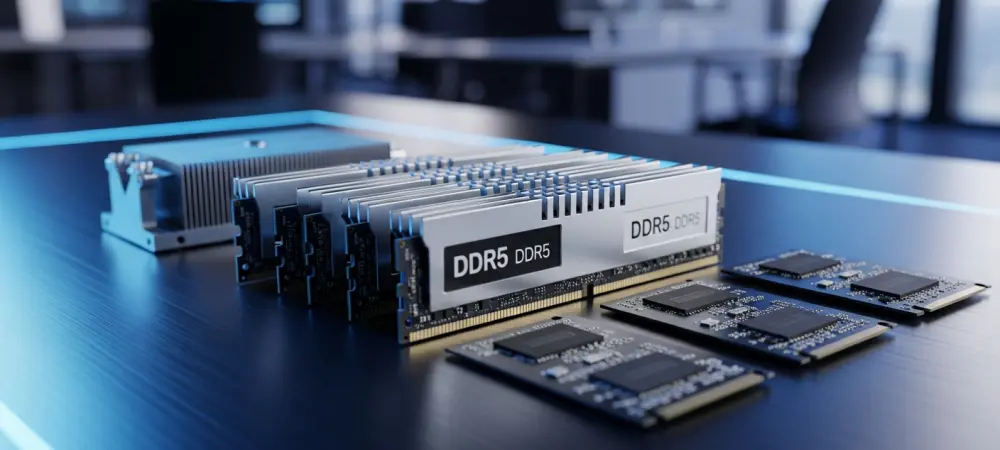
The “AI gold rush” has effectively hijacked the manufacturing capacity that once served the broader public. Major players like Samsung, SK Hynix, and Micron are increasingly redirecting their fabrication lines toward high-bandwidth memory and enterprise-grade storage solutions optimized for massive data processing. Consequently, the production of standard DDR5 modules and consumer SSDs has become a secondary priority, leading to a noticeable depletion of inventory in the retail sector as the year progresses.
This pivot in production strategy ensures that long-term supply contracts for AI-centric hardware are fulfilled first, leaving smaller vendors and individual buyers to navigate a dwindling pool of resources. As general-purpose memory becomes a byproduct of more lucrative AI ventures, the availability of affordable upgrades for personal computers is diminishing. The market is evolving into a two-tiered system where performance is guaranteed for those building the future of intelligence, while traditional users face rising costs and limited choices.
Voices of the Industry: Expert Insights on Market Volatility
Industry leadership has been vocal about the precarious nature of the current supply chain. ADATA Chairman Chen Li-bai recently issued a stark warning, describing the current state of the consumer market as “starving” due to the prioritization of server-grade components. He emphasized that the financial shift is not a temporary anomaly but a fundamental change in how silicon wafers are allocated across the globe. This sentiment suggests that the industry is bracing for a period where high margins in the AI sector will dictate the cost of every other electronic component.
Other tech giants, including leadership from AMD, Intel, and Lenovo, have corroborated these concerns, noting that supply shortages are impacting their own product roadmaps for the next several quarters. The consensus among these experts is that the memory market is undergoing a permanent transformation. They view the current volatility as a symptom of a larger technological shift where the sheer scale of AI requirements outpaces the physical ability to build new factories, resulting in a persistent imbalance between supply and demand.
Future Outlook: Navigating Scarcity and New Production Realities
Looking toward the horizon, the tightness in the memory market is expected to persist through 2028. While several major manufacturing facilities are currently under construction, the lead times for these projects are significant, and they may not scale quickly enough to meet the compounding demand of next-generation neural networks. The gap between production capacity and consumption remains wide, suggesting that the pressure on prices will remain a constant factor for the next several years.
The broader implications for the consumer landscape are significant, as personal electronics may see sustained price hikes and longer refresh cycles. This environment rewards manufacturers who can secure high-performance components early, but it creates a challenging landscape for budget-conscious buyers. The industry must now balance the high-performance needs of the AI sector against the stability of the traditional consumer market, a feat that requires both technological innovation and strategic manufacturing foresight to prevent total market stagnation.
Conclusion: Adapting to a High-Cost Memory Landscape
The memory market reached a pivotal turning point where the insatiable demand from the artificial intelligence sector fundamentally redirected global supply chains. Manufacturers prioritized high-margin components for data centers, which resulted in significant price hikes for DRAM and NAND flash across all sectors. This shift forced businesses and consumers to reconsider their purchasing timelines as the availability of affordable storage modules became increasingly scarce throughout the current year. Stakeholders recognized that navigating this era of scarcity required a move toward more disciplined inventory management and long-term procurement planning. The focus transitioned from reactive buying to securing strategic partnerships with major chipmakers to mitigate the impact of rising costs and supply volatility. Ultimately, the industry acknowledged that the high-cost environment was a permanent fixture of a world powered by AI, demanding a more resilient and forward-thinking approach to digital infrastructure and consumer hardware.