

In an era where global data consumption is skyrocketing—projected to reach 181 zettabytes by the end of this year, according to Statista—the pressure on digital infrastructure to keep pace while minimizing environmental impact has never been more critical. Edge data centers, designed to process data closer to its source, are emerging as a pivotal solution to reduce latency and support the explosive growth of IoT and AI applications. However, their rapid proliferation raises urgent questions about sustainability. This analysis explores the trend toward sustainable Edge data centers, spotlighting Hochtief’s innovative project in Herne, Germany, as a benchmark. It delves into market dynamics, industry perspectives, strategic shifts by key players, and the broader implications for a greener digital future.
The Emergence of Eco-Friendly Edge Data Centers
Surging Demand and Green Imperatives
The demand for data centers is surging, with Edge computing playing a central role in meeting the needs of real-time applications. Reports from IDC indicate that the global Edge data center market is expected to grow at a compound annual growth rate of over 20% from this year onward, driven by the expansion of 5G networks and smart devices. This growth is crucial for reducing latency in data processing, yet it comes with significant environmental costs. Traditional data centers consume vast amounts of energy, often relying on fossil fuels, contributing to substantial carbon emissions.
A parallel trend pushing the industry forward is the adoption of sustainable practices. Gartner highlights that over 60% of data center operators are now prioritizing green technologies, spurred by regulatory pressures and public demand for eco-conscious solutions. Innovations such as renewable energy integration and energy-efficient cooling systems are becoming standard, reflecting a broader commitment to mitigating the ecological footprint of digital infrastructure.
The environmental challenges posed by conventional data centers—high water usage for cooling and reliance on non-renewable energy—have catalyzed a shift toward sustainable designs. Timber construction, once unconventional in this sector, is gaining traction for its lower carbon impact compared to steel and concrete. This movement signifies an industry-wide recognition that technological advancement must align with planetary health.
Hochtief’s Herne Initiative: A Blueprint for Sustainability
In Herne, Germany, Hochtief is setting a new standard with a 2MW Edge data center, expandable to 4MW, under its Yexio brand. Located in the Funkenberg Quartier, a revitalized 14-hectare former industrial site near Herne railway station, this project exemplifies how digital infrastructure can harmonize with urban redevelopment. The facility incorporates groundbreaking sustainable features, including a timber frame that slashes embodied carbon and a direct water cooling system that minimizes energy use.
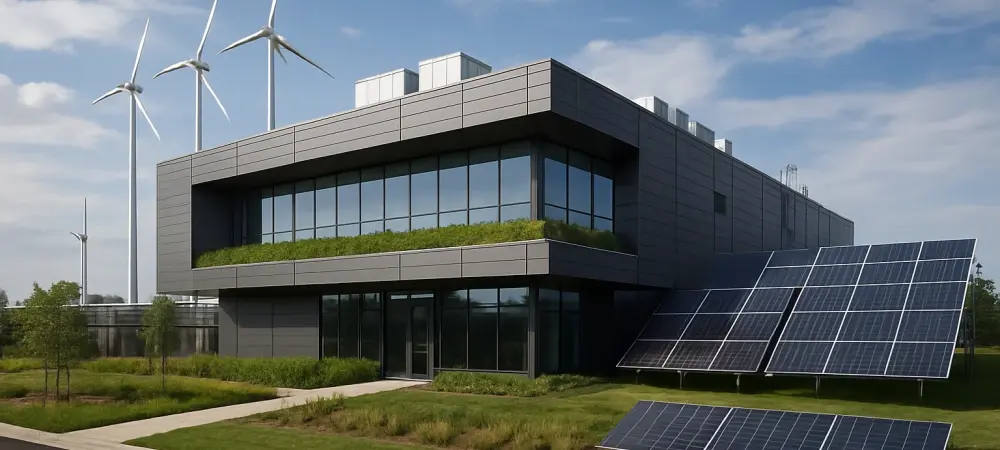
Additional eco-friendly elements distinguish this project further. Integration with the local district heating network allows excess heat from the data center to warm nearby buildings, while a living green wall enhances insulation and air quality. These features underscore a holistic approach to sustainability, blending technological efficiency with environmental stewardship.
Construction of the Herne data center began this year, with commissioning anticipated by mid-2027. This timeline aligns with Herne’s broader vision of becoming a smart city, where digital infrastructure supports economic growth without compromising ecological goals. Hochtief’s initiative serves as a tangible example of how localized data solutions can be both cutting-edge and conscientious.
Industry Perspectives on Digital and Environmental Synergy
Insights from key stakeholders reveal a unified vision for sustainable data infrastructure. Bernd Holtwick, CFO and COO of Hochtief PPP Solutions, emphasizes that projects like the one in Herne are vital for digital transformation. He notes that such facilities provide not only high-speed data processing but also future-proof solutions that adapt to evolving technological needs while prioritizing environmental impact.
Local leadership echoes this sentiment. Mayor Dr. Frank Dudda of Herne has highlighted the data center’s role in fostering knowledge-based workplaces and bolstering AI capabilities within a smart city framework. According to him, integrating advanced infrastructure into urban planning is essential for creating resilient, innovative communities that attract talent and investment.
Beyond individual voices, there is a growing industry consensus on the necessity of localized, eco-friendly data centers. As global data demands escalate, balancing technological progress with sustainability becomes non-negotiable. Experts across the sector advocate for designs that minimize resource consumption while maximizing operational efficiency, signaling a paradigm shift in how digital infrastructure is conceptualized and deployed.
Hochtief’s Bold Transition and the Horizon for Edge Data Centers
Hochtief, traditionally known as a construction giant, is undergoing a significant transformation into a data center developer and operator. Under the Yexio brand, in collaboration with Palladio Partners and Thomas-Krenn AG, the company plans to establish a network of 15 liquid-cooled, timber-frame Edge data centers across Germany. Active projects include facilities in Bad Lippspringe, Essen (already operational as of last year), Brake, Dorfen, and an inaugural site in Heiligenhaus near Düsseldorf.
This strategic pivot extends beyond national borders. Hochtief is expanding internationally, with developments underway in Austria, Switzerland, Spain, the US, and the UK through its newly formed division, Hochtief Data Center Partner Limited. This global outreach reflects an ambitious vision to tap into the burgeoning data center market, leveraging the company’s construction expertise to deliver sustainable, scalable solutions.
Looking ahead, the potential for Edge data centers is vast, with Hochtief eyeing a global pipeline of up to 5GW. However, challenges such as regulatory constraints and land acquisition complexities loom large. Despite these hurdles, the benefits—reduced carbon footprints, enhanced urban integration, and support for localized data needs—position sustainable Edge data centers as a cornerstone of future digital ecosystems, promising a model where technology and the environment coexist harmoniously.
Final Reflections on a Greener Digital Path
Looking back, Hochtief’s Herne project stands as a pioneering effort in sustainable innovation, blending timber construction and energy-efficient systems into a model that redefines Edge data centers. Its significance within the company’s broader strategy underscores a transformative moment for the industry, proving that digital infrastructure can address modern demands while curbing environmental harm. The initiative also mirrors a global shift toward greener practices in technology.
As a next step, industry stakeholders must accelerate the adoption of renewable materials and energy solutions in data center design. Governments and corporations alike should collaborate to streamline regulatory frameworks and incentivize sustainable projects. By investing in research and scalable models, the sector can ensure that the digital future remains both robust and responsible, paving the way for infrastructure that serves humanity without depleting natural resources.