

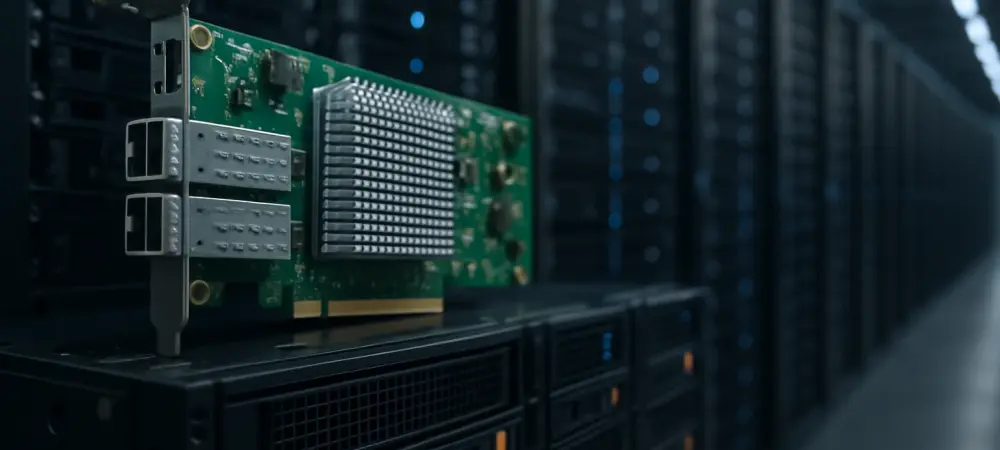
Imagine a sprawling data center managing billions of transactions daily, where every millisecond of delay can cost millions in lost opportunities. With global data traffic expected to triple over the next few years, the pressure on modern data centers to handle escalating workloads has never been more intense. Network efficiency stands as a cornerstone of scalability, yet traditional solutions like simply adding bandwidth or more network interfaces often fall short in addressing the core bottlenecks. This analysis dives into the rising trend of SmartNICs (Smart Network Interface Cards), exploring their transformative impact on data center performance, key benefits, real-world applications, expert insights, and their potential to shape the future of scalable infrastructure.
The Rise of SmartNICs: A Game-Changer for Data Centers
Market Growth and Adoption Trends
The adoption of SmartNICs is surging as data centers grapple with unprecedented demands. Industry reports project that the SmartNIC market will grow at a compound annual rate of over 20% from now to 2027, driven by the need for intelligent networking hardware. This growth mirrors the rapid expansion of data center infrastructure, with global spending on such facilities expected to increase significantly in the coming years to support cloud computing and AI workloads.
A closer look reveals that the demand for SmartNICs is fueled by their ability to address critical network challenges without requiring extensive overhauls. As enterprises scale operations, the volume of data processed daily necessitates hardware that can keep pace. SmartNICs, with their embedded processing capabilities, are becoming a go-to solution for major cloud providers and tech giants aiming to optimize performance.
This trend is not merely a passing phase but a response to a fundamental shift in IT priorities. With data centers increasingly central to business operations, the push for efficient, scalable networking solutions has positioned SmartNICs as an essential investment. Their growing presence in the market signals a broader acceptance of intelligent hardware as a key driver of operational success.
Real-World Applications and Case Studies
In practice, SmartNICs are proving their worth across diverse sectors. Major cloud service providers have integrated these advanced cards to manage the immense data flows of their hyperscale environments. For instance, a leading provider reported a significant reduction in server CPU load by offloading encryption and decryption tasks to SmartNICs, enabling smoother handling of secure transactions at scale.
Another compelling example comes from AI-focused enterprises, where SmartNICs optimize data-intensive workloads. By handling tasks like packet processing and load balancing directly on the hardware, these cards free up critical resources for training complex machine learning models. A notable case saw a tech firm achieve a 30% improvement in processing speed for AI inference tasks after deploying SmartNICs in their data centers.
These applications highlight the versatility of SmartNICs in addressing specific scalability challenges. Whether enhancing security protocols or accelerating computational tasks, their ability to tailor performance to unique needs makes them invaluable. Such real-world successes underscore why adoption continues to rise among organizations pushing the boundaries of data center capabilities.
Expert Perspectives on SmartNICs and Scalability
Industry leaders and network engineers are vocal about the paradigm shift SmartNICs represent. A prominent IT analyst recently noted that these cards are “redefining how data centers manage network traffic, offering a level of efficiency previously unattainable with traditional hardware.” This sentiment reflects a consensus on their role in meeting the demands of modern infrastructure.
However, experts also caution about hurdles in implementation. Integration with existing systems can pose complexities, particularly for organizations with legacy setups, while upfront costs may deter smaller players. Despite these challenges, a network engineer from a leading tech firm emphasized that “the performance gains and long-term savings far outweigh initial barriers, especially for high-traffic environments.”
These balanced views align with the pressing need for scalable solutions in large-scale operations. As data centers evolve to support emerging technologies, expert opinions reinforce that SmartNICs are not just a luxury but a necessity. Their insights paint a picture of a technology poised to become integral, provided adoption strategies address integration and cost concerns effectively.
Future Outlook: SmartNICs Shaping Data Center Evolution
Looking ahead, SmartNICs are expected to evolve with even greater programmability, allowing for more customized network management. Innovations may include tighter integration with AI frameworks, enabling real-time optimization of data flows for machine learning applications. Such advancements could further cement their role in cutting-edge data center designs.
The potential benefits are substantial, including significant cost savings by reducing the need for additional hardware and boosting performance through efficient traffic handling. Yet, challenges like compatibility with older systems remain a concern, as does the need for skilled personnel to manage increasingly sophisticated setups. Overcoming these issues will be crucial for widespread adoption. Broader implications suggest that SmartNICs could redefine data center architecture itself. By enabling more compact, efficient designs, they may support next-generation applications in industries ranging from healthcare to autonomous vehicles. As a catalyst for innovation, their influence could extend beyond technical performance to shape how businesses approach digital transformation in an interconnected world.
Key Takeaways and Call to Action
SmartNICs stand out for their ability to enhance network efficiency, alleviate CPU burdens, and deliver scalable performance without necessitating major infrastructure changes. Their importance in tackling contemporary data center challenges, particularly with the rise of AI and high-performance computing, cannot be overstated. These intelligent cards offer a strategic edge in managing the complexities of modern workloads.
Reflecting on their impact, it becomes clear that SmartNICs provide a vital solution at a time when traditional methods struggle to keep up with escalating demands. Their deployment marks a turning point in how scalability is approached, prioritizing efficiency over sheer capacity. This shift lays the groundwork for more resilient, adaptable data center environments. As a next step, IT leaders are encouraged to evaluate SmartNIC integration as a proactive measure to future-proof their operations. Exploring partnerships with vendors and investing in staff training emerge as practical actions to ease adoption. By staying ahead of the curve, organizations can ensure their infrastructure remains robust amidst the ever-growing digital landscape.