

The rapid turnover of consumer electronics has created a staggering surplus of high-performance hardware that often finds its way into landfills far too early in its functional life. While a typical smartphone is discarded after only three years, a groundbreaking initiative by researchers at the University of California San Diego and Google is challenging this cycle by transforming retired handsets into high-performance data center clusters. This trend addresses the urgent crisis of electronic waste and “embodied carbon”—the emissions generated during manufacturing—by proving that pocket-sized devices can power modern enterprise workloads. This shift explores the technical feasibility, economic shift, and environmental necessity of repurposing mobile hardware for a new generation of sustainable computing. By extending the operational life of these devices, the initiative aims to mitigate electronic waste and provide a viable alternative to traditional server hardware.
The Evolution of Mobile Hardware Into Computing Infrastructure
Growth Trends in Repurposed Performance and Sustainability
Current data reveals a surprising parity between aged mobile processors and modern server hardware. Research utilizing SPEC benchmarks indicates that the single-core performance of three-year-old mobile System-on-Chips can rival or even exceed that of current server configurations, such as AMD EPYC-based systems, in specific tasks. While servers excel in total throughput and massive multi-core tasks, the per-core efficiency of mobile chips provides a compelling case for their second life in distributed environments. This trend is gaining significant traction as organizations look to mitigate the environmental impact of manufacturing, which accounts for the vast majority of a device total carbon footprint. The industry is beginning to recognize that performance is no longer just about raw power but also about the ratio of compute output to carbon input.
Real-World Applications and the UCSD-Google Initiative
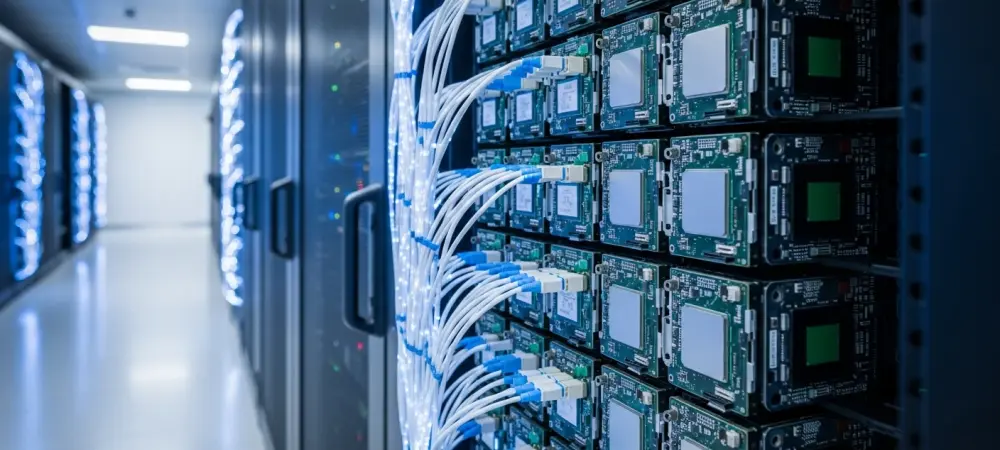
The most prominent application of this technology is the UCSD cluster, where researchers stripped away non-essential components—screens, batteries, cameras, and speakers—to create a bare-metal server environment. By replacing the Android OS with a standard Linux distribution and using Kubernetes for orchestration, they successfully managed a cluster of 20 phones to support over 75 students simultaneously. Beyond academia, this model mirrors specialized use cases like NASA’s Ingenuity Mars helicopter, which utilized a Qualcomm Snapdragon SoC, proving that consumer-grade mobile chips are robust enough for high-stakes, specialized computing environments. This success underscores the potential for mobile motherboards to act as reliable, low-power nodes in various edge-computing scenarios where space and power efficiency are paramount.
Expert Perspectives on the Technical and Economic Shift
Industry specialists emphasize that this movement represents a significant shift in the economics of infrastructure. Experts suggest that for universities and small research organizations, the ability to match the compute output of a dual-socket server CPU with roughly 25 to 50 repurposed phones offers a massive reduction in capital expenditure. Thought leaders in the field note that while hyperscale operators like Amazon or Microsoft may stick to standardized hardware for reliability, the “middle lane” of computing—distributed, local tasks and edge computing—is ripe for disruption by these low-cost, repurposed clusters. This democratization of compute power allows smaller entities to build private clouds without the exorbitant costs typically associated with enterprise-grade server procurement.
The Future of Sustainable Data Centers and Scaling Challenges
The trajectory of this trend points toward a more circular economy in the tech sector. Later this year, the UCSD team plans to scale operations into a 2,000-phone cluster, which will serve as a definitive test for the long-term durability of consumer hardware under sustained, high-intensity data center demands. Future developments may include automated recycling pipelines that harvest motherboards from trade-in programs specifically for compute farms, streamlining the transition from pocket to rack. However, challenges remain regarding the complexity of managing heterogeneous hardware and the lack of standardized cooling solutions for mobile boards in a rack environment. Overcoming these hurdles will require a concerted effort from manufacturers to design with a “second life” in mind, rather than focusing solely on the initial consumer sale.
Conclusion: Reframing Hardware Longevity
The transition from smartphones to data center nodes signaled a vital shift in how society perceived electronic waste. By proving that retired devices retained significant computational and economic value, researchers provided a roadmap for a more sustainable digital future. Moving forward, success in these repurposed clusters encouraged a broader movement toward hardware circularity, reaffirming that the most sustainable server was the one that had already been built. Actionable steps for the industry involved standardizing motherboard form factors to ease integration and establishing secondary-market certifications for refurbished compute nodes. This evolution suggested that the future of computing lied in the intelligent orchestration of the massive processing power already in existence.