

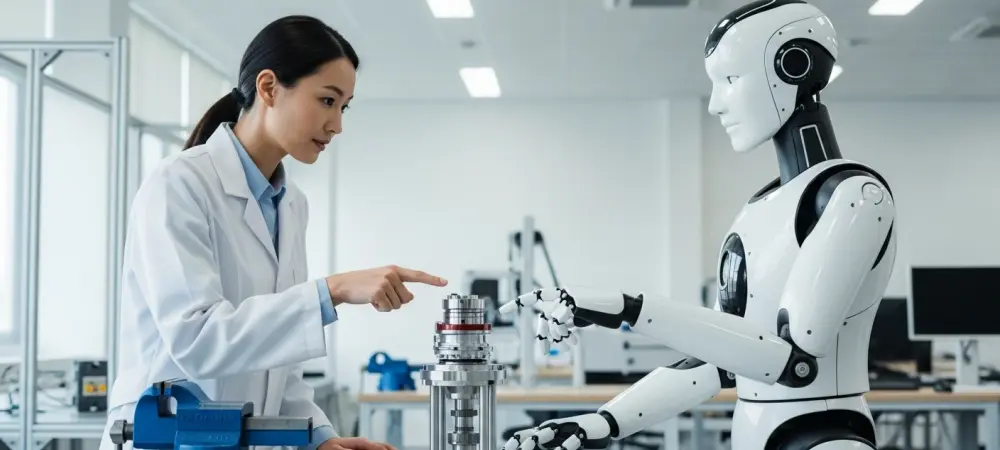
What was once the exclusive domain of cinematic blockbusters and speculative fiction is now materializing on factory floors, as humanoid robots begin to take their first programmatic steps into the real world, marking a pivotal moment in the history of automation. This profound shift is not a sudden revolution but the result of a powerful convergence of mature, affordable hardware and sophisticated artificial intelligence. The fusion of these technologies is actively reshaping industries, redefining the future of work, and setting the stage for a new era of human-machine collaboration. This analysis will explore the current market landscape, decipher expert insights driving this transformation, project future developments and their inherent challenges, and ultimately reflect on the dawn of the humanoid era.
The Current Landscape a Tipping Point for Adoption
Market Dynamics Growth Investment and Key Drivers
The humanoid robotics market is experiencing an unprecedented acceleration in growth and investment, signaling a decisive shift from speculative research to commercial viability. According to reports from firms like ABI Research, investment figures have surged, reflecting a growing confidence in the technology’s near-term potential. This momentum is largely propelled by a crucial technological convergence: the availability of reliable, low-cost hardware platforms combined with the power of large-scale AI foundation models. This synergy has effectively broken a long-standing “logjam” that previously hindered the development of adaptable, general-purpose robots.
This burgeoning industry confidence is statistically evident in the increasing number of high-profile pilot programs and strategic partnerships. For instance, the collaboration between Figure AI and automotive giant BMW serves as a powerful testament to the growing industrial traction. Such ventures are not merely experimental; they represent significant capital investments and a strategic bet that humanoids can deliver a tangible return by integrating into complex, human-centric workflows. This trend signals a market that is rapidly maturing, moving beyond prototypes to seek scalable, real-world applications.
From Prototypes to Production Lines Real World Deployments
The transition from controlled laboratory settings to the dynamic environment of a factory floor is a critical milestone. A leading example is Figure AI’s deployment within BMW’s manufacturing facility in South Carolina, where its humanoids are being tested for physically demanding and repetitive tasks in logistics and assembly. This pilot is designed to evaluate the robots’ ability to handle complex object manipulation, navigate dynamic spaces, and work safely alongside human employees, providing invaluable data on their practical utility.
Other pioneers are forging distinct paths, showcasing the versatility of humanoid platforms. Tesla’s Optimus project is focused on developing a general-purpose robot intended for its own manufacturing lines and, eventually, broader applications. Meanwhile, Boston Dynamics continues to push the boundaries of mobility and athleticism with Atlas, focusing on research and development that informs more specialized commercial robots. These real-world deployments are essential proving grounds, forcing companies to move beyond theoretical capabilities and demonstrate concrete business value and a clear return on investment in unpredictable, operational environments.
Expert Perspectives Deciphering the Humanoid Revolution
Industry leaders widely agree that the key technological unlock has been the “grafting” of advanced AI onto physical hardware. Jan Liphardt, CEO of OpenMind, characterizes this as the central innovation, enabling robots to interpret complex commands, learn from their environment, and adapt to new tasks without explicit reprogramming. This integration of Large Language Models allows a machine to reason about its actions, creating a system that is far more flexible and intuitive than its pre-programmed predecessors. The hardware has become a capable vessel for the intelligence provided by these powerful software models.
Further analysis from George Chowdhury of ABI Research highlights a strategic market pivot that is differentiating new entrants from established players. While traditional industrial automation companies have a strong hold on manufacturing and logistics, emerging humanoid robotics firms are increasingly targeting the consumer and at-home sectors. This move is seen as a crucial strategy to carve out a new market niche. The consumer space presents a vast, untapped opportunity for robots designed to assist with domestic chores, elder care, and personal assistance, representing a significant long-term growth vector. Characterizing the current phase, Tim Ensor of Cambridge Consultants describes it as a crucial period of real-world testing that will separate market hype from demonstrable value. Following years of lab-based development and enthusiastic projections, the industry must now prove that humanoids can deliver a positive return on investment in practical settings. This year is defined by extensive trials focused on validating the technology’s efficiency, safety, and economic viability. The companies poised to succeed are those that can navigate this phase successfully, proving their platforms are not just technologically impressive but also commercially sound.
The Future Trajectory Promises Perils and Possibilities
The Next Frontier Humanoids in Society
Looking ahead, the potential applications for humanoid robots extend far beyond the factory. A significant expansion into consumer markets is anticipated, with machines designed to perform domestic chores, provide companionship and assistance for the elderly, and even serve in healthcare settings to support nurses and clinicians. This vision of a personal robot assistant is rapidly moving closer to reality as the underlying technology matures and costs decrease. To bridge the gap between current capabilities and full autonomy, many companies are employing teleoperation as a key market-entry strategy. By allowing a human to remotely control the robot, firms can introduce products to the market sooner, generating immediate revenue and building investor confidence. This approach also provides a valuable stream of real-world data to further train and refine the autonomous AI models. The long-term vision remains a general-purpose robot capable of learning new skills and sharing that knowledge across a network, leading to an exponential growth in collective capability.
Navigating the Headwinds a Landscape of Risk
Despite the optimistic trajectory, the path to widespread adoption is fraught with significant challenges. Technologically, the foundation models that power these robots still require greater robustness to ensure safe and reliable operation in unpredictable public and domestic environments. Safety protocols must be failsafe, and privacy concerns associated with teleoperation—effectively placing a mobile camera and microphone in private spaces—must be addressed through transparent policies and secure technology.
The industry also faces considerable economic risks. Its fortunes are closely tied to the broader AI investment landscape, making it vulnerable to a potential downturn if the current “AI bubble” were to deflate. The high cost of research, development, and manufacturing remains a barrier to entry and a source of financial pressure. Furthermore, profound societal and ethical questions loom large. The prospect of widespread labor displacement raises complex economic and social issues. Crafting a regulatory framework that balances the drive for productivity with the imperative of human safety and well-being will be one of the defining challenges of the coming decade.
Conclusion Embracing the New Humanoid Era
The developments of this year confirmed that the humanoid robotics industry had reached a critical inflection point. This progress was not the result of a single breakthrough but rather the powerful synthesis of advanced AI and mature hardware, which has unlocked a new paradigm of general-purpose automation. This technological fusion has already catalyzed real-world deployments in industrial settings and fueled a strategic and ambitious push toward consumer markets.
The journey forward required navigating a complex landscape of technological, economic, and societal challenges. Ensuring the responsible and beneficial integration of this transformative technology depended on addressing issues of safety, privacy, and economic disruption with foresight and care. The central question for society had fundamentally shifted; it was no longer a matter of if humanoid robots would become a part of our world, but how we would choose to adapt to and shape their role within it.