

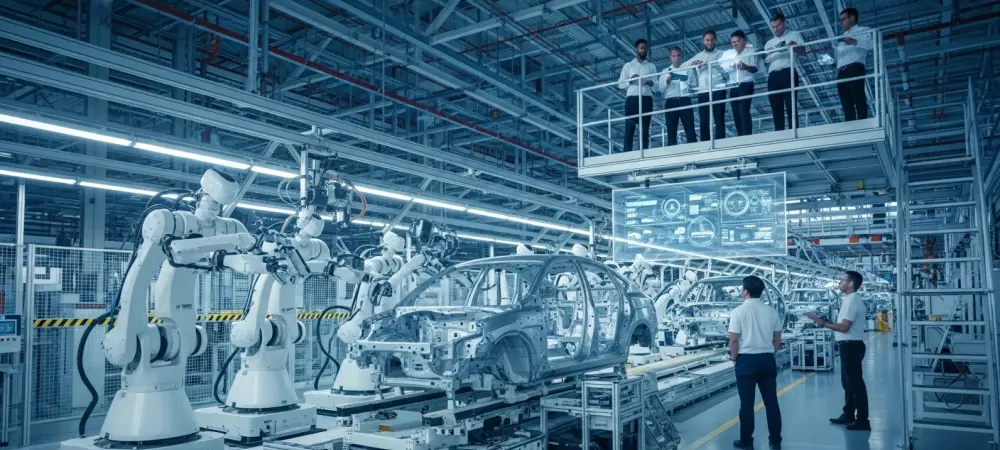
A high-stakes confrontation is unfolding on the factory floors of Hyundai Motor, where the planned introduction of advanced humanoid robots has ignited a fierce dispute between the company and its powerful labor union, drawing commentary from the International Labour Organisation (ILO). The conflict centers on Hyundai’s strategy to deploy the “Atlas” robot, an AI-driven humanoid capable of performing complex tasks in environments designed for people, with a projected rollout starting in 2028. This move has been met with staunch resistance from the union, which fears a significant “employment shock” and accuses the automaker of prioritizing labor cost reduction over its workforce. In response, an ILO director has stepped into the debate, characterizing the union’s opposition as a familiar bargaining tactic and urging a shift in perspective. Instead of outright rejection, the international body advocates for a more pragmatic approach, one that focuses on adaptation, reskilling, and the strategic redeployment of human workers to create a symbiotic relationship with their new robotic counterparts.
The Heart of the Dispute
The standoff at Hyundai encapsulates a broader global anxiety about the future of work in an era of rapid automation. It pits the corporate drive for efficiency and technological advancement against the fundamental concerns of a workforce facing potential obsolescence. While the company views the Atlas robot as a key to unlocking new levels of productivity and innovation, the union sees it as a direct threat to job security and the established social contract between employer and employee. This clash is not merely about a single piece of technology but about defining the principles that will govern the human-machine workplace of tomorrow. The outcome of this specific labor dispute could have far-reaching implications, potentially setting a precedent for how industries worldwide navigate the complex and often contentious integration of artificial intelligence and robotics into their operations.
A Clash of Visions for the Factory Floor
The union’s resistance is rooted in deep-seated fears that the deployment of the Atlas robot is a precursor to widespread job displacement. Union officials have been vocal in their concern that the primary motivation behind this technological leap is not to augment human labor but to replace it, thereby drastically cutting labor costs. The capabilities of the Atlas robot, which is designed with AI to navigate complex factory environments and perform repetitive tasks traditionally handled by humans, only fuel these anxieties. The union has drawn a firm line, declaring that no robots will be installed on the assembly line without a comprehensive and formal agreement with management that safeguards employment. This stance reflects a belief that technological implementation must be a collaborative process, not a unilateral corporate decision. The fear is that without such an agreement, the “huge employment shock” they predict will become an unavoidable reality, fundamentally altering the landscape of the automotive manufacturing workforce.
The Call for Pragmatic Coexistence
From the perspective of the International Labour Organisation, the union’s hardline opposition, while understandable, may be strategically misguided. Lee Sang-heon, the director of the ILO’s Employment Policy Department, has framed the union’s actions as a “typical bargaining tactic” rather than a sustainable long-term strategy. He advises that a more constructive and forward-looking path involves finding ways for workers to coexist and collaborate with automated systems. Lee advocates for the creation of a “virtuous cycle” where the efficiencies gained from automation are reinvested into the workforce. This would involve the optimal and strategic redeployment of staff whose roles have become redundant, moving them into new, higher-value positions. He stresses the critical importance of proactive adaptation, urging that all employees, including veteran workers, must embrace opportunities to learn new skills. This upskilling is presented not merely as a defensive measure but as a necessary evolution to protect skilled positions and ensure that human expertise remains central to the manufacturing process.
Navigating the Automated Future
The dialogue surrounding the Hyundai-union conflict extends beyond immediate job security, touching upon the long-term economic and social structures that will be shaped by automation. The debate forces a critical examination of how societies can manage this transition equitably. The ILO’s intervention highlights the risk of shortsighted solutions that could provide temporary relief but ultimately undermine future economic stability and job creation. The core challenge lies in developing policies and corporate strategies that balance the productivity gains from technology with the imperative to maintain a vibrant and skilled human workforce. It calls for a new social compact where investments in robotics are paired with equally robust investments in human capital, ensuring that the benefits of technological progress are shared broadly rather than concentrated in the hands of a few.
The Economic and Generational Stakes
The ILO’s warning against shortsighted solutions carries significant economic weight, particularly regarding the long-term health of the labor market. Lee Sang-heon cautioned against measures such as paying workers for doing nothing after their jobs are automated, arguing that such a policy would be fiscally unsustainable and ultimately self-defeating. He argues that this approach would not only drain corporate and public resources but would also effectively eliminate job opportunities for future generations, creating a legacy of dependency rather than empowerment. The concern is that by resisting the integration of technology without a parallel plan for workforce evolution, the union could inadvertently lock younger workers out of an evolving industry. The ILO’s stance underscores a belief that true job security lies not in preserving the roles of the past but in preparing the workforce for the jobs of the future, ensuring that the industry remains competitive and capable of providing meaningful employment for years to come.
The Evolving Role of Human Skill
Contrary to the dystopian vision of complete worker obsolescence, the ILO director downplayed fears that robots will make human labor entirely redundant. Instead, the argument is made that even the most advanced robotic systems will require a contingent of highly skilled human workers to function effectively. The focus, therefore, shifts from preventing automation to defining the new roles that will emerge alongside it. Skilled technicians and engineers will be essential for maintaining, troubleshooting, programming, and updating the sophisticated AI and mechanical systems embodied by robots like Atlas. This perspective reframes the challenge as one of transition rather than replacement. The imperative for the current workforce is to engage in continuous learning and skill development to pivot into these new, indispensable roles. Proactive adaptation becomes the key to long-term career viability, allowing human workers to move up the value chain and oversee the very automated systems that are transforming the factory floor.
A Precedent for Industrial Relations
The standoff at Hyundai ultimately became a critical test case for labor-management relations in the age of advanced automation. The resolution of this dispute was closely watched by industries around the world, as it was poised to establish a significant precedent for how companies and their workforces negotiate the integration of AI and humanoid robotics. The core of the matter was not simply whether robots would be used, but how their introduction was managed. The situation highlighted the necessity for collaborative frameworks that prioritize transparent communication, joint planning for workforce transitions, and shared commitments to retraining and upskilling initiatives. The outcome underscored the idea that technological advancement and worker security need not be mutually exclusive goals, but could instead be pursued in tandem through proactive and equitable partnerships.