

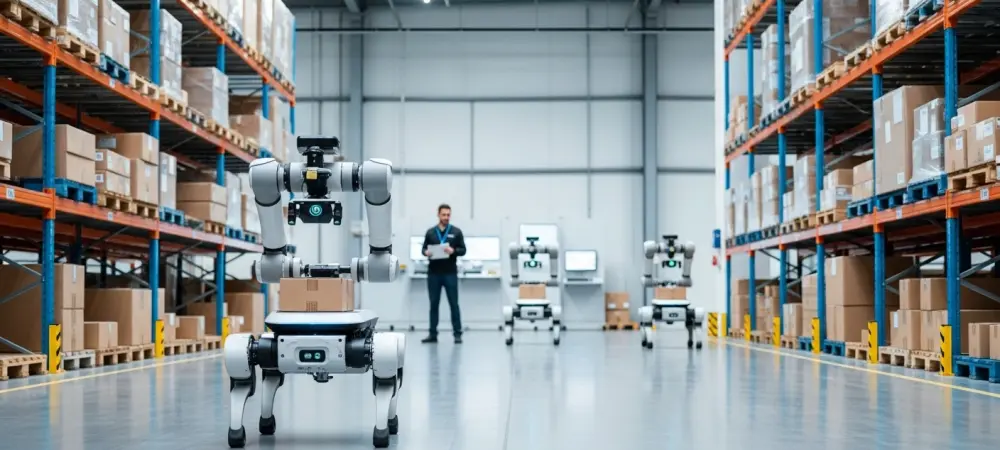
The physical agility of modern robots has outpaced their cognitive flexibility, creating a chasm that a new generation of software platforms is now attempting to bridge. The emergence of sophisticated robotic application marketplaces represents a significant advancement in the automation and robotics sectors. This review explores the evolution of this software distribution model, focusing on the new OpenMind App Store, its key features, market positioning, and its impact on the industry. The purpose of this review is to provide a thorough understanding of this technology, its current capabilities, and its potential future development in making robotics more accessible and versatile.
The Genesis of the Robotic App Store
The robotics industry has long grappled with a fundamental disconnect: while hardware capabilities advance at an impressive rate, software development remains a significant bottleneck. Traditionally, robotic functionalities are created through bespoke, one-off integrations tied to specific hardware. This approach hinders scalability, making it difficult to adapt a robot for new tasks without extensive and costly redevelopment.
OpenMind’s platform was conceived to directly address this fragmentation. The core concept is to decouple software from hardware, allowing a robot’s skills to evolve independently. By creating a standardized software distribution layer, the goal is to foster a more dynamic ecosystem where developers can create applications that run across a diverse range of machines, transforming robots from single-purpose tools into multi-functional platforms.
Anatomy of the OpenMind Platform
The OM1 Operating System The Modular Core
At the foundation of the OpenMind ecosystem lies OM1, a modular operating system designed specifically for robotics. Its architecture is engineered to abstract away the complexities of underlying hardware, providing developers with a consistent environment. This modularity allows complex capabilities, such as advanced navigation or object recognition, to be packaged into self-contained, portable applications.
This design philosophy simplifies the development cycle significantly. Instead of coding for a specific robot’s proprietary system, developers can build for the OM1 standard, confident that their application will be compatible with any OM1-powered machine. This dramatically lowers the barrier to entry for creating sophisticated robotic behaviors and accelerates the pace of innovation.
The App Store A Centralized Hub for Robotic Skills
The OpenMind App Store serves as the consumer-facing centerpiece of the platform, functioning as a centralized hub for discovering and deploying robotic skills. Positioned as a “skill and cognition layer,” it enables users to browse, download, and install new functionalities onto their robots with the same ease as adding an app to a smartphone. This model empowers users to configure, update, and completely repurpose their hardware for different tasks without needing specialized programming knowledge.
The marketplace effectively transforms the robot into a vessel whose purpose is defined by its software. A robot used for security patrols one day could be reconfigured for inventory management the next by simply installing a new application. This paradigm shift ensures that the value of the hardware is not fixed at the time of purchase but can be continuously enhanced through software updates and a growing library of third-party applications.
Initial Application Offerings
At launch, the App Store features a curated selection of applications that target core areas of robotic functionality. The initial offerings provide a clear indication of OpenMind’s strategic focus, concentrating on skills essential for general-purpose machines. These include applications for autonomous movement, which grant robots advanced navigational intelligence, and social interaction modules that enable more natural human-robot communication.
Furthermore, a significant emphasis has been placed on practical operational needs, with applications for privacy management and data security. This focus on foundational capabilities ensures that the platform provides immediate value while establishing a robust base upon which more specialized, third-party applications can be built.
Emerging Trends and Industry Adoption
The launch of the OpenMind platform is a clear indicator of a broader industry trend toward software-defined robotics. As hardware becomes more commoditized, differentiation is increasingly shifting to the intelligence and versatility of the software that powers it. OpenMind is capitalizing on this shift by creating a shared standard that encourages a more collaborative and unified ecosystem, moving away from the siloed development practices of the past.
By opening the App Store to a global audience of developers and robotics companies, the platform aims to catalyze a network effect. The goal is to foster an environment where innovation is shared, and the collective effort of the community leads to a rapid expansion of robotic capabilities, benefiting both developers and end-users.
Real-World Implementations and Key Alliances
To demonstrate its viability, the OpenMind App Store launched with initial support for robots from ten distinct hardware manufacturers, showcasing its cross-platform potential from day one. This immediate compatibility with a range of quadruped and humanoid robots signals a serious attempt to establish a universal standard. The platform is not just a theoretical concept but a functional marketplace with tangible, real-world applications. Crucial to this debut are the platform’s key launch partners, including prominent robotics firms like Ubtech, Agibot, and Deep Robotics. These companies are not merely customers; they are active collaborators in shaping the platform’s development and establishing its technical standards. Their involvement provides essential industry validation and helps ensure that the ecosystem evolves to meet the practical demands of the market.
Challenges and Market Hurdles
Despite its promising vision, the OpenMind platform faces significant obstacles. The primary challenge is overcoming the industry’s deep-rooted inertia and its reliance on custom software integrations. Many established robotics companies have invested heavily in their proprietary systems and may be hesitant to adopt a new, unproven standard that could diminish their competitive edge.
Furthermore, the success of any marketplace depends on achieving a critical mass of both suppliers and consumers. OpenMind must convince a substantial number of developers to build applications for its platform while simultaneously persuading hardware manufacturers to adopt its OM1 operating system. Failing to attract either side of this equation could relegate the App Store to a niche product rather than the industry-unifying standard it aims to be.
Future Outlook The Smartphone Model for Robots
The long-term vision for platforms like the OpenMind App Store is to replicate the smartphone’s revolutionary impact on personal computing. The goal is to transform robots into universal hardware platforms whose functionality is primarily defined and expanded through a vibrant application ecosystem. This model could dramatically accelerate innovation cycles, as software development can proceed independently of the slower pace of hardware manufacturing.
If this vision is realized, the capabilities of robots could expand exponentially, driven by a global community of developers creating novel applications for everything from logistics and manufacturing to healthcare and personal assistance. The robot of tomorrow might be less about its physical form and more about the ever-growing library of skills it can download from the cloud.
Conclusion A New Operating Layer for Robotics
The introduction of the OpenMind App Store was a pivotal attempt to address the persistent software bottleneck that has constrained the robotics industry. By creating a unified platform built on a modular operating system, it presented a compelling solution for decoupling hardware and software evolution. The marketplace’s potential to foster a collaborative ecosystem and accelerate the deployment of advanced robotic solutions was clear. Its success, however, hinged on its ability to overcome the industry’s fragmentation and establish a new, universal standard.