

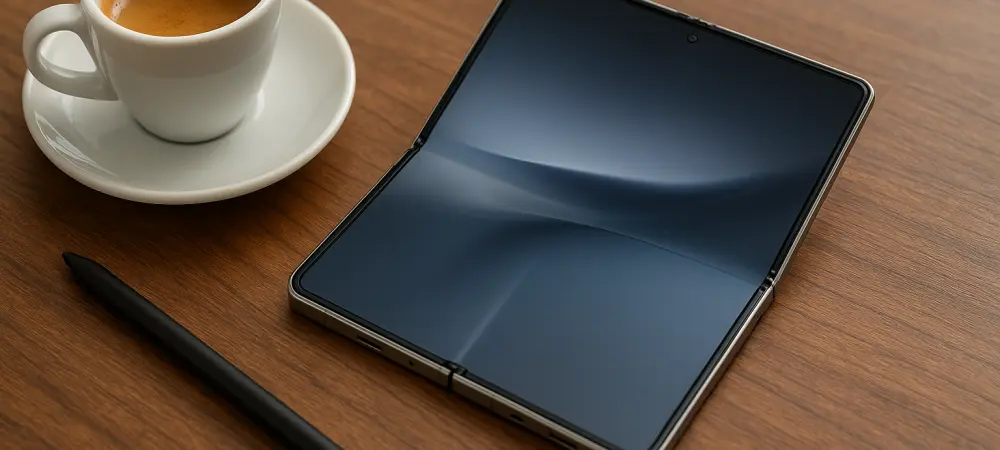
The official debut of the iPhone Duo on September 9 fundamentally altered the trajectory of the global mobile industry, signaling a definitive shift from experimental novelty to a state of refined maturity. This transition represents more than just a new product launch; it is the culmination of a decade-long pursuit of a device that finally reconciles the portability of a smartphone with the expansive utility of a tablet. By waiting for the underlying technology to catch up with the original vision, manufacturers have moved beyond the “wait-and-see” phase, delivering hardware that feels like a completed thought rather than a work in progress. The arrival of this sophisticated form factor has forced a recalibration of consumer expectations, setting a new standard for what constitutes a flagship experience.
Market Expansion: The Shift Toward Refined Maturity
Statistical Growth: The Emergence of the “No-Compromise” Foldable
Market dynamics have shifted rapidly as consumer confidence reaches an all-time high, primarily because foldable devices have finally shed their long-standing reputation for fragility and compromise. Current IDC projections indicate that a premium entrant like the iPhone Duo is poised to capture a staggering 40 percent of the foldable market within its first year, a testament to the pent-up demand for polished hardware. This surge is largely attributed to the “no-compromise” nature of modern engineering, where users no longer have to choose between a folding screen and top-tier internal specifications. The move from niche curiosity to mainstream flagship status is now complete, as the tech-buying public moves away from skeptical observation toward active adoption.
The integration of 2-nanometer processor technology and custom vapor chambers allows these devices to maintain peak performance during the most intensive tasks, meeting the high-performance demands of professional users who previously remained loyal to traditional slabs. Specifically, the latest silicon architecture provides a 20 percent increase in CPU speed and a 40 percent jump in graphical performance compared to the previous generation of hardware. To manage the thermal demands of such a high-performance chip within a constrained folding chassis, manufacturers have integrated sophisticated cooling systems that ensure a 35 percent gain in sustained performance. This technical foundation ensures that mobile video editing and high-end gaming are no longer limited by the physical constraints of a folding design.
Real-World Application: From Multitasking Powerhouses to Tablet Replacements
The practical utility of modern foldables is found in the fluid movement between disparate use cases throughout a single day. A 5.4-inch external display provides a familiar interface for quick responses and one-handed navigation, while the unfolding 7.6-inch internal canvas offers a workspace that actively challenges the necessity of owning a separate tablet. Features like “saved app pairs” have revolutionized mobile workflows, allowing users to instantly launch two frequently used applications in a split-view layout. This seamless transition between a compact phone and a productivity-focused tablet environment effectively bridges the gap between smartphone mobility and desktop-like efficiency.
Practicality extends into specialized hardware modes that capitalize on the unique hinge design of the device. The use of “stand mode” has become the standard for hands-free video conferencing and 4K mobile video editing, allowing the device to support itself without the need for external accessories. This versatility is driving a strategic overlap between high-end foldables and smaller tablets, such as the iPad Mini, as users seek to consolidate their electronic kits into a single, multi-functional tool. The software now intelligently reacts to the hinge’s angle, transforming the lower half of the screen into a dedicated control surface or keyboard, which further cements the device’s status as a legitimate replacement for traditional portable computers.
Industry Perspectives: Expert Insights on the Foldable Pivot
Prominent industry reviewers from The Wall Street Journal and Tom’s Guide have reached a consensus that the current generation of hardware has finally moved past the “prototype” stage. A major breakthrough cited by these experts is the near-total elimination of the display crease, a feat achieved through the use of specialized nano-texture coatings and titanium support plates situated beneath the folding panel. These engineering advancements make the hinge line virtually invisible when viewed straight-on, resolving one of the most persistent aesthetic complaints that plagued earlier iterations of flexible screen technology. The consensus is that the era of “finished” hardware has arrived, characterized by a level of polish that was previously absent from the category.
However, tech analysts have identified specific trade-offs that were necessary to achieve this level of physical refinement. To maintain a thinness that feels comfortable in a pocket, certain features like periscope telephoto lenses and variable aperture sensors were omitted in favor of maintaining a slim profile. While the primary 48-megapixel sensors remains world-class, photography enthusiasts have noted that the lack of optical zoom is a notable concession given the ultra-premium pricing. Despite these omissions, the industry-wide impact of a major player like Apple entering a segment previously dominated by Samsung, Google, and Huawei has forced an acceleration in build quality across all competing brands.
Future Outlook: The Long-Term Implications of Foldable Dominance
Looking ahead, the resolution of technical compromises like the visible crease and clunky software transitions will continue to influence future smartphone design cycles for years to come. While current devices successfully bridge the gap between phone and tablet, the next development cycle will likely focus on reducing the standard 249-gram weight to improve one-handed ergonomics. As the technology matures, the foldable form factor is expected to become the baseline for ultra-premium luxury mobile devices, regardless of the high entry costs. The focus will shift from “can it fold?” to “how thin and light can it become?” as manufacturers compete to make the folding mechanism entirely transparent to the user experience.
The broader impact on the app ecosystem will be profound as developers move to optimize software for dynamic, folding interfaces. Rather than simply stretching existing apps, the next wave of mobile software will be designed to react in real-time to the physical state of the hardware. This optimization will eventually trickle down to more affordable segments, though the “no-compromise” foldable will remain a status symbol for those seeking the pinnacle of mobile innovation. As durability improves and titanium becomes the standard for structural integrity, the standard “slab” phone may eventually be viewed as a secondary option for those who do not require the versatility of an expandable display.
Conclusion: Setting the New Benchmark for Mobile Innovation
The evolution of the foldable category from a tech experiment to a sophisticated, titanium-clad reality redefined the industry’s approach to mobile hardware. The arrival of refined hardware and hybrid software effectively ended the era of “experimental” foldables, forcing manufacturers to prioritize durability and polish over mere novelty. This transition ensured that the folding form factor became a permanent fixture in the luxury market, forever changing the expectations of power users and creative professionals. The strategic focus on structural integrity and seamless software transitions successfully demonstrated that a screen could fold without the traditional sacrifices in performance or aesthetics. This shift pushed the entire mobile ecosystem to adopt a more versatile design philosophy, proving that the future of technology lay in its ability to adapt to the diverse needs of the modern user. Manufacturers established a new benchmark that moved the conversation beyond simple screen size toward a more holistic view of device utility and longevity. Thus, the industry moved forward into a period where the boundary between a phone and a workstation became increasingly blurred, all thanks to the successful maturation of flexible display technology.