

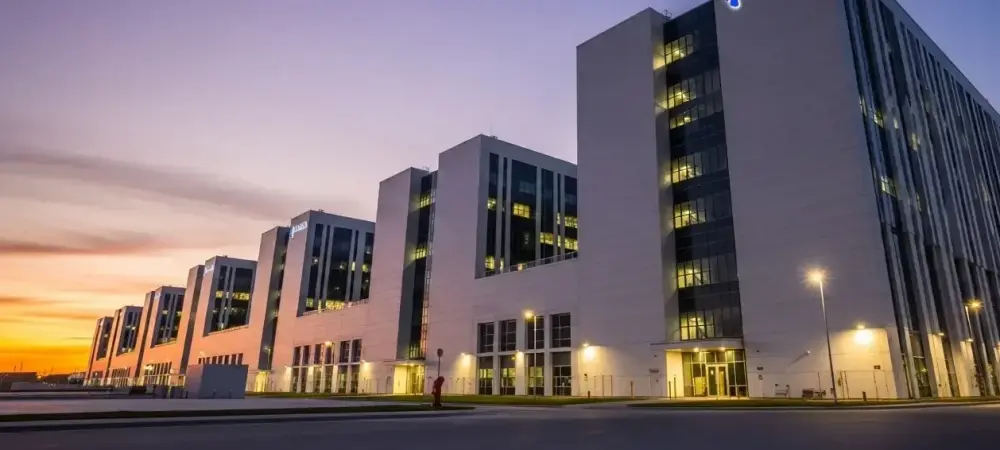
A torrent of multi-billion-euro investments is fundamentally reshaping Europe’s digital landscape, signaling a foundational shift in the continent’s technological future. This article examines the powerful forces driving the continent’s data center boom, anchored by a landmark partnership, and explores what this rapid expansion means for the future of technology and infrastructure.
The Scale of Expansion A Market in Overdrive
Unprecedented Growth by the Numbers
The core driver behind this market frenzy is the insatiable demand for data center capacity, fueled by the widespread adoption of cloud computing and artificial intelligence. This need for robust infrastructure is attracting massive capital injections, exemplified by a new €8 billion ($9.4 billion) joint venture between Goodman Group and CPP Investments. This partnership is strategically focused on Europe’s primary “FLAP” markets—Frankfurt, London, Amsterdam, and Paris—concentrating development where digital demand is highest.
The sheer scale of this expansion is staggering. The initial phase of this single partnership is set to deliver 435MW of primary power and 282MW of IT load. Such figures underscore the immense level of new capacity being brought online, transforming the continent’s ability to process and store data.
Case Study The Goodman and CPP Investments Power Play
The Goodman European Data Centre Development Partnership, a 50/50 joint venture, represents the strategic alliances forming to meet this demand. With an initial €2.2 billion ($2.59 billion) allocated to fast-track four large-scale projects, the partnership’s key advantage is its advanced state of readiness.
Developments are proceeding with secured power connections and planning permits, allowing construction to begin by mid-2026. This preparation ensures a crucial speed to market, enabling the venture to capitalize on the current demand surge before competitors.
Insights from the Inside The Strategic Imperative
Both partners view this venture as a rare opportunity to develop at scale in Europe’s most sought-after and land-constrained technology hubs. The collaboration effectively leverages Goodman Group’s property development expertise and existing landbank with CPP Investments’ global capital and digital infrastructure experience, creating a formidable market player. For CPP Investments, this move marks a significant and strategic entry into the European data center market, expanding its global portfolio beyond Asia, the Americas, and Australia. The deal builds upon a successful investment relationship between the two firms dating back to 2009, indicating deep confidence and a shared long-term vision.
Projecting the Future Europe’s Digital Backbone
The scale of investment points to a sustained, long-term build-out of digital infrastructure, not a short-term trend. This boom promises to increase capacity for AI and cloud innovation, strengthen Europe’s digital sovereignty, and drive significant economic activity in key technology hubs.
However, this rapid expansion also presents emerging challenges. It will place considerable strain on power grids, raise critical sustainability and energy consumption concerns, and intensify competition for land and skilled labor. Addressing these issues will be paramount to the long-term success of this digital transformation.
Conclusion Building the Foundation for Tomorrow
The analysis confirmed that the European data center market was in the midst of an unprecedented boom, driven by massive strategic investments like the Goodman-CPP partnership. This growth was revealed to be an essential prerequisite for supporting the continent’s ambitions in AI, cloud computing, and the broader digital economy.
As billions were poured into building Europe’s digital foundation, the critical challenge shifted. The focus moved from securing capital toward executing these complex projects sustainably and efficiently to successfully power the continent’s future.