

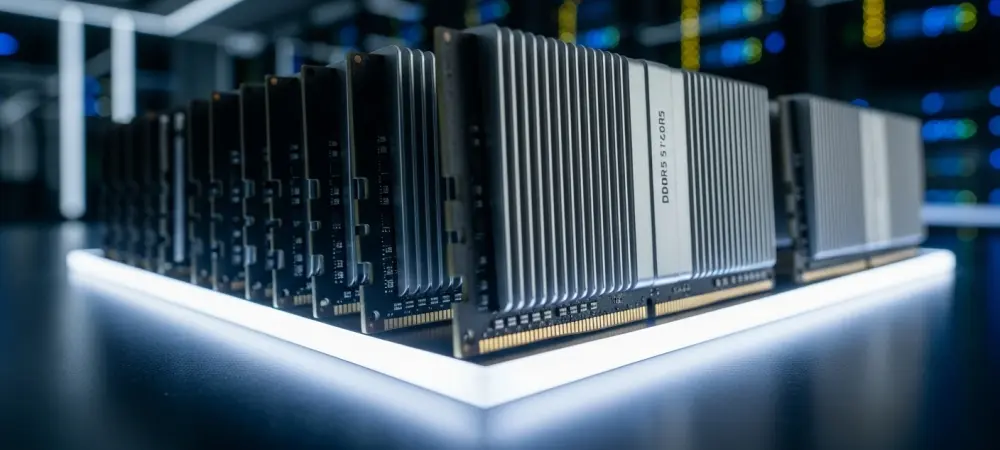
The era of affordable system memory has faced a sudden and drastic reversal, leaving PC builders and enterprise architects grappling with a volatile market that shows few signs of immediate relief. As the backbone of modern computing, DDR5 pricing now dictates the accessibility of next-generation platforms and the overall cost of digital infrastructure. This analysis examines the factors driving current price hikes, the influence of the artificial intelligence boom, and the projected timeline for market stabilization.
Analyzing Market Shifts and Adoption Statistics
The Surge in DDR5 Demand and Manufacturing Constraints
DDR5 remains four to five times more expensive than historical norms due to significant production shifts within the semiconductor industry. Memory manufacturers have reallocated fabrication capacity to prioritize high-performance modules for data centers. This strategic pivot has resulted in a tight supply for the consumer retail market, keeping prices at a sustained premium. Additionally, the phase-out of legacy DDR4 production has led to unexpected inflation for older modules as available stock dwindles.
Real-World Applications and the Resilience of Legacy Platforms
AMD’s continued support for the AM4 platform highlights the market’s reliance on older architectures to meet budget-conscious needs. Processors like the Ryzen 7 5800X3D allow users to bypass high costs while still maintaining high performance levels. Meanwhile, enterprise-level AI infrastructure projects are outcompeting consumer markets for the limited semiconductor supply. Motherboard manufacturers have responded by extending DDR4-compatible product lineups to support those who are currently priced out of the DDR5 ecosystem.
Expert Perspectives on the Semiconductor Supply Chain
Insights from David McAfee, AMD’s Vice President and GM of Client Channel Business, suggest that hardware costs have reached a “new normal.” The disruptive impact of AI-related hardware demand has fundamentally altered traditional retail supply chains across the globe. Industry analysts emphasize the immense difficulty in scaling fabrication facilities to meet the dual demands of the enterprise and consumer sectors. This lack of flexibility in the supply chain means that retail pricing remains highly sensitive to shifts in the corporate tech landscape.
The Road to 2028: Future Implications for the Tech Industry
Projecting the trajectory of memory costs through 2027 reflects a period of slow manufacturing expansion. High entry costs may stifle innovation in the consumer PC space, as developers target hardware that the average user can actually afford. However, these pressures could accelerate the development of more efficient manufacturing processes, potentially stabilizing the global supply by 2028. There remains a risk of a split market where cutting-edge technology becomes a luxury tier while the mainstream relies on aging architectures.
Conclusion: Navigating the Extended Era of High Hardware Costs
The primary drivers of market volatility remained the fierce competition between AI infrastructure and consumer electronics. Industry forecasts reaffirmed that pricing did not return to traditional levels for several years, forcing a shift toward more strategic hardware planning and longer upgrade cycles. This era proved that global supply chains were vulnerable to sudden technological shifts, requiring a focus on long-term infrastructure sustainability. Organizations and individuals alike had to adapt by maximizing the efficiency of existing systems while carefully timing their transition toward modern standards.