

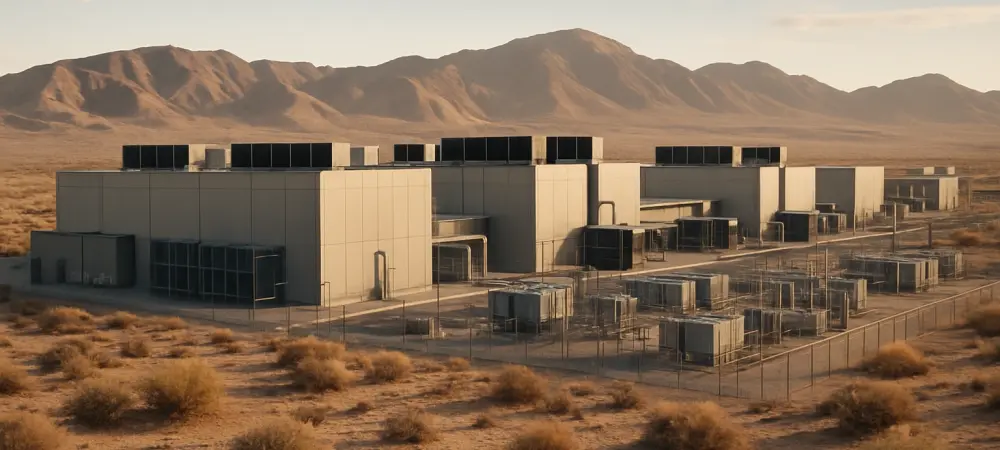
In an era where digital consumption skyrockets, a staggering fact emerges: global data center capacity has doubled in the last five years to meet the insatiable demand for cloud computing and artificial intelligence, making it a critical issue for modern infrastructure. Surprisingly, an unlikely frontier for this tech boom is the arid expanse of desert regions. Places once deemed inhospitable are now hosting sprawling facilities that power the internet’s backbone. The paradox of situating energy- and water-intensive data centers in environments defined by scarcity raises eyebrows and questions. How can such a counterintuitive trend take root, and what does it mean for sustainability in a resource-constrained world?
The significance of this shift cannot be overstated. As digital infrastructure becomes the lifeblood of modern economies, driven by big data and AI innovations, the pressure to build more data centers intensifies. Yet, placing these facilities in desert locales introduces unique environmental and logistical challenges, from water scarcity to extreme heat. This juxtaposition of technological necessity and geographic adversity sets the stage for a critical examination of how industry needs intersect with planetary limits.
This analysis delves into the emergence of data centers in arid landscapes, exploring real-world applications, stakeholder perspectives, and future implications. It highlights specific projects and expert insights to unpack the trend’s complexities. Ultimately, the discussion aims to reflect on balancing technological progress with environmental preservation, offering a lens into a polarizing yet pivotal development in the digital age.
The Rise of Data Centers in Arid Landscapes
Growth Trends and Driving Factors
Desert regions are witnessing a remarkable surge in data center development, a trend backed by industry insights from firms like CBRE and Synergy Research Group. Reports indicate significant investments pouring into areas such as Arizona, Nevada, and parts of the Middle East, with growth in these locales outpacing traditional tech hubs over the past few years. This shift is not random; it reflects a calculated response to escalating demands for digital storage and processing power amid a global tech boom.
Several factors fuel this unexpected migration to arid zones. Affordable land prices offer a cost-effective alternative to urban centers, while the abundance of solar energy potential aligns with sustainability goals for power-hungry facilities. Proximity to major tech markets also plays a role, as deserts near cities like Phoenix or Dubai provide strategic connectivity. Despite challenges like water scarcity, these advantages make deserts increasingly viable for data center expansion.
Beyond economics, policy incentives in some regions further accelerate this trend. Governments in arid areas often offer tax breaks or streamlined permitting to attract tech investments, viewing them as engines for economic diversification. This confluence of financial, geographic, and political drivers underscores why deserts, once overlooked, are now at the forefront of digital infrastructure growth.
Real-World Implementations and Case Studies
A prime example of this trend is Project Blue in Tucson, Arizona, a proposed 290-acre, 2 million-square-foot data center campus spearheaded by Beale Infrastructure, with reported ties to Amazon. Set to become operational by May 2027 and ramping up to 286MW of power by the following year, this $3.6 billion investment promises substantial economic impact. However, its location in a desert region has sparked fierce debate over resource use, particularly water, highlighting the friction between progress and preservation.
Globally, similar initiatives illustrate the trend’s reach. In Dubai, data centers leverage the region’s solar potential while grappling with extreme heat, often deploying innovative cooling technologies to compensate. Meanwhile, Nevada hosts facilities near Las Vegas, capitalizing on cheap land and renewable energy incentives, though facing scrutiny over energy grid strain. Each location reveals unique adaptations to desert challenges, from advanced engineering to policy negotiations.
These cases demonstrate that while the trend is widespread, solutions are not one-size-fits-all. In Tucson, Project Blue’s initial plan to access reclaimed water was rejected by city officials, forcing a pivot to undisclosed alternatives. In contrast, Middle Eastern projects often integrate desalination partnerships. Such variations emphasize the localized nature of tackling environmental hurdles in desert data center development.
Stakeholder Perspectives and Expert Opinions
The debate over desert data centers reveals a spectrum of opinions among stakeholders. Industry leaders from tech giants often champion these projects as vital for meeting digital demand, citing economic benefits like job creation and infrastructure upgrades. In Tucson, Beale Infrastructure has framed Project Blue as a transformative investment, despite setbacks like the city council’s unanimous rejection of annexation for water access.
Local perspectives, however, often lean toward caution. Tucson Mayor Regina Romero has signaled potential future restrictions on data centers to safeguard resources, reflecting a protective stance. Councilmember Nikki Lee, while acknowledging the inevitability of such developments, warns of losing control over their impact if projects move to neighboring areas. These voices highlight community concerns about water depletion and environmental strain in an already fragile ecosystem.
Sustainability experts and tech analysts add depth to the discourse. Environmental advocates argue that without robust innovations in waterless cooling or renewable energy integration, desert data centers risk exacerbating resource scarcity. Conversely, industry analysts stress that with proper planning, these facilities can drive regional growth while adopting green technologies. This polarized dialogue underscores the challenge of aligning economic ambitions with ecological responsibility.
Future Outlook for Desert Data Centers
Looking ahead, technological advancements hold promise for addressing the inherent challenges of desert data centers. Innovations such as waterless cooling systems, already in trial phases in some arid regions, could drastically reduce dependency on scarce resources. Additionally, deeper integration of solar and wind energy might offset the massive power needs, positioning these facilities as models of sustainable tech infrastructure.
Potential benefits extend beyond technology to socioeconomic impacts. Projects like Project Blue could spur job creation and regional development, transforming desert communities into tech hubs. However, risks loom large, including resource depletion and community backlash, as seen in Tucson’s resistance. If unresolved, these tensions could stall progress or shift developments to less regulated areas, amplifying environmental harm.
On a broader scale, this trend may reshape urban planning and policy in arid regions worldwide. Governments might need to craft stricter guidelines on water and energy use for industrial projects, balancing growth with conservation. Optimistic scenarios envision desert data centers as catalysts for green innovation, while cautionary tales warn of overexploitation. The trajectory of initiatives like Project Blue will likely serve as a benchmark for navigating these dual outcomes.
Navigating Progress and Preservation
Reflecting on the journey of data centers into desert regions, a complex narrative unfolds. The allure of cheap land and renewable energy has driven significant investments into places like Arizona and the Middle East, with Project Blue in Tucson standing as a vivid emblem of ambition clashing with local realities. Diverse opinions, from optimistic industry leaders to wary community voices, paint a picture of both opportunity and contention.
What emerges as critical is the urgent need for collaboration among policymakers, tech companies, and local stakeholders to forge sustainable paths forward. Solutions like adopting cutting-edge cooling technologies and prioritizing renewable energy show potential to mitigate environmental impacts. Establishing clear regulations on resource use in arid zones also appears essential to prevent long-term damage.
Ultimately, the saga of desert data centers highlights a broader imperative: progress need not come at the expense of preservation. By investing in innovation and fostering dialogue, the tech industry and communities can chart a course that supports digital growth while safeguarding fragile ecosystems. This balance remains the key challenge for future endeavors in such unconventional landscapes.