

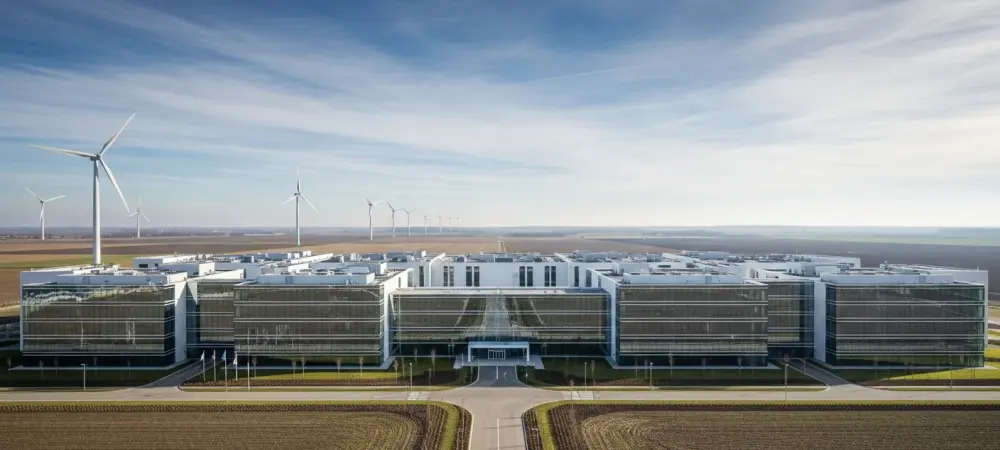
The geographic footprint of the global digital economy is undergoing a profound transformation as the traditional reliance on a handful of massive urban hubs gives way to a highly distributed and strategic national network. For decades, the industry prioritized proximity to major financial centers and existing fiber backbones, creating enormous clusters in Northern Virginia, Silicon Valley, and Chicago. However, the constraints of the modern era—specifically power grid saturation and skyrocketing land costs—have forced a fundamental rethinking of where data lives. This evolution represents more than a simple expansion; it is a sophisticated migration toward regions that can support the immense power densities required by contemporary artificial intelligence and high-performance computing.
The Shift from Urban Hubs to Distributed Infrastructure
Market Evolution and Growth Statistics
Historical data center concentration in “Tier 1” markets was once the standard for minimizing latency and ensuring connectivity to corporate headquarters. Northern Virginia, often cited as the data center capital of the world, along with Silicon Valley and the Chicago metropolitan area, historically accounted for the vast majority of all new capacity. This centralization was practical when enterprise cloud services were the primary drivers of growth. However, recent data indicates a significant pivot, as grid capacity limits in these legacy hubs have reached a breaking point. This stagnation in traditional corridors has forced a 15-20% shift in new construction toward emerging regions that were previously overlooked by major developers.
The rise of secondary markets and rural “Tier 2” and “Tier 3” locations is no longer a peripheral trend but a core component of hyperscale investment strategies. Recent reports show a massive surge in infrastructure spending across the American South and Midwest, where the availability of thousands of contiguous acres and lower power costs provide a sustainable path for expansion. As of 2026, the market shares of these emerging regions are growing at twice the rate of established hubs. This geographic rebalancing ensures that the physical internet is becoming more resilient by spreading the load across a broader range of utility grids and environmental zones.
Real-World Applications and Geographic Use Cases
The specific requirements of modern workloads are now the primary architects of geographic diversity. AI training clusters, which require unprecedented levels of power but are relatively insensitive to millisecond latency, are increasingly migrating to rural areas like North Dakota and Iowa. In these regions, developers can build massive, specialized facilities that take advantage of abundant local energy and cooler climates, which reduce the overhead associated with complex cooling systems. These “AI factories” represent a departure from the multi-tenant urban facility, focusing instead on pure computational throughput and energy efficiency.
In contrast, the demand for real-time interactive services is driving a different kind of expansion through “Edge” deployments in cities like Denver, Boston, and Phoenix. These facilities are designed to support low-latency applications such as autonomous vehicle coordination, augmented reality, and localized cloud processing. Furthermore, states like Mississippi and Pennsylvania have successfully used aggressive tax incentives and streamlined zoning laws to attract major cloud providers that seek to diversify their physical risk. To bypass utility grid congestion in these new territories, many operators are implementing “behind-the-meter” energy solutions, utilizing on-site generation to maintain operational independence from the primary grid.
Industry Perspectives on Site Selection Drivers
Infrastructure architects are currently refocusing their efforts on balancing fiber proximity with the total cost of ownership. While being close to a major fiber line remains important, the escalating costs of urban real estate and electricity have changed the mathematical model of site selection. Experts suggest that a facility located five hundred miles further from a traditional hub can still be highly profitable if the power costs are significantly lower and the land allows for more efficient, horizontal building designs. This shift emphasizes that connectivity is now easier to extend than power capacity is to create.
From a regulatory standpoint, the “Time to Market” advantage has become a deciding factor for cloud service providers racing to meet demand. Regions with data-center-friendly governance and streamlined permitting processes are winning projects that might have otherwise gone to traditional markets. In contrast, utility providers face the daunting challenge of scaling transmission lines to meet the 24/7 demand of massive new rural facilities. This tension between rapid development and grid stability requires a collaborative approach to infrastructure planning that ensures local residents are not left with a strained electrical system or rising utility bills.
Furthermore, industry leaders are increasingly highlighting the necessity of “Social License” and early community engagement. As data centers move into new markets, they often encounter local opposition rooted in concerns over water usage, noise, and the visual impact of large industrial buildings. Successful developers are those who treat community members as stakeholders, offering transparency regarding resource consumption and demonstrating the long-term economic benefits of high-value infrastructure. Building this trust is essential for preventing the legal and political delays that have plagued several recent high-profile projects in legacy markets.
Future Projections and Industry Implications
The decentralization of the internet backbone is likely to become a permanent fixture of the landscape as “Digital Gold Rush” states solidify their roles as infrastructure leaders. This movement is leading to the development of specialized geographic zones tailored to specific technological needs. Rural areas are becoming the preferred environment for massive AI modeling and long-term data storage, while urban areas are evolving into specialized hubs for latency-sensitive edge computing and local enterprise support. This bifurcation allows the industry to optimize its physical footprint for both performance and sustainability.
However, this rapid geographic spread brings a new set of challenges, particularly regarding labor shortages for specialized data center technicians in remote locations. As facilities open in less populated areas, the competition for skilled mechanical and electrical engineers will intensify, likely forcing companies to invest heavily in local workforce development and relocation programs. On a broader scale, the competition between states to attract these facilities is accelerating the integration of renewable energy into the national power grid. Data center operators, committed to carbon-neutral goals, are often the primary financiers of new wind and solar projects in the regions where they build.
Summary of the Diversification Movement
The transition from geographic concentration to a strategic, multi-tiered national footprint redefined the relationship between digital services and the physical environment. Infrastructure stability and power availability officially superseded traditional urban proximity as the primary metrics for site selection across the sector. This evolution demonstrated that the digital world could no longer be supported by a few overworked hubs, necessitating a move toward a more resilient and distributed architecture.
The ability to navigate diverse regulatory environments and manage complex physical logistics became the defining trait of successful digital infrastructure strategies. By the middle of the decade, the movement toward secondary and rural markets provided the necessary breathing room for the continued growth of artificial intelligence and cloud computing. Ultimately, the industry learned that geographic diversity was not just a cost-saving measure but a fundamental requirement for the long-term reliability of the global internet backbone. As developers looked toward the next cycle of growth, the lessons learned during this period of expansion provided a clear roadmap for balancing technological ambition with environmental and social responsibility.