

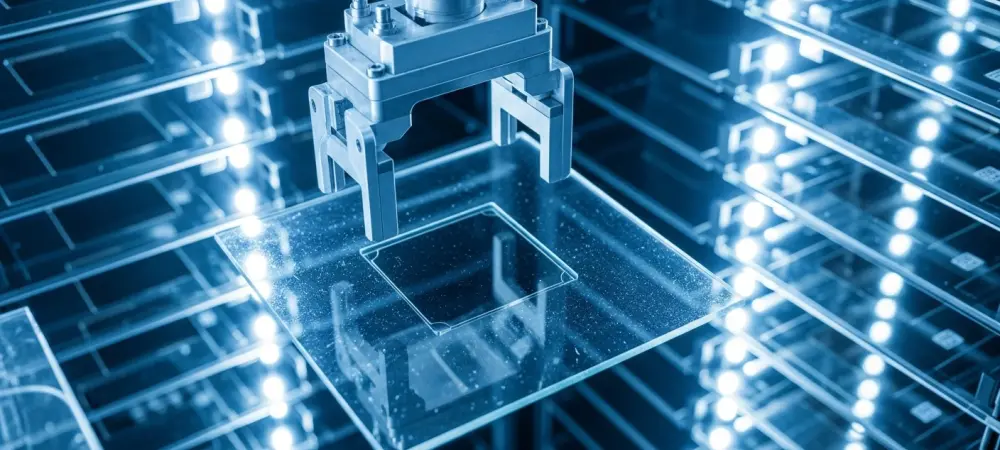
The rapid accumulation of global digital information has reached a critical bottleneck where the physical endurance of our storage media cannot keep pace with the sheer volume of data we generate. While modern data centers currently rely on magnetic tapes and hard drives that require replacement every few years to avoid the inevitable “data rot,” a more permanent solution has emerged from the molecular structure of glass. This technology, most notably championed through initiatives like Microsoft’s Project Silica, represents a fundamental shift from temporary electronic or magnetic states to permanent physical alterations within a solid-state medium. By utilizing the inherent stability of glass, researchers have moved beyond the experimental phase into a realm where storing the entirety of human knowledge for millennia is no longer a theoretical exercise but an engineering reality.
The Evolution of Long-Term Archival Media
The quest for a “forever” storage medium is driven by the fragility of our current digital infrastructure. Hard disk drives are prone to mechanical failure, and even the most advanced magnetic tapes suffer from magnetic fluctuations and physical degradation within a decade. This creates a cycle of constant migration, where data must be moved to new hardware at immense energy and financial costs. Glass data storage disrupts this cycle by providing a medium that is essentially inert. It does not require climate-controlled environments or power to maintain the integrity of the information once it has been written.
In the broader technological landscape, this advancement addresses the archival crisis facing hyperscale cloud providers. As the world transitions toward 2027 and 2028, the demand for “cold storage”—data that is rarely accessed but must be preserved—is skyrocketing. Glass offers a way to de-couple data preservation from the constant churn of hardware lifecycles. It provides a dense, immutable alternative that survives fire, flooding, and electromagnetic pulses, making it the first truly viable candidate for a multi-generational digital archive.
Core Technological Breakthroughs in Glass Storage
Borosilicate Glass Integration
A pivotal turning point in the development of this technology was the transition from expensive fused silica to borosilicate glass. While fused silica offered high purity, its manufacturing costs were prohibitive for enterprise-level scaling. Borosilicate glass, the same material used in high-end cookware and laboratory equipment, provides a much more cost-effective substrate without sacrificing the necessary optical clarity. This shift has allowed the technology to tap into existing industrial glass manufacturing pipelines, drastically lowering the barrier to entry for mass production.
Femtosecond Laser Encoding and Voxel Writing
The technical heart of glass storage lies in the use of femtosecond lasers, which emit ultra-fast pulses of light to create microscopic distortions called voxels. Unlike a CD or DVD that stores data on a surface, this method uses birefringent voxel writing to encode information in three-dimensional space within the glass. By manipulating the orientation and intensity of these pulses, engineers can store multiple bits of data in a single voxel. This multi-layered approach allows a small sheet of glass to hold terabytes of information, effectively turning a simple translucent slab into a high-density data library.
Parallel Writing Systems
Historically, the primary criticism of laser-based storage was its sluggish write speed. To compete with enterprise tape libraries, glass storage has adopted parallel writing systems. Instead of a single laser beam laboriously etching data bit by bit, modern arrays use multiple beams simultaneously to ingest data at speeds that meet the requirements of large-scale data centers. This improvement in throughput is what transitioned glass storage from a laboratory curiosity into a functional component of cloud infrastructure, capable of handling the massive data dumps required by modern archival workflows.
Emerging Trends in Persistent Data Management
The current storage landscape is being reshaped by the “set it and forget it” hardware model. As artificial intelligence models require increasingly large datasets for training and historical reference, the industry is moving away from storage that requires active maintenance. Glass media fits perfectly into this trend, offering a passive storage solution that remains readable long after the original recording hardware has become obsolete. This shift is particularly relevant as organizations seek to reduce their carbon footprint by eliminating the power consumption associated with keeping traditional spinning disks active.
Real-World Applications and Sector Deployment
Industries that prioritize cultural and historical preservation have been the first to adopt glass-based solutions. Major film studios and national archives are looking at glass as a way to safeguard cinematic masterpieces and sensitive government records. For instance, the ability to store a high-definition feature film on a small glass pane that can withstand boiling water and oven temperatures makes it an ideal disaster-recovery medium. In the hyperscale cloud environment, this technology acts as the ultimate “bottom tier” of storage, providing a safety net for the world’s most critical digital assets.
Technical Hurdles and Market Obstacles
Despite its promise, glass storage faces significant competition from the established dominance of LTO (Linear Tape-Open) technology. The initial capital expenditure for femtosecond laser hardware and the specialized robotic systems needed to retrieve and move glass plates remains high. Furthermore, while the data is permanent, the retrieval latency is higher than that of flash storage. This means glass is currently unsuitable for “hot” data that needs to be accessed instantly. Engineers are still working on refining the read-write heads to make them as ubiquitous and affordable as those found in traditional server racks.
The Future of Glass-Based Storage Infrastructure
Looking ahead, the integration of glass media into standard data center architectures will likely involve fully automated robotic libraries that can manage thousands of glass sheets. We can expect breakthroughs in optical sensing that will further increase the read speeds, potentially narrowing the gap between archival and active storage. The long-term goal is to establish a digital footprint that lasts for 10,000 years, ensuring that the history and knowledge of our current civilization do not disappear due to a simple power failure or hardware degradation.
Summary of Findings and Technological Outlook
The transition of glass data storage from a specialized physics project to a viable engineering solution addressed the most pressing limitation of the digital age: permanence. The research demonstrated that by moving away from expensive materials and embracing parallel processing, the industry created a path toward sustainable, long-term data preservation. This technology effectively bridged the gap between the fragile nature of modern electronics and the ancient durability of stone carvings, providing a medium that is both incredibly dense and remarkably resilient. The verdict on glass storage was clear: it established itself as the premier choice for archival workloads where longevity and energy efficiency outweighed the need for millisecond access speeds. The move toward borosilicate glass and refined laser techniques proved that the archival crisis could be solved through material science rather than just incremental software updates. As organizations began to prioritize the total cost of ownership over several decades, the shift toward a passive, immutable storage tier became an essential component of the global data strategy, securing the legacy of the digital era for the distant future.