

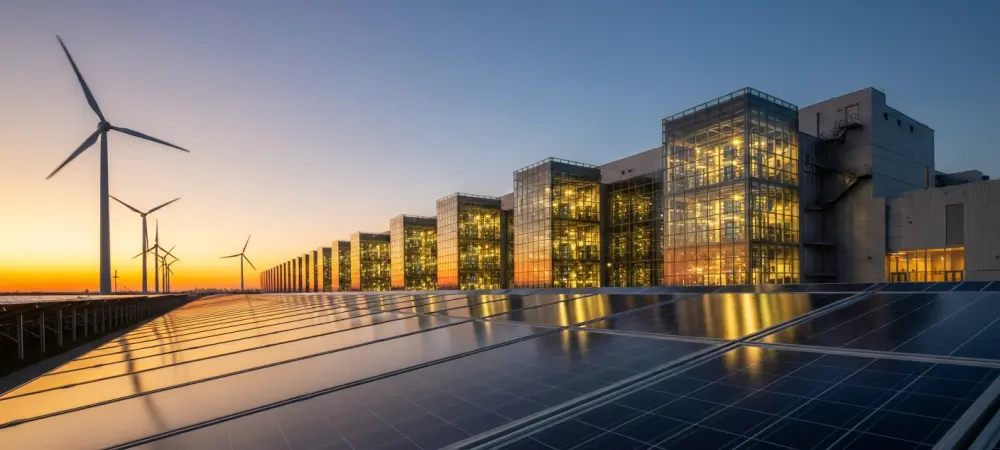
The global network of server farms that facilitates every digital interaction from banking to video streaming has transitioned from a silent background utility into a dominant consumer of the world’s electrical capacity. As the digital backbone of the modern economy, these facilities are facing a critical crossroads where the hunger for electricity reaches unprecedented and potentially unsustainable levels. In the current landscape of 2026, the energy footprint of data centers has transformed from a niche technical concern into a central pillar of global environmental policy. This shift is driven by the dual forces of ubiquitous cloud computing and the explosive integration of generative artificial intelligence into every facet of commerce and daily life. The following analysis examines the rapid acceleration of power demand, the transformative impact of high-performance computing, and the innovative strategies that are currently shaping the future of sustainable digital infrastructure.
The transition toward a fully digitized society has historically relied on the assumption that hardware efficiency would naturally offset the increasing volume of data processing. However, recent developments have proven that the sheer scale of modern computational needs is outstripping even the most aggressive efficiency gains. Industry experts and environmental researchers now view the data center sector as a litmus test for the world’s ability to balance technological progress with energy security. As the demand for real-time processing and massive storage continues to climb, the industry must navigate a complex environment of regulatory pressure, physical grid constraints, and the moral imperative of carbon neutrality. This article explores how the sector is evolving from a passive power consumer into an active participant in the global energy transition.
Measuring the Surge in Global Power Demand
Statistical Evolution: Energy Usage Profiles and Growth
The historical trajectory of data center energy consumption reveals a transition from a period of relative stability to one of extreme acceleration. Between 2014 and 2018, U.S. data center usage remained somewhat predictable, growing from roughly 60 Terawatt-hours (TWh) to 76 TWh. By 2023, consumption in the United States had jumped to 176 TWh, representing more than 4% of the total national electricity demand. This surge is not merely a localized phenomenon but a global trend that reflects the increasing centrality of digital infrastructure in every modern economy. Quantitative analysis of recent market data shows that the Compound Annual Growth Rate (CAGR) for data center electricity usage has spiked from a manageable 7% in the previous decade to an alarming 18% in the current cycle. This rapid escalation is forcing utility providers to rethink their long-term capacity planning. Projections from the International Energy Agency suggest that total sector demand worldwide is on a path to double by 2030. Such a trajectory implies that data centers will soon account for a significant and growing portion of the world’s total electricity consumption, placing them in direct competition with other critical sectors like manufacturing and residential heating for limited power resources.
The implications of this growth are particularly visible in regional power hubs where data center density is highest. In areas like Northern Virginia or parts of Ireland, the electrical load from these facilities has already strained local grids to their breaking points, leading to moratoriums on new construction and requirements for on-site power generation. The industry is no longer characterized by a steady, linear increase in power needs; rather, it has entered a phase of exponential expansion. This shift requires a fundamental reassessment of how energy is sourced and distributed, as the traditional reliance on the public grid is becoming insufficient to support the sector’s relentless appetite for power.
The AI Catalyst: Real-World Computational Loads
The most significant disruptor in the current energy landscape is the massive deployment of artificial intelligence. Unlike traditional cloud workloads that primarily involve data storage and retrieval, AI training and inference require intense, continuous mathematical calculations that consume vast amounts of electricity. Concrete comparisons from the field reveal that a single generative AI request can consume nearly ten times the power of a traditional search engine query. This disparity means that as AI becomes integrated into standard web browsers and productivity tools, the baseline power consumption for every internet user is shifting upward.
The physical manifestation of this AI surge is the widespread installation of high-performance Graphics Processing Units (GPUs) and specialized AI accelerators. These chips operate at significantly higher power densities than the Central Processing Units (CPUs) used in previous generations of servers. A standard server rack that once required 10 kilowatts of power and traditional air cooling may now require upwards of 100 kilowatts to support the latest AI hardware. This change is fundamentally altering the thermal and electrical requirements of modern facilities, rendering many older data centers obsolete because their cooling and power delivery systems cannot handle the intense heat generated by high-density AI clusters.
Despite these challenges, Leading hyperscalers such as Amazon and Google have demonstrated that it is possible to achieve remarkable efficiency even at a massive scale. These organizations have successfully reached Power Usage Effectiveness (PUE) ratings as low as 1.14 by utilizing optimized hardware and advanced cooling techniques. By custom-designing their own chips and cooling systems, these tech giants are setting a benchmark for the rest of the industry. However, the paradox remains that while these facilities are more efficient on a per-unit basis, the sheer volume of their operations means their total carbon footprint continues to grow. This highlights the ongoing tension between individual device efficiency and the aggregate demand of a world that is increasingly reliant on automated intelligence.
Industry Perspectives: The Efficiency Paradox
The Rebound Effect: Volume Over Efficiency
Thought leaders within the digital infrastructure space frequently emphasize that the industry is currently grappling with a classic “rebound effect.” This phenomenon, often referred to as the Jevons Paradox, occurs when improvements in the efficiency of a resource lead to an increase in its total consumption rather than a decrease. As processors become more efficient and capable of performing more calculations per watt, the cost of computing drops, which in turn encourages companies to develop even more complex and data-heavy applications. This cycle ensures that total energy demand keeps rising regardless of how many technical breakthroughs are achieved in server design.
Professional perspectives suggest that the migration from legacy corporate data centers to hyperscale clouds is a necessary and beneficial shift in this context. Large-scale cloud providers can capture economies of scale that are simply unavailable to smaller, on-premise server rooms. By consolidating workloads into massive, highly optimized facilities, the industry can at least ensure that every watt of electricity is used as effectively as possible. However, even this consolidation has its limits. Experts point out that the centralization of data processing creates its own set of risks, particularly concerning the resilience of the regional power grids that support these massive hubs.
The conversation among infrastructure professionals has shifted from a pure focus on “energy efficiency” toward a more holistic view of “energy sustainability.” This involves looking beyond the PUE metric to consider the source of the energy being used and the time of day it is consumed. There is a growing consensus that simply being efficient is no longer enough to satisfy investors, regulators, or the public. The industry is being pushed to prove that it can grow without adding to the net carbon load of the planet, a task that requires a complete reimagining of the relationship between data centers and the energy producers that fuel them.
Regulatory Influence: The Drive Toward Carbon Neutrality
Regulatory experts highlight the increasing influence of government mandates in forcing a transition toward more sustainable operations. The Climate Neutral Data Centre Pact and the European Green Deal have set ambitious targets that are now beginning to influence global standards. These frameworks are not just suggestions; they are increasingly being tied to the ability of companies to secure permits for new facilities or to access favorable financing. In the current environment, a data center’s environmental record is as important to its long-term viability as its uptime or its network latency.
The influence of these regulations is particularly strong in the European market, where strict reporting requirements for energy use and carbon emissions have become the norm. Other regions are expected to follow suit as the global community works toward the goals established in international climate agreements. This regulatory pressure is accelerating the adoption of green technologies that might otherwise have been deemed too expensive or experimental. For instance, the requirement to report on water usage and waste heat recovery is pushing operators to look for ways to integrate their facilities into the local community’s infrastructure. Moreover, the rise of Environmental, Social, and Governance (ESG) criteria has made sustainability a top priority for corporate boards. Investors are increasingly wary of companies with high carbon exposure, and data centers are often the largest single source of emissions for tech-heavy portfolios. This financial pressure, combined with government regulation, is creating a powerful incentive for the sector to move away from fossil fuels. The result is a competitive environment where the most “green” operators are the ones most likely to attract high-value tenants and secure the necessary capital for expansion.
The Future Landscape: Sustainable Infrastructure
Long-Term Forecasts: The Road to 2050
Long-term forecasts stretching toward 2050 suggest that if current high-demand trends continue without significant intervention, server energy consumption could grow sixteen-fold compared to levels seen at the beginning of the decade. This staggering projection assumes that the appetite for AI and real-time data processing will remain insatiable. While such extreme growth poses a significant threat to global energy stability, it also serves as a powerful motivator for the radical innovation required to prevent such a scenario from becoming reality. The industry is currently in a race to decouple digital growth from carbon emissions.
To meet these long-term challenges, the sector is expected to evolve through the integration of on-site microgrids and “grid-sharing” models. These systems allow data centers to generate their own power using renewable sources like solar, wind, or even small modular nuclear reactors. By operating independently of the main grid during times of high demand, these facilities can reduce the strain on public utilities and even contribute excess power back to the community. This transition transforms the data center from a passive load into a dynamic partner in regional energy resilience, helping to balance the supply and demand of a grid that is increasingly reliant on intermittent renewable sources.
The geographic distribution of data centers is also likely to change as operators seek out environments that offer natural advantages for sustainability. We are already seeing a trend toward building large-scale facilities in colder climates where “free cooling” from the ambient air can significantly reduce energy use. Additionally, proximity to abundant renewable energy sources, such as hydroelectric dams or geothermal vents, is becoming a primary factor in site selection. The future of the industry lies in a more decentralized model where data is processed closer to where energy is generated, minimizing the losses associated with long-distance power transmission.
Emerging Technologies: Liquid Cooling and Waste Heat
Among the most promising developments in the quest for sustainable infrastructure is the widespread adoption of liquid cooling systems. Traditional air cooling, which relies on massive fans to move chilled air through server racks, is reaching its physical limits as chip power density increases. Liquid cooling, whether through direct-to-chip cold plates or total immersion in dielectric fluids, is far more efficient at removing heat. This technology not only reduces the energy required for cooling by up to 90% but also allows for much higher rack densities, enabling more computing power to be packed into a smaller physical footprint.
Another innovative strategy involves the repurposing of waste heat for municipal use. Data centers generate an enormous amount of low-grade thermal energy that is traditionally vented into the atmosphere. New projects are beginning to capture this heat and pipe it into local district heating systems to provide warmth for homes, offices, and even greenhouses. By turning a waste product into a valuable community resource, data centers can improve their overall efficiency and build stronger relationships with the local populations that host them. This circular approach to energy management is a key component of the “green-from-the-top-down” philosophy that is gaining traction across the sector.
Furthermore, the industry is exploring the use of advanced materials and sustainable construction practices to reduce the “embodied carbon” of new facilities. This includes the use of low-carbon concrete, recycled steel, and modular building designs that minimize waste. Every aspect of the data center’s lifecycle, from the initial breaking of ground to the eventual decommissioning of hardware, is being scrutinized for its environmental impact. The future implications of these trends involve a delicate balance between the economic benefits of the AI revolution and the physical constraints of local power grids and natural resources.
Strategic Imperatives: Navigating the Digital Future
The comprehensive analysis of current trends reaffirmed that data center energy demand was no longer growing in a predictable, linear fashion but had entered a phase of significant and rapid acceleration. Stakeholders recognized that the traditional methods of managing power consumption were insufficient to keep pace with the computational requirements of generative AI and global cloud networks. Decision-makers determined that the long-term viability of the digital sector depended on moving beyond simple efficiency metrics toward a holistic philosophy that prioritized the absolute reduction of carbon footprints.
Engineers and architects prioritized the transition toward liquid cooling and the integration of on-site renewable energy sources as standard practices. This shift allowed the sector to maintain its growth trajectory while beginning to mitigate the strain on public utility systems. The analysis highlighted that the successful facilities of the future were those that functioned as “grid-friendly” partners, contributing to the stability and resilience of the regional energy infrastructure. Leaders acknowledged that the era of viewing data centers as isolated silos of processing power had ended, replaced by a vision of interconnected energy hubs that served both digital and local community needs. Strategic collaboration between technology providers, utility companies, and government regulators became the primary mechanism for ensuring a sustainable transition. The industry realized that the challenges of energy consumption could not be solved by any single organization in isolation. Consequently, collective efforts were directed toward establishing global standards for transparency and sustainability reporting. These actions ensured that the ongoing digital revolution remained aligned with the physical realities of the planet’s resources. By embracing these strategic imperatives, the data center industry positioned itself to continue as the engine of the modern economy without compromising the environmental health of future generations.
The transition toward a sustainable digital infrastructure required a fundamental shift in corporate priorities and technological investment. Organizations that failed to adapt to the new energy reality faced increasing operational costs and regulatory hurdles that threatened their market positions. In contrast, those that embraced the transition found new opportunities for innovation and community engagement. The resulting landscape was one where digital progress and environmental stewardship were no longer seen as opposing forces but as complementary goals. Through these efforts, the industry demonstrated its capacity for radical transformation in the face of global challenges.
Ultimately, the sector’s response to the energy surge defined the next era of technological development. The integration of advanced power management, renewable energy, and circular resource use provided a blueprint for other energy-intensive industries to follow. As the world continued to become more data-dependent, the strategies developed during this critical period served as the foundation for a resilient and sustainable digital future. The successful navigation of the energy crossroads ensured that the benefits of the digital economy could be shared widely and maintained over the long term. This period of rapid change served as a powerful reminder of the industry’s role as a steward of both information and the physical resources required to process it.