

Dominic Jainy is an IT veteran who has spent years at the intersection of artificial intelligence, machine learning, and blockchain technology. As a professional who understands both the digital architecture of the future and the physical infrastructure required to sustain it, he offers a unique perspective on the growing friction between technological expansion and environmental conservation. This conversation explores the shift in public perception toward data centers, the rising influence of “pro-human” marketing campaigns, and the technical innovations being deployed to mitigate the industry’s massive resource demands.
Public campaigns are increasingly targeting technology infrastructure by framing data centers as a direct threat to natural resources like water; how do you perceive the impact of these narratives on the industry’s reputation?
These campaigns, like the provocative billboards Polaroid is running in busy transit hubs like King’s Cross and Hackney, tap into a very visceral fear that our digital lives are physically draining the planet. When you see a sign at Coney Island telling you to enjoy the water before a server farm “drinks it all up,” it creates a David-and-Goliath narrative that is incredibly difficult for a faceless infrastructure company to combat. It is striking that 50 percent of respondents in a Gallup poll of 1,000 people cited resource depletion as their primary concern, showing that these slogans are hitting a raw nerve with the public. This shift in sentiment has already translated into real-world friction, leading to data center moratoria in several American towns as local communities begin to view these facilities as thirsty intruders rather than economic engines.
While the rhetoric around water consumption is quite heated, what does the actual data tell us about how much water these facilities are using compared to other common infrastructure or recreational activities?
The reality on the ground is far more nuanced than the “anti-digital” rebellion might suggest, though the numbers are certainly large enough to sound alarming when presented in isolation. In 2023, data centers consumed roughly 17.4 billion gallons of water, which sounds like a massive amount until you put it alongside the 200 billion gallons used for swimming pools or the staggering 476 billion gallons for golf courses. Even giant providers like AWS reported a global consumption of 2.5 billion gallons for 2025, which underscores the scale but also highlights the disparity between industrial and recreational usage. Seeing these figures side-by-side helps de-escalate the panic, revealing that while the industry is a significant user, it is not the primary drain on our global reservoirs that the headlines might imply.
How are the latest advancements in cooling technology and architectural design, such as those mentioned by Nvidia and Microsoft, changing the narrative around the sustainability of high-performance AI facilities?
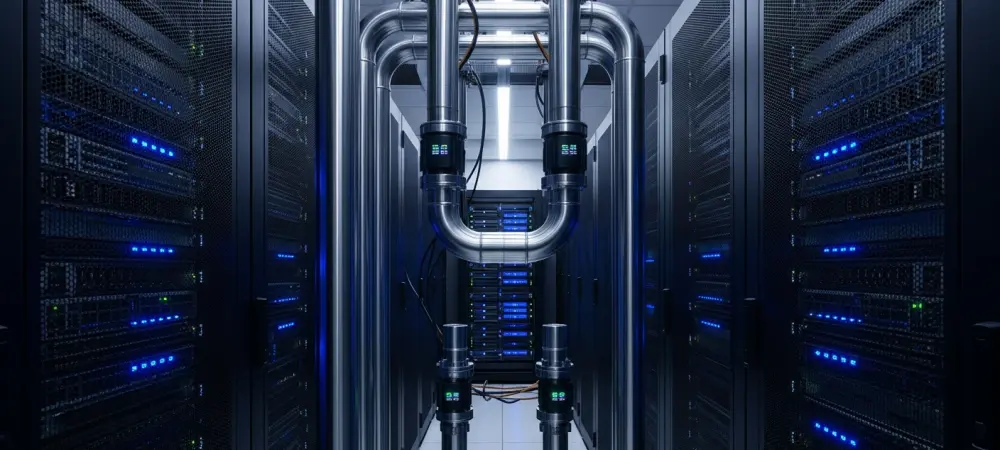
We are witnessing a massive shift toward closed-loop systems that aim to decouple high-performance computing from massive water consumption. Microsoft’s leadership has pointed out that a modern data center’s water footprint can be roughly equivalent to that of a single restaurant, which is a far cry from the image of a facility draining a local river. Innovations like Nvidia’s DSX reference design are pushing the envelope even further by aiming for zero water consumption through dry-cooler technology. In these setups, they might only need to engage traditional chillers for about one percent of the year in specific climates, effectively turning the “thirsty” data center into a self-contained, air-cooled unit that leaves the local water supply untouched.
What is your forecast for the relationship between local communities and the tech giants building these data centers?
I expect the next few years to be a period of intense negotiation where tech companies must become much more transparent and communicative in their local engagement. We will likely see more towns following the path of those current moratoria unless companies can prove their facilities are as resource-neutral as these new dry-cooler designs suggest. The industry will need to move beyond just being a hidden utility and instead prove that it can coexist without depriving the local population of their air quality, tax fairness, or water security. Ultimately, the data centers that survive and thrive will be the ones that integrate seamlessly into the local environment, proving they are as “pro-human” as the communities they serve.