

Unveiling the Economic Revolution Driven by AI
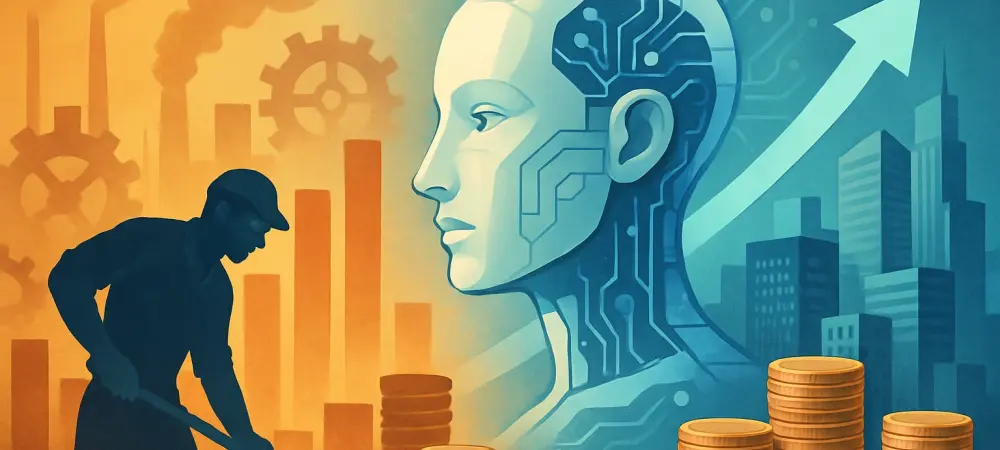
The transformative power of artificial intelligence is reshaping global economies with unprecedented speed, creating a landscape where innovation drives progress while simultaneously dismantling established structures, often leaving societal disruption in its wake. This dual nature of AI, as both a catalyst for growth and a source of upheaval, mirrors the historical concept of creative destruction, a principle recently spotlighted by the 2025 Nobel Prize in Economics awarded to Joel Mokyr, Philippe Aghion, and Peter Howitt. Their work underscores how relentless technological advancement fuels sustained prosperity, yet it also poses significant challenges for adaptation. This analysis delves into the roots of creative destruction, examines AI’s current economic impact, incorporates expert insights, and explores future implications, offering a comprehensive view of navigating this dynamic era.
The Pillars of Creative Destruction in Economic Progress
Historical Underpinnings and Contemporary Significance
Creative destruction, a term coined by economist Joseph Schumpeter and later formalized by Aghion and Howitt in their 1992 model, describes how innovation propels economic growth by replacing outdated systems with novel solutions. Data from World Bank reports illustrate this trend vividly, showing that since the Industrial Revolution, Europe’s GDP growth rates have averaged a steady increase, reflecting sustained prosperity through technological churn. This historical pattern reveals a consistent cycle where new industries emerge at the expense of old ones, driving long-term advancement despite short-term friction.
The relevance of this concept to AI’s trajectory is striking. Just as steam engines and mechanized production once redefined economies, AI today is rewriting the rules of productivity and competition. Economic studies from institutions like the International Monetary Fund highlight that innovation-driven displacement, while painful for certain sectors, has historically paved the way for broader societal gains, a dynamic that remains critical to understanding AI’s role in modern markets.
Parallels of Resistance: From Luddites to AI Anxiety
History offers cautionary tales of resistance to technological change, most notably through the Luddite movement of the early 19th century, when textile workers destroyed machinery in protest against job losses. This early backlash finds echoes in contemporary fears surrounding AI-driven automation, as workers across industries grapple with the threat of obsolescence. The parallel lies in the human cost of progress, where innovation often outpaces societal readiness to adapt.
Modern examples amplify these concerns. In manufacturing, companies like Tesla have integrated AI to automate production lines, significantly reducing labor needs while boosting efficiency. Similarly, in journalism, AI tools for content generation are displacing traditional roles, raising questions about the future of creative professions. These cases underscore a persistent tension between technological advancement and workforce stability, echoing historical struggles with a modern twist.
AI as the Vanguard of Economic Transformation
Swift Integration and Economic Realignment
The adoption of AI across industries is accelerating at a remarkable pace, with global investments reaching billions annually, according to recent reports from McKinsey. This surge is evident in sectors like healthcare, where AI enhances diagnostic precision, and finance, where algorithms optimize trading strategies, driving productivity gains that reshape economic landscapes. Such rapid integration signals a new era of efficiency, yet it also challenges traditional frameworks.
However, the speed of AI’s rollout often surpasses the capacity of institutions to respond effectively. While opportunities abound, such as breakthroughs in personalized medicine, the flip side reveals significant hurdles, including labor market disruptions that affect millions. The disparity between innovation’s benefits and its immediate costs highlights a critical need for adaptive strategies to manage this transformative wave.
Tangible Impacts: AI Successes and Struggles
Concrete examples illuminate AI’s dual impact on economies. Amazon’s use of robotic warehouses showcases how AI streamlines logistics, slashing delivery times and costs, thereby redefining retail efficiency. In healthcare, DeepMind’s advancements in protein folding demonstrate AI’s potential to revolutionize medical research, offering hope for faster drug development and tailored treatments.
Yet, the destructive aspect of this cycle is equally evident. Small businesses, unable to match the AI-driven capabilities of tech giants, often find themselves outcompeted, leading to market consolidation and reduced diversity. This imbalance illustrates the harsh reality of creative destruction, where innovation’s benefits are not universally accessible, often exacerbating economic divides and necessitating targeted interventions.
Expert Perspectives on Harmonizing Innovation with Equity
Insights from the 2025 Nobel laureates provide a roadmap for navigating AI’s economic implications. Joel Mokyr emphasizes the cultural foundations of innovation, arguing that openness to new ideas remains essential for progress. Philippe Aghion, meanwhile, advocates for maintaining competitive markets, aligning AI development with sustainability, and preventing power concentration among a few dominant firms, which could stifle future advancements.
Industry leaders and economists echo these sentiments, stressing the importance of updated governance to address AI’s societal fallout. There is broad agreement on the need for education reform to equip workers with relevant skills, alongside policies that ensure fair competition. Such measures aim to mitigate risks like job displacement while maximizing AI’s potential to drive inclusive growth, reflecting a collective push for balance in this rapidly evolving field.
Looking Ahead: AI’s Economic Promises and Perils
AI holds transformative potential for sectors yet to be fully tapped, such as education, where adaptive learning platforms could personalize instruction at scale. In energy, AI-driven optimization of renewable grids promises to enhance sustainability, addressing global challenges with innovative solutions. These prospects signal a future where technology could redefine societal well-being on multiple fronts.
Nevertheless, significant risks loom on the horizon. The environmental burden of AI’s energy-intensive operations, coupled with deepening inequality from job losses, poses serious threats to stability. Additionally, the concentration of AI resources like data and computing power in the hands of a few tech giants risks creating monopolies, potentially stifling competition and innovation if unchecked.
The broader implications of these trends weigh heavily across industries. While global productivity gains offer a positive outlook, unchecked disruption could fuel social unrest, underscoring the pivotal role of policy in shaping AI’s trajectory. Crafting regulations that foster innovation without sacrificing equity remains a paramount challenge, requiring coordinated efforts to steer this powerful technology toward beneficial outcomes.
Reflecting on the Path Forward
Looking back, the journey through AI’s economic impact reveals a profound interplay of creation and destruction, rooted in historical patterns and amplified by modern technology. The insights from experts underscore a pressing need for balance, as the rapid pace of change often outstrips societal readiness. Future uncertainties loom large, yet they also present opportunities for proactive engagement.
Moving ahead, actionable steps emerge as critical. Policymakers are urged to develop flexible regulatory frameworks that encourage innovation while safeguarding against monopolistic tendencies. Businesses need to invest in reskilling initiatives to prepare workforces for evolving demands. Communities, too, have a role in advocating for inclusive policies that ensure AI’s benefits reach beyond a privileged few. These collaborative efforts promise a pathway to harness technology’s potential while mitigating its risks, setting a precedent for sustainable progress in an era of relentless change.