

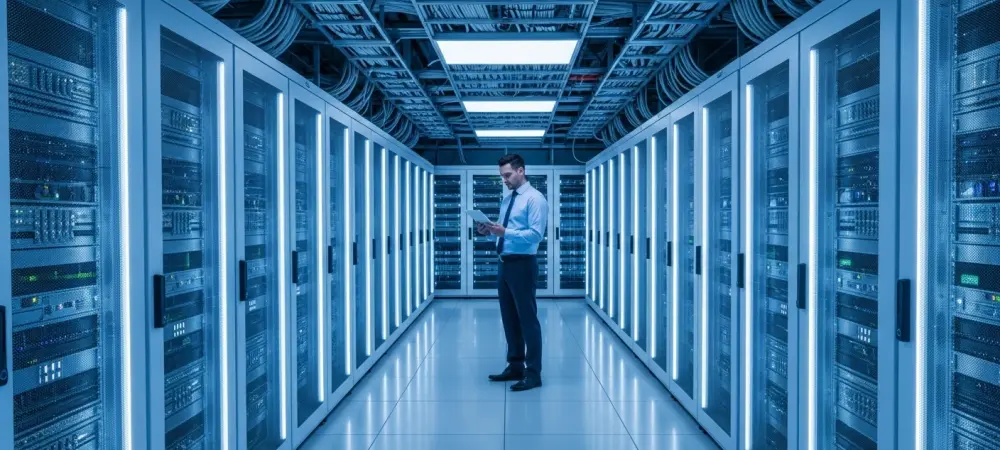
The seismic shift occurring within the back offices of global finance is no longer a quiet transition but a wholesale redefinition of how trillions of dollars move across the planet every single day. As the Depository Trust & Clearing Corporation (DTCC) processes an incomprehensible $3.7 quadrillion in annual securities transactions, the migration of this workload to public cloud environments marks the end of the traditional, isolated data center era. This evolution represents a fundamental change in the DNA of market stability, where the rigidity of legacy hardware is being replaced by the fluid scalability of software-defined architectures.
The Shift Toward Cloud-Native Market Infrastructure
Adoption Statistics: The Scale of Digital Migration
The momentum behind cloud adoption in Tier 1 financial institutions has reached a critical mass, driven by the need to handle unprecedented transaction volumes. When an entity like the DTCC, which serves as the backbone of the U.S. financial markets, moves its core operations to the cloud, it signals that the technology has met the highest possible standards for security and throughput. This shift is characterized by a move away from fixed physical assets toward elastic environments that can expand or contract based on real-time market volatility. A primary catalyst for this acceleration was the SEC’s “Notice of No Objection,” a regulatory green light that cleared the path for mission-critical clearance and settlement services to reside in public cloud environments. This decision effectively dismantled the long-standing belief that systemic risk could only be managed within private, on-premise facilities. Consequently, the industry is seeing a rapid divestment from legacy mainframe systems in favor of cloud-native frameworks that offer superior diagnostic capabilities and operational transparency.
Real-World Applications: Modernizing the Core and Digital Assets
The practical application of this shift is visible in the reroofing of the National Securities Clearing Corporation (NSCC) and the Fixed Income Clearing Corporation (FICC) through Amazon Web Services. By rearchitecting these systems, engineers have achieved a level of modularity that allows for fault isolation—ensuring that a localized glitch does not trigger a systemic shutdown. This microservices-based approach allows for continuous updates without the downtime traditionally associated with massive financial system maintenance windows.
Beyond traditional equities, the focus has shifted toward the lifecycle of emerging digital asset classes through platforms like Microsoft Azure. The migration of “Digital Launchpad” to Azure demonstrates how cloud providers are becoming the staging grounds for tokenized assets and distributed ledger experiments. Furthermore, the integration of generative AI, such as agentic coding services and Microsoft 365 Copilot, is fundamentally altering the software development lifecycle, allowing developers to automate routine security patching and code generation with higher precision than manual processes.
Industry Perspectives on Resilience and Modernization
Financial technologists increasingly view the transition as a defensive necessity rather than a mere efficiency play. The move toward “Cloud First” frameworks allows for decentralized cyber defense mechanisms that are far more difficult for bad actors to penetrate than centralized legacy hubs. Expert consensus suggests that the ability to replicate data across geographically dispersed regions in milliseconds provides a level of disaster recovery that was physically impossible a decade ago.
However, the speed of innovation must be balanced against the rigorous governance required for global financial stability. Regulatory experts emphasize that while the cloud offers agility, it also introduces a new form of concentration risk. To counter this, many institutions are adopting a “dual-cloud” strategy, splitting critical workloads between AWS and Microsoft Azure. This redundancy ensures that the failure of a single provider cannot paralyze the global economy, creating a diversified infrastructure that mirrors the risk-mitigation strategies used in investment portfolios.
Future Implications for Global Finance
The trajectory of market infrastructure suggests an eventual move toward a fully decentralized, borderless model for global settlement. As cloud-enabled AI becomes more sophisticated, we can expect real-time risk assessment tools to operate autonomously within high-frequency environments, identifying and neutralizing threats before they manifest. This transition will likely blur the lines between domestic and international markets, as cloud infrastructure provides a consistent technological layer across different jurisdictions.
The benefits of increased market agility are substantial, yet they come with the challenge of maintaining data sovereignty. As core infrastructure becomes increasingly borderless, institutions must navigate a complex web of cross-border compliance requirements. The reliance on third-party platforms also introduces a dependency that requires constant oversight. Despite these hurdles, the move toward a cloud-centric model is inevitable, as the cost of maintaining obsolete systems becomes a greater risk than the transition itself.
Conclusion: A New Standard for Financial Stability
The landmark transition of systemic financial services to the cloud established a necessary foundation for a digital-first global economy. This evolution proved that the convergence of artificial intelligence, cloud scalability, and digital asset management was not an experimental phase but a structural requirement for modern market integrity. Stakeholders recognized that the traditional barriers between technology and finance had permanently dissolved, necessitating a proactive approach to infrastructure design. Future efforts will likely focus on harmonizing international cloud standards to prevent regulatory fragmentation while continuing to refine the AI-driven security protocols that now guard the world’s wealth. Market participants who prioritized this modernization effectively insulated themselves against the volatility of an increasingly complex financial landscape.