

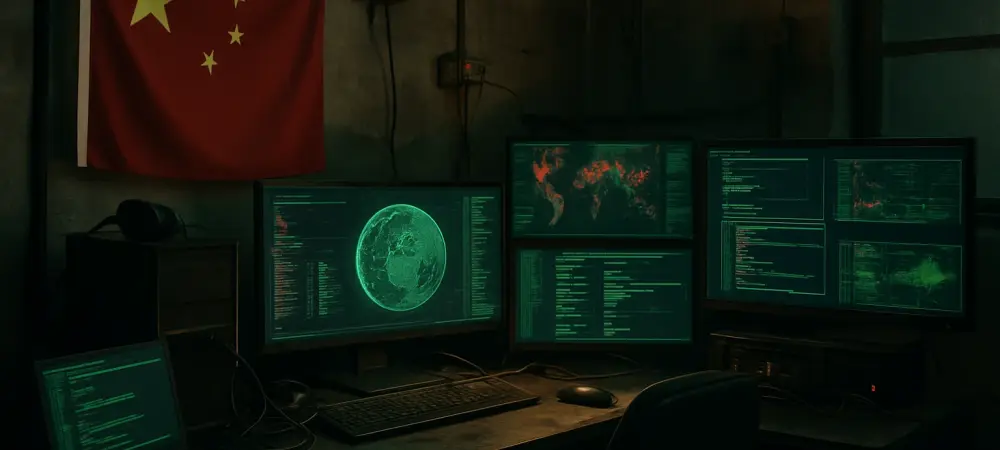
In an increasingly digital world, a staggering reality emerges: nation-state cyber espionage campaigns have compromised critical infrastructure across the globe, with Chinese state-sponsored actors leading the charge. A recent report highlights that virtualization systems, often considered the backbone of enterprise IT environments, are now prime targets for these sophisticated adversaries. This alarming trend underscores a new battlefield in cyberspace where attackers seek not just data, but control over the very systems that power modern organizations. The focus on such infrastructure reveals a calculated strategy to undermine security at its core, posing unprecedented risks to global stability.
The significance of understanding these cyber espionage tactics cannot be overstated in today’s interconnected landscape. As critical systems like virtualization platforms and network appliances become focal points for attacks, the potential for widespread disruption grows exponentially. This analysis delves into a specific campaign orchestrated by a threat actor known as Fire Ant, exploring their methods, the real-world implications of their actions, and expert insights into combating such threats. Furthermore, it examines future trends and offers key takeaways for bolstering cybersecurity defenses against these persistent adversaries.
Unveiling the Fire Ant Campaign: A Deep Dive into Tactics
Emerging Patterns in Infrastructure Attacks
A disturbing trend has surfaced in the realm of cyber espionage, where virtualization and network infrastructure are increasingly targeted by state-sponsored actors. Since early this year, Fire Ant has demonstrated a particular focus on VMware appliances such as vCenter and ESXi hosts. This shift toward exploiting the foundational layers of IT environments signals a strategic intent to gain deep, persistent access to sensitive systems, bypassing traditional security measures with alarming precision.
Data from a detailed report released on July 24 by cybersecurity researchers reveals the exploitation of specific vulnerabilities, such as CVE-2023-34048, an out-of-bounds write flaw in vCenter. This flaw allows unauthenticated remote code execution, granting attackers control over the virtualization layer. Such hypervisor-level access enables interaction with guest virtual machines, exposing blind spots in conventional security frameworks and highlighting the growing sophistication of these infrastructure-centric attacks.
Industry analyses, including tracking of the group UNC3886 by cybersecurity firms, further confirm this trend as a hallmark of Chinese nation-state actors. The deliberate focus on infrastructure over endpoints suggests a long-term strategy aimed at maintaining covert control over critical systems. This pattern of targeting virtualization environments is reshaping the threat landscape, necessitating a reevaluation of how organizations protect their most vital assets.
Real-World Implementation: Methods and Specific Cases
Fire Ant’s operational tactics reveal a meticulous approach to achieving persistent access within targeted networks. One prominent technique involves using PowerCLI, a command-line tool, to extract credentials directly from memory snapshots of virtual machines. This method allows attackers to execute commands without needing in-guest credentials, effectively tampering with security tools and maintaining a low profile during operations.
Another critical tactic centers on compromising network appliances to bypass segmentation controls. By exploiting CVE-2022-1388 in F5 load balancers, Fire Ant deploys webshells and tunneling mechanisms to bridge isolated network segments. This enables routing of malicious traffic through trusted endpoints, evading firewall rules and demonstrating a profound understanding of network architecture in their quest for unrestricted access.
The dynamic between Fire Ant and defenders resembles a relentless game of cat and mouse. When systems are cleaned or malicious tools removed, the threat actor quickly re-compromises assets, rotates toolsets, and renames binaries to avoid detection. Specific instances, such as unauthorized command execution on ESXi hosts, illustrate their adaptability and commitment to maintaining a foothold, posing significant challenges to even the most robust defense mechanisms.
Expert Perspectives on Chinese Cyber Espionage
Insights from cybersecurity researchers point to Fire Ant’s likely attribution to a Chinese nation-state group, based on operational patterns and regional indicators. Telltale signs, such as errors in command execution linked to Chinese-language keyboard layouts, bolster this assessment. These subtle clues, combined with consistent activity hours, align with broader industry observations of state-sponsored espionage originating from the region.
Thought leaders in the field, including analysts tracking UNC3886, emphasize the strategic intent behind targeting critical infrastructure. Such attacks are not merely opportunistic but are designed to secure long-term access for intelligence gathering and potential disruption. The focus on virtualization and network layers reflects a calculated effort to exploit areas often overlooked by traditional security tools, amplifying the impact of each breach.
Experts also highlight the immense challenges in defending against advanced persistent threats of this nature. Traditional endpoint security is insufficient when adversaries operate at the infrastructure level, necessitating enhanced monitoring and a shift in defensive priorities. The consensus is clear: organizations must adapt by implementing comprehensive visibility across hypervisor and network environments to detect and mitigate these stealthy operations effectively.
Future Implications of Infrastructure-Centric Cyber Threats
Looking ahead, the trajectory of Chinese cyber espionage tactics suggests an even greater emphasis on virtualization and network layers as primary attack vectors. As adversaries refine their approaches, the potential for more disruptive and widespread campaigns looms large. This evolution could target an expanding array of infrastructure components, further complicating the security landscape for organizations worldwide.
For defenders, this trend presents both opportunities and obstacles. The urgent need for updated security tools tailored to hypervisor and network monitoring offers a chance to build more resilient systems. However, the complexity of implementing such measures, coupled with the rapid adaptability of threat actors like Fire Ant, poses significant hurdles that must be addressed through innovation and collaboration across industries.
The broader implications span multiple sectors, particularly those reliant on critical infrastructure. Heightened risks to power grids, financial systems, and healthcare networks could emerge if these trends persist unchecked. While improved defenses could mitigate some vulnerabilities, the possibility of enduring weaknesses remains a concern, urging a proactive stance to anticipate and counter the next wave of infrastructure-focused threats.
Key Takeaways and Call to Action
Reflecting on the past, the Fire Ant campaign underscored a pivotal shift in cyber espionage, with a laser focus on VMware and network infrastructure revealing vulnerabilities in foundational systems. Their sophisticated persistence and evasion tactics, coupled with the geopolitical context of Chinese state-sponsored efforts, painted a stark picture of the challenges faced by global cybersecurity communities. Each operation by this threat actor served as a reminder of the evolving nature of digital threats.
Moving forward, organizations must pivot from endpoint-centric to infrastructure-focused security models to effectively combat these dangers. This transition demands investment in tools and strategies that prioritize visibility at the hypervisor and network levels. Businesses and policymakers are encouraged to allocate resources toward adaptive cybersecurity measures, ensuring defenses evolve alongside emerging threats.
Collaboration on global threat intelligence emerges as a cornerstone for future resilience. By sharing insights and fostering partnerships, stakeholders can build a united front against advanced adversaries like Fire Ant. The path ahead requires a commitment to innovation and vigilance, ensuring that the lessons learned from past encounters shape stronger, more proactive defenses for the digital age.