

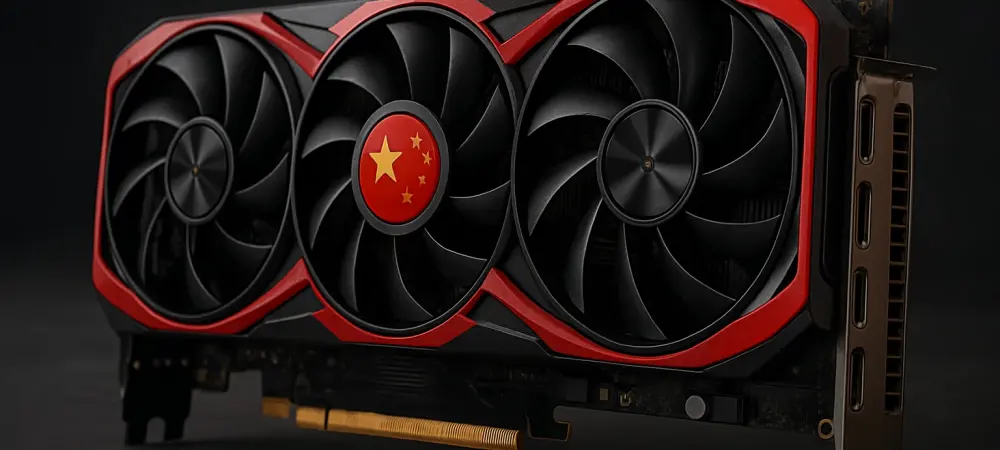
China’s ascent in the global technology arena has taken a striking turn with the emergence of the Lisuan G100, a gaming GPU that’s capturing attention as a potential disruptor in both gaming and AI sectors. Imagine a world where a single piece of hardware from a homegrown Chinese company challenges the long-standing dominance of industry giants like NVIDIA and AMD, not just in gaming but also in cutting-edge AI applications. This development signals more than just a new product launch; it underscores China’s aggressive push for self-reliance in high-performance computing amid intensifying global tech rivalries. This analysis dives deep into the Lisuan G100’s capabilities, explores its dual-purpose design for gaming and AI, examines broader industry trends, and evaluates its potential to reshape China’s technological landscape.
The Emergence of Lisuan G100: A Milestone in Chinese GPU Technology
Technical Specifications and Competitive Edge
The Lisuan G100 stands out as a remarkable achievement in China’s GPU sector, built on a 6nm process that promises efficiency and power. Reports suggest its gaming performance aligns closely with NVIDIA’s RTX 4060, positioning it as a serious contender for mainstream gamers seeking high-quality graphics without relying on foreign hardware. This level of performance marks a significant step forward for a domestic product in a market historically dominated by Western technology.
Beyond raw specs, the GPU’s market positioning reflects a growing confidence in China’s tech industry. Sources such as ITHome and MyDrivers have noted a surge in domestic innovation, with local companies gaining traction among consumers and developers alike. This trend indicates a shift in perception, where Chinese GPUs are no longer seen as mere alternatives but as viable competitors in a crowded field.
Versatility in Application and Dual Functionality
A standout feature of the G100 is its support for INT8 operations, enabling user-end AI workloads such as training and inference tasks. This capability addresses a critical shortfall in China’s AI hardware ecosystem, where few domestic solutions have offered such flexibility. By integrating AI functionality into a gaming-focused GPU, Lisuan is carving a unique niche that could appeal to a wide range of users, from tech enthusiasts to data scientists.
In the gaming sphere, the G100 holds its own against local rivals like Moore Threads’ S4000, offering practical benefits for developers and gamers seeking accessible, high-performance hardware. Its dual-purpose design not only enhances its appeal but also showcases a forward-thinking approach to hardware development. This versatility could redefine expectations for what a gaming GPU can achieve in the domestic market, potentially setting a new standard for multifunctional tech.
Industry Dynamics: China’s Drive for Tech Autonomy
China’s pursuit of technological independence has become a defining theme in its tech sector, particularly in the face of global supply chain disruptions and restrictions on foreign technology. The Lisuan G100 embodies this ambition, with industry analysts highlighting its role in reducing dependence on Western GPU solutions. Experts point to the GPU as a symbol of China’s broader strategy to build a self-sufficient tech ecosystem capable of withstanding external pressures.
Central to this narrative is Lisuan’s proprietary ‘TrueGPU Tiantu’ architecture and independent software stack, which demonstrate a commitment to creating a standalone platform. This approach contrasts with past reliance on adapted foreign technologies and signals a maturing domestic industry. The consensus among tech observers is that such innovations are vital for China to secure a foothold in high-performance computing, especially as geopolitical tensions continue to shape access to critical components.
The trend toward self-reliance extends beyond individual products, reflecting a systemic shift in how China approaches technology development. The growing emphasis on versatile hardware, as seen in the G100’s design, aligns with industry priorities to maximize utility across multiple sectors. This strategic focus could position Chinese firms to not only meet domestic demand but also influence global standards in GPU technology over time.
Future Prospects: Navigating Challenges and Seizing Opportunities
Looking ahead, the Lisuan G100 holds the potential to dominate China’s domestic gaming GPU market if its performance claims are substantiated through real-world testing. Its dual functionality could also open doors in the AI accelerator market, an area where memory-efficient calculation formats like INT8 are in high demand. Success in these arenas would mark a significant achievement for Lisuan and bolster China’s reputation as a hub for cutting-edge hardware.
However, challenges remain, particularly in closing historical performance gaps with industry leaders like NVIDIA and AMD. Past domestic GPUs have struggled with optimization and compatibility, issues that Lisuan must address to build trust among users. Additionally, establishing a robust ecosystem of software and developer support will be crucial for the G100 to achieve sustained market relevance, a hurdle that cannot be underestimated given the entrenched dominance of Western platforms.
On a broader scale, the implications of the G100’s trajectory extend to China’s overarching tech ambitions. A successful rollout could disrupt established market dynamics, inspiring further innovation among domestic firms. Conversely, scalability issues or unmet performance expectations might temper enthusiasm, highlighting the need for consistent investment and refinement. The balance between opportunity and obstacle will shape how this GPU influences China’s position in the global tech landscape.
Closing Thoughts: Reflecting on a Pivotal Shift
Looking back, the journey of the Lisuan G100 captured a transformative moment in China’s GPU sector, blending gaming prowess with AI potential to challenge long-standing norms. Its innovative features and alignment with the nation’s self-reliance goals underscored a critical pivot toward homegrown technology. The industry stood at a crossroads, with Lisuan’s efforts signaling a bold step into uncharted territory.
As a next step, stakeholders were encouraged to closely track the G100’s retail launch progress and its performance in real-world scenarios. Building partnerships with developers and fostering a supportive ecosystem emerged as essential actions for Lisuan to cement its market presence. Beyond immediate outcomes, the focus shifted to how such innovations could inspire a wave of domestic advancements, potentially redefining global tech competition in the years ahead.