

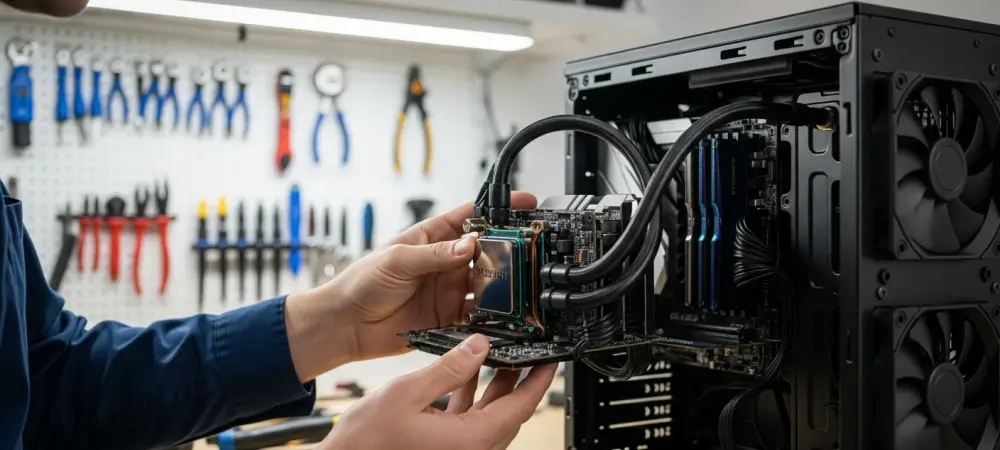
The excitement of assembling a state-of-the-art computer with the latest components can quickly sour into a deeply frustrating experience when a brand-new system suddenly and permanently fails. Recent reports of high-end Asus AM5 motherboards failing when paired with new AMD processors have brought the issue of platform stability back into the spotlight. This analysis examines the recurring trend of instability on the AM5 socket, delving into specific incidents, manufacturer responses, and the broader implications for enthusiasts in the high-performance PC market.
The Emerging Pattern of AM5 Platform Issues
Recent Incidents Asus 800 Series and Ryzen 9800X3D Failures
A disturbing pattern has begun to surface within the PC building community, specifically involving Asus’s new B850 and X870E motherboards. User reports detail a consistent failure sequence where a newly built system operates perfectly, only to fail to boot after a routine reboot or when waking from sleep mode. This isn’t a simple software glitch; the system displays a “00” error code, a clear indicator that the motherboard can no longer detect the CPU.
This specific error signifies a critical hardware failure that is often irreversible, marking a catastrophic end for what should be a premium computing experience. The trend points not to an initial setup problem but to a latent instability that can strike without warning, turning a significant investment into a non-functional collection of parts. This consistency in failure across different user builds suggests a systemic issue rather than isolated incidents of user error.
Real World Scenarios From Stable Systems to Bricked Components
The real-world impact of this instability is severe, transforming the dream of a new build into a troubleshooting nightmare. Concrete examples from online forums and communities paint a vivid picture: builders who have successfully assembled their systems, installed operating systems, and even used their new PCs for days suddenly find them inert. These are not novices, but experienced builders who are left staring at a black screen despite their best efforts. These case studies underscore a crucial point: standard troubleshooting methods are proving entirely ineffective. Reseating the CPU, clearing the CMOS, and swapping other components yield no results, leaving consumers with bricked, high-end motherboards and processors. The abrupt transition from a perfectly stable system to a dead one highlights the tangible and costly consequences of this emerging platform-wide issue.
Manufacturer Accountability and Industry Precedent
Asus’s Response and Proactive Measures
In the face of growing reports, Asus has moved to address the situation publicly, initiating an internal investigation to validate the claims. The company has also emphasized its close collaboration with AMD to get to the root of the problem, a necessary step in untangling the complex interplay between motherboard and CPU. This formal acknowledgment shows that the issue is being taken seriously at the corporate level.
Beyond its internal review, Asus has issued direct guidance to its customers. The company officially advises all users of its AMD 800-series motherboards to update to the latest available BIOS as a primary measure to ensure system stability. For those already affected, Asus is directing them to its customer support channels, demonstrating a commitment to assisting users and mitigating the damage to both its products and its reputation.
Lessons from the Past The Asrock and Ryzen 9000 Issue
This is not the first time the AM5 platform has been at the center of such a controversy. The current situation with Asus mirrors a more widespread problem from the previous year that involved Asrock motherboards and Ryzen 9000 series CPUs. That incident set a critical precedent for understanding where the fault for such failures often lies.
After a thorough investigation, Asrock eventually admitted that the CPU failures were not due to a flaw in AMD’s processors but were instead caused by its own aggressive BIOS settings, which supplied excessive amperage to the CPU socket. This history provides essential context, reinforcing the theory that motherboard manufacturers pushing performance boundaries with out-of-spec default settings, rather than faulty CPUs, are the likely culprits in these catastrophic hardware failures.
Future Implications and Consumer Guidance
The Path Forward Balancing Performance and Reliability
The long-term health of the AM5 platform may depend on a fundamental shift in priorities among motherboard manufacturers. The race to claim the best performance benchmarks has led to increasingly aggressive default BIOS configurations that, while appealing on paper, introduce a significant risk of hardware damage. The path forward requires a renewed focus on reliability, ensuring that out-of-the-box settings prioritize component longevity over marginal performance gains.
This could lead to several key developments in the industry. We may see manufacturers adopt more conservative default power delivery profiles, leaving extreme overclocking and voltage adjustments to users who understand the risks. Moreover, these incidents will likely push for stricter, more transparent collaborative testing between motherboard vendors and AMD before new products are launched, preventing such widespread issues from reaching consumers in the first place.
Challenges and Recommendations for PC Builders
For consumers, particularly early adopters, the primary challenge is navigating the inherent risk of investing in a new and evolving platform. The desire to own the latest technology is strong, but this trend serves as a stark reminder that cutting-edge hardware can come with unforeseen stability problems that take time to resolve.
The most prudent recommendation for PC builders is to exercise caution. Instead of purchasing new motherboards and CPUs on day one, it is often wiser to wait for several mature BIOS releases and to closely monitor community feedback and professional reviews. This trend highlights a broader implication for the modern PC builder: in an era of ever-increasing component complexity and power, informed patience has become one of the most valuable tools in ensuring a successful and long-lasting build.
Conclusion A Call for Stricter Standards
The recurrence of catastrophic, motherboard-induced CPU failures on the AM5 platform represents a troubling trend. What began with Asrock and now appears to be emerging with Asus points to a systemic issue rooted in overly aggressive BIOS configurations designed to push performance at the expense of safety. This pattern undermines the foundational expectation that components should operate reliably within their specified parameters.
While the manufacturers involved have responded to these issues, the incidents themselves underscored a critical need for more rigorous quality assurance and transparent communication within the industry. These events served as a powerful reminder for the PC building community that adopting cutting-edge technology requires careful research and a healthy dose of caution. Ultimately, maintaining consumer trust will depend on a collective commitment to prioritizing platform stability over marketing-driven performance claims.