

A precarious balancing act is unfolding within the walls of one of the world’s most iconic technology companies, where insatiable demand for artificial intelligence hardware is both a powerful lifeline and an immense operational strain. Intel’s fourth-quarter 2025 performance paints a picture of a company caught between two worlds: one of high-margin, AI-fueled success and another constrained by persistent manufacturing challenges. This internal schism has forced a series of strategic pivots that will define its trajectory through 2026, prioritizing its most profitable ventures while navigating the immense pressure of its production limitations.
The High-Stakes Chip Game: A New Competitive Landscape
The semiconductor industry has been reshaped by the artificial intelligence boom, transforming it into a hyper-competitive arena where manufacturing prowess is paramount. Market leadership is increasingly defined not just by chip design but by the ability to produce those designs at scale on the most advanced process nodes. This reality has placed immense pressure on all players, pushing the boundaries of physics and supply chain logistics.
In this landscape, key players like Nvidia have thrived by leveraging a fabless model, focusing exclusively on design while outsourcing manufacturing to titans like TSMC. This approach has allowed for rapid innovation and scale. In contrast, Intel’s identity is deeply rooted in its integrated device manufacturer (IDM) model, handling both design and in-house production. While this offers potential advantages in optimization and control, it also carries the immense burden of keeping its foundry capabilities at the absolute cutting edge, a challenge that has become the central plot point in its current corporate narrative.
A House Divided: Intel’s Diverging Fortunes
Riding the AI Wave: The Data Center’s Dominance
The brightest spot in Intel’s recent financial report was undoubtedly its Data Center and AI group. The division posted an impressive nine percent surge in quarterly revenue, a direct result of the voracious appetite for computational power from cloud providers and large enterprises. This growth is not merely a passive benefit of a rising market tide; it reflects a successful alignment of products like Xeon processors and new AI accelerators with the specific, high-performance needs of AI workloads.
This success underscores a fundamental shift in the market, where data centers have become the primary battleground for high-margin chip sales. As companies race to build out their AI infrastructure, the demand for powerful, efficient processors has created a powerful tailwind for Intel’s enterprise-focused products. The performance of this group demonstrates that where Intel can produce competitive chips, the demand is robust and immediate.
The Consumer Crunch: A Strategic De-emphasis
The story is markedly different in the consumer-facing Client Computing Group. This division, responsible for the well-known Core processors and Arc graphics, saw its revenue decline by seven percent. While market fluctuations play a role, this downturn is also a symptom of a deliberate de-emphasis. With manufacturing capacity stretched thin, a conscious choice has been made to allocate resources elsewhere.
Intel’s overall Q4 2025 revenue of $13.7 billion, a modest four percent year-over-year decrease, effectively masks this deep internal division. The strength of the data center segment is partially offsetting the weakness on the consumer side, but this financial summary obscures the critical strategic trade-offs being made behind the scenes. The company is actively choosing to service one demanding market at the potential expense of another.
The 18A DilemmWhen Production Can’t Keep Pace with Demand
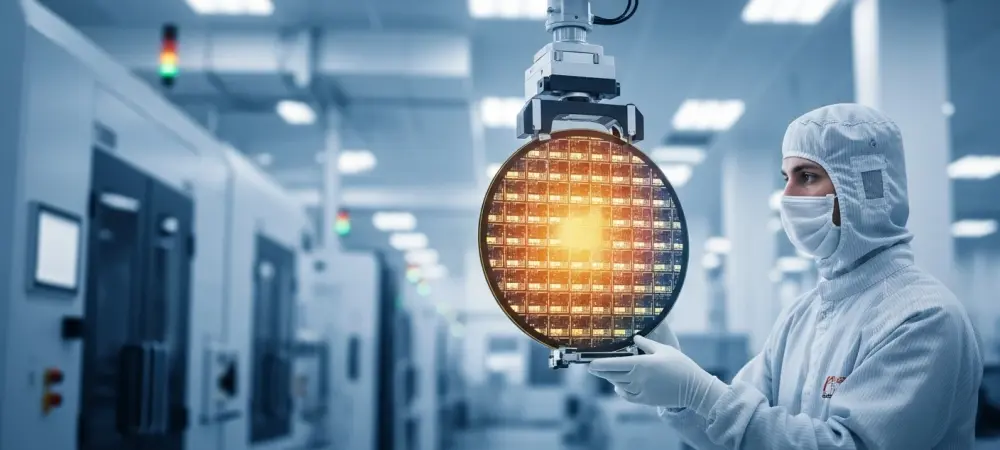
The root cause of Intel’s strategic predicament lies in the persistent manufacturing struggles with its advanced 18A process node. Yield rates—the percentage of functional chips per wafer—have consistently been below expectations. Although management reports that yields are improving monthly, these gains are coming from a very low starting point and have not yet reached the levels required for mass, cost-effective production.
This production bottleneck has a direct and significant operational impact. The company finds itself in the paradoxical position of selling nearly every advanced chip it can make while simultaneously being unable to meet the soaring demand from the market. This supply constraint forces difficult choices, as every wafer produced on the 18A node becomes a precious resource that must be allocated with surgical precision to maximize profitability. Management has publicly identified the first quarter of 2026 as the “trough” of these supply issues, projecting that a meaningful recovery in output will begin in the second quarter.
A Calculated Risk: Reconfiguring the Production Playbook
Faced with limited internal wafer capacity, Intel is making a calculated but risky decision to reconfigure its entire production strategy. The company is deliberately funneling its constrained 18A supply toward the high-margin data center and AI products, where profitability is highest and demand is most urgent. This move ensures that its most valuable customers receive the processors they need, shoring up its most successful business segment. The unavoidable consequence of this prioritization is a growing reliance on external foundries, primarily TSMC, for a larger portion of its consumer chip production. While outsourcing is a practical solution, it represents a significant compromise for a company built on the principle of in-house manufacturing leadership. This strategy also introduces potential risks for the consumer market, including the possibility of shortages or price increases for upcoming products like the “Panther Lake” processors, which are slated for mostly in-house production.
The Road Ahead: Intel’s Two-Pronged Strategy for a Turnaround
Looking forward, Intel is charting a course based on a two-pronged strategy designed to resolve its current challenges and secure long-term growth. The first prong is intensely focused on manufacturing, with massive efforts dedicated to refining the 18A process and accelerating the development of its successor, the 14A node. This technical roadmap is crucial not only for its own products but also for its ambitious plans for Intel Foundry Services.
The second prong involves an ambitious product roadmap. The next-generation “Nova Lake” architecture, planned for the end of 2026, is poised to unify its processor families on the 18A process, assuming the yield issues are resolved. In parallel, the long-term vision for Intel Foundry Services is to onboard major third-party customers by late 2026 or early 2027, a goal that hinges entirely on demonstrating that its manufacturing technology is both reliable and competitive.
The Final Verdict: Execution is Everything
The central tension defining Intel today is clear: the powerful tailwind of AI-driven demand is being met by the significant headwind of its own manufacturing execution. The company’s strategic decision to prioritize its data center business is a logical response to its current constraints, providing a financial cushion while it works to solve its fundamental production problems.
Ultimately, Intel’s prospects depend less on its designs and more on its ability to deliver them at scale. The roadmap is ambitious, and the market demand is undeniable. However, success hinges entirely on the company’s capacity to resolve its 18A yield issues. Without a stable and high-volume manufacturing foundation, even the most innovative product architectures will fail to capitalize on the immense market opportunity, leaving Intel’s turnaround story dependent on a successful execution of its complex production playbook.