

The insatiable appetite of artificial intelligence has officially outpaced the ability of the traditional electrical grid to supply reliable power, forcing a radical reimagining of the data center industry. This shift is not merely a matter of scale but a complete reconstruction of how energy is acquired, managed, and distributed across the digital landscape. As high-density AI workloads become the standard, the availability of electricity has surpassed physical square footage as the primary metric of success for developers. The current market environment reflects a reality where securing a steady megawatt of power is more valuable than the land upon which the servers sit. Consequently, the industry is witnessing a strategic pivot where developers must act as energy strategists to maintain the pace of technological innovation.
The Surge in AI Compute and Energy Consumption
Market Dynamics: The Scaling Demand for Power
Current projections from the International Energy Agency indicate that data center electricity consumption is on a trajectory to double by 2030, reflecting the intense pressure placed on global energy networks. This trend is exacerbated by a massive shift in how compute resources are utilized, moving away from simple cloud storage toward the heavy processing requirements of large language models. Experts from IDC suggest that energy use could potentially triple by 2029, a direct result of the rapid transition to power-intensive AI training and inference phases. This expansion is not limited to a specific region but represents a global movement where digital infrastructure is the fastest-growing consumer of electricity.
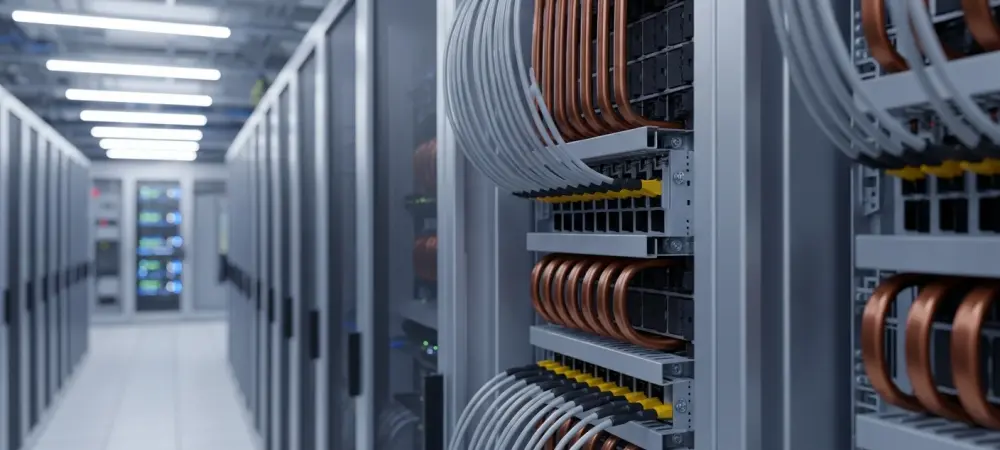
The hardware itself is driving a significant portion of this energy demand, as high-density AI racks are pushing power requirements per cabinet from historical levels of 10 kilowatts to more than 100 kilowatts. This tenfold increase requires a specialized infrastructure that traditional data centers were simply not designed to handle. Such a concentrated load necessitates a complete overhaul of electrical distribution systems within the facility to prevent failures and optimize performance. Developers are finding that the old blueprints are obsolete, leading to a race for specialized components that can support these massive power draws without compromising reliability.
Real-World Applications: The Speed to Power Mandate
Major hyperscalers are responding to these pressures by pivoting toward dynamic load planning, a strategy that allows facilities to come online in phased energization stages. Instead of waiting for a utility provider to deliver the full grid capacity required for a massive campus, developers are activating smaller sections of the facility as power becomes available. This approach minimizes idle time and allows companies to begin processing AI workloads much sooner than traditional construction timelines would permit. This flexibility has become essential in a market where the time to market is the difference between leading the AI race and falling behind.
Leading developers are also altering their geographic strategies, moving away from centralized urban hubs toward power-rich rural regions where energy access is less congested. In these areas, the abundance of land is secondary to the proximity of high-voltage transmission lines and underutilized energy resources. Furthermore, the implementation of liquid cooling systems has become a standard requirement to manage the intense thermal output generated by next-generation GPU clusters. By utilizing advanced cooling techniques, operators can maintain high performance while attempting to manage the physical footprint of the heat generated by these dense compute environments.
Industry Perspectives: The Energy Infrastructure Gap
Expert insights from the National Electrical Manufacturers Association emphasize that the aging electrical grid, much of which is a century old, requires a fundamental upgrade to support modern compute loads. The gap between the speed of digital innovation and the slow pace of utility infrastructure development has created a bottleneck that threatens to stall technological progress. Industry leaders argue that the traditional relationship between data centers and utilities must change, moving toward a model where large-scale users contribute to the modernization of the grid itself. This collaborative approach is seen as the only viable path to ensuring long-term stability for both the tech sector and the public.
Thought leaders frequently point to the efficiency paradox, noting that while chip-level performance-per-watt has improved, the exponential growth in total AI workloads effectively neutralizes these energy savings. Even as engineers find ways to make individual calculations more efficient, the sheer volume of new data being processed means that total energy consumption continues to climb. This creates a situation where efficiency gains are a prerequisite for survival rather than a solution to the energy crisis. Consequently, the industry is shifting its focus toward total system efficiency, looking for ways to optimize every link in the power chain from the substation to the server. Industry specialists also suggest that data centers must transition from passive consumers of electricity to active grid partners. By utilizing demand-response programs, these facilities can adjust their power draw in real time to help stabilize local energy networks during periods of peak demand. This interactivity allows data centers to serve as a buffer for the grid, providing a level of flexibility that was previously unavailable to utility operators. Moreover, this evolution helps build social capital and regulatory favor, as data centers demonstrate their value as stabilizing forces rather than just massive consumers of limited resources.
The Future of AI Power: Diversification and Autonomy
The industry is moving toward a hybrid energy model that blends traditional grid reliance with localized, independent power ecosystems. This diversification is a direct response to the unpredictability of grid-based power delivery and the need for absolute uptime in AI operations. By integrating multiple sources of energy, developers can protect their operations from localized outages while also exploring more sustainable power options. This move toward autonomy represents a significant shift in the power dynamic between tech companies and utility providers, as developers take greater control over their energy destiny. Behind-the-Meter generation is emerging as a primary strategy, enabling developers to bypass long interconnection queues through on-site natural gas and battery storage. By generating power on-site, a facility can become operational years ahead of a project waiting for a traditional grid connection. This strategy not only provides a deployment advantage but also offers a layer of protection against the rising costs and volatility of the wholesale energy market. While these localized systems require significant capital investment, the ability to maintain consistent power in a constrained environment provides a clear competitive edge. Significant investment is also flowing into Small Modular Reactors and geothermal energy, with projects already integrating nuclear power directly into data center campuses. These technologies offer a path to carbon-free, baseload power that can meet the massive requirements of AI clusters without the intermittency issues of solar or wind. The transition toward nuclear energy highlights the scale of the challenge, as the tech industry seeks out the most reliable and dense energy sources available. Long-term implications include the rise of data center microgrids that can feed excess power back into the public grid, fundamentally altering the utility-customer relationship.
Summary of the Structural Transformation
The AI-driven transformation of data center infrastructure reached a critical turning point as developers successfully evolved into energy strategists to navigate a landscape of scarcity. This analysis highlighted that the era of relying solely on traditional grid connections ended when the demand for compute capacity outpaced the speed of utility upgrades. The industry pivoted toward localized power generation and phased deployment strategies, which allowed for continued growth despite systemic energy constraints. These innovations ensured that the momentum of artificial intelligence remained unhindered by the limitations of the physical world.
The shift toward specialized nuclear and geothermal sources provided a blueprint for a more resilient and autonomous digital economy. Developers utilized advanced technologies to create microgrids that acted as stabilizing forces for the broader electrical network, turning a potential liability into a community asset. By taking direct control of the power supply, the industry moved away from a passive consumption model toward a more integrated and proactive approach. These strategic decisions ultimately redefined the global race for technological dominance, placing energy management at the heart of digital innovation.