

##: Trend Analysis: AI Data Center Power ConstraintsThe global semiconductor supply chain has finally found its match in an adversary far more stubborn than manufacturing shortages: the static and aging architecture of the modern electrical power grid. While software capabilities and chip speeds have advanced at an exponential rate, the infrastructure required to power these innovations remains tethered to decades-old utility frameworks that were never designed for the era of hyper-scale computation. This fundamental mismatch between the speed of digital innovation and the glacial pace of physical grid expansion has created a new hierarchy in the tech industry. In this environment, the ability to secure a stable megawatt of power has become more valuable than the ability to design the next great neural network.
The recent collapse of high-profile agreements, such as the Microsoft-Nscale contract in the United Kingdom, serves as a watershed moment for the industry, signaling that the era of easy expansion is over. This analysis explores the growing disconnect between digital ambition and physical reality, examining how power availability has replaced silicon as the primary bottleneck in the artificial intelligence revolution. As companies scramble to find “energized” sites, the market is beginning to realize that a contract for a data center is essentially worthless if the utility provider cannot deliver the necessary electricity for another decade. This shift is forcing a radical re-evaluation of project timelines and capital allocation across the global technology sector.
The Surge in AI Energy Demand and Infrastructure Realities
Data Trends and the Growing Power Deficit
Current market data illustrates a staggering rise in energy requirements driven by Large Language Models (LLMs), which demand far more than previous generations of cloud hardware. Unlike traditional cloud computing, which often relies on lower-density power distribution, AI training and inference require high-density configurations that can exceed 100 kilowatts per rack. Industry reports from the early months of 2026 indicate that the AI contract pipeline has swelled to over $100 billion, yet a significant portion of this value is categorized as “non-energized,” meaning the hardware is ready but the lights cannot be turned on. Statistics from leading research firms show that in major tech hubs, the wait time for grid upgrades has extended to nearly a decade.
Moreover, the discrepancy between “contracted capacity” and “energized capacity” is creating a shadow inventory of data centers that exist on paper but cannot contribute to the global compute supply. From 2026 to 2028, the industry expects a widening gap between the deployment of next-generation GPUs and the availability of the medium-voltage transformers required to support them. Consequently, the massive backlog of unfulfilled infrastructure projects is not just a logistical hurdle; it is a systemic financial risk that threatens to slow the adoption of generative technologies. The capital intensive nature of these builds means that any delay in power delivery translates directly into lost revenue and mounting interest expenses on massive hardware loans.
Real-World Impacts and the Loughton Case Study
The termination of the Microsoft-Nscale project in Essex, England, provides a concrete example of this trend and the fragility of the current infrastructure pipeline. Originally designed to house 23,000 Nvidia GPUs, the facility faced a terminal delay when utility providers estimated that power would not be available until the early 2030s. This scenario is being replicated globally, where neocloud providers—specialized firms like Nscale that focus on GPU-as-a-service—find themselves with massive hardware orders but no means to plug them in. For a hyperscaler like Microsoft, a delay of ten years renders a site obsolete before it even opens, as the underlying hardware would have gone through multiple cycles of depreciation in that span.
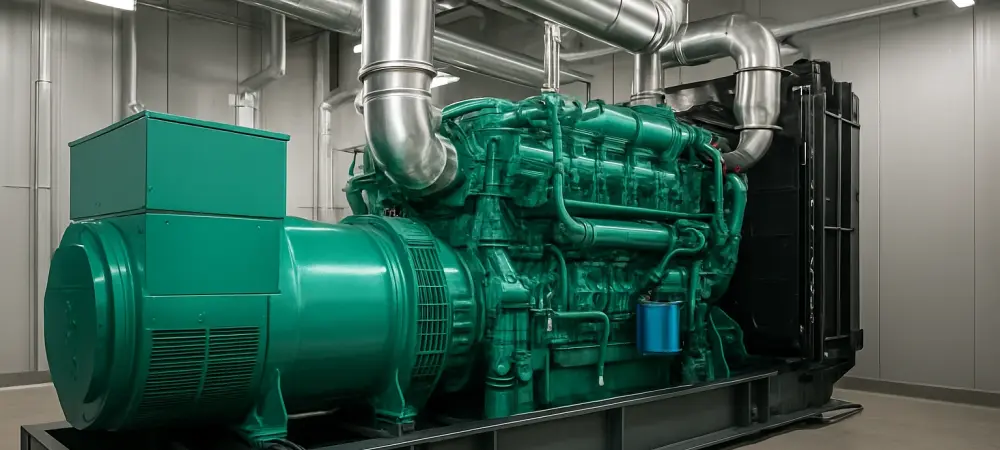
In contrast to the rapid-fire release cycles of Nvidia and other chip designers, the construction of electrical substations remains a multi-year endeavor involving complex permitting and supply chain constraints. This mismatch has led to a strategic pivot toward “behind-the-meter” solutions, where companies attempt to generate their own power on-site to bypass public grid delays. Projects in Northern Virginia and Dublin are now exploring the integration of natural gas turbines and large-scale battery arrays to ensure that their multi-billion-dollar investments do not sit idle. This move toward energy independence reflects a growing desperation among developers to gain control over the one variable they cannot currently influence: the utility timeline.
Industry Expert Perspectives on the Power Bottleneck
Leading voices in the data center and utility sectors emphasize that energized capacity is now the ultimate arbiter of success in the 2026 market. Experts from the Dell’Oro Group and Uptime Institute argue that the industry is facing a triad of requirements: creditworthy customers, secure financing, and available electricity. While capital and demand are at all-time highs, the lack of control over utility timelines creates a timing mismatch that can bankrupt smaller providers. Analysts warn that this could lead to significant financial impairment for firms that have borrowed heavily to purchase GPUs that may become obsolete before they can ever be powered on, creating a bubble of “dark” infrastructure.
Furthermore, researchers from Gartner suggest that the industry must transition from measuring success by GPU counts to a more sophisticated metric focused on gigawatts-per-site. The financial community has begun to scrutinize the “take-or-pay” nature of AI contracts, realizing that revenue only flows when the compute is actually operational. If a provider cannot meet its delivery milestones due to power constraints, the recoverable amount of their assets may fall far below the carrying value on their balance sheets. This realization is cooling the investor enthusiasm for neocloud firms that do not have ironclad power agreements, favoring instead the established hyperscalers who can afford to build their own energy microgrids.
Future Outlook and Global Implications
The future of AI infrastructure will likely be defined by a shift from digital-first to energy-first strategies, where the proximity to power sources dictates the geography of innovation. We can expect to see hyperscalers and neocloud providers investing more heavily in sovereign energy sources, including small modular reactors and advanced geothermal storage. While this could lead to more resilient and sustainable data centers in the long term, the short-term outlook involves heightened financial risk and potential market consolidation. If the power gap is not bridged by 2028, the industry may face a period of massive write-downs as the reality of physical scarcity settles into the digital landscape.
Additionally, the geopolitical map of artificial intelligence is being redrawn by the availability of stable electricity. Regions that can offer immediate grid connectivity are attracting investment that was previously destined for traditional tech hubs like London or Frankfurt. This decentralization of compute capacity may lead to a more fragmented AI ecosystem, but it also provides a buffer against the regional grid failures that have plagued older urban centers. To survive, companies will need to integrate utility management as a core competency, moving beyond software optimization toward the vertical integration of the entire energy-to-inference value chain.
Conclusion: Navigating the Physical Limits of the Digital Frontier
The AI infrastructure market reached a critical juncture where the availability of electricity determined the winners and losers of the mid-2020s. Industry leaders recognized that the era of passive reliance on local utilities ended when the power deficit began to threaten capital returns on a global scale. Stakeholders transitioned from evaluating raw GPU counts to auditing direct energy access and on-site generation capabilities. This movement solidified the role of energy engineering as the core competency of any successful data center operator. Strategies shifted toward the vertical integration of power and compute, ensuring that the next generation of artificial intelligence found a sustainable home within a revitalized infrastructure framework.
Decision-makers prioritized the development of sovereign energy sources and microgrids to bypass the traditional ten-year waiting periods for utility upgrades. This proactive approach helped decouple the digital economy from the limitations of legacy electrical systems, fostering a new model of self-sufficient data campuses. Financial institutions also adapted, requiring rigorous energy feasibility studies before approving the massive capital expenditures associated with AI scaling. By the end of this transition, the industry successfully reconfigured its development pipeline to prioritize “energized megawatts” as the primary asset class. This systemic adaptation ensured that the digital frontier remained resilient despite the persistent physical constraints of the electrical grid.