

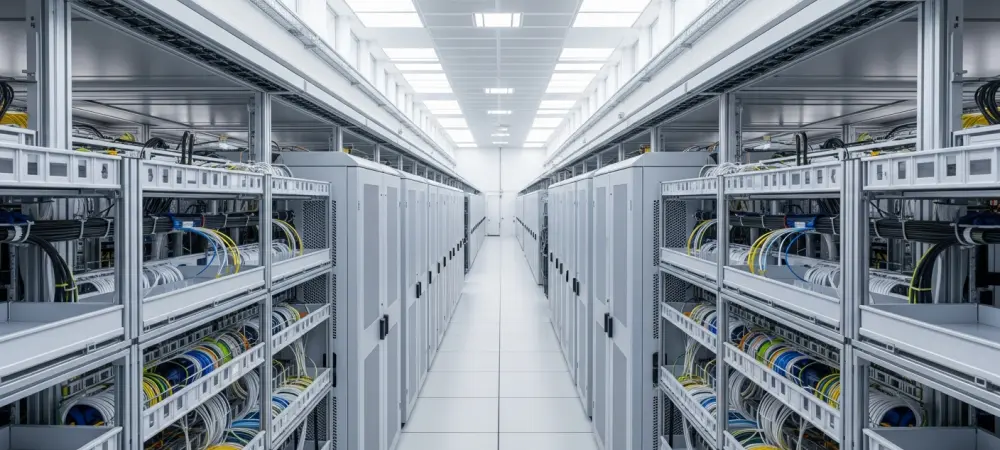
The meteoric rise of autonomous agentic systems is fundamentally rewriting the laws of data center physics, forcing a massive migration from the brute-force training clusters of yesterday to the hyper-efficient inference architectures of tomorrow. This structural transformation signifies a shift in focus from building models to operationalizing them at a scale previously deemed unsustainable. As artificial intelligence moves beyond the “chat” phase and into the “execution” phase, the underlying hardware and software layers must evolve to handle workflows that are no longer linear. These agentic systems, capable of reasoning, planning, and calling various tools, have introduced a level of complexity that traditional GPU clusters were not originally designed to manage efficiently.
1. Quantifying the Shift: From Training Clusters to Agentic Workloads
1.1 The Data Behind the Inference Explosion
Current market analysis reveals a staggering transition in how compute resources are consumed within the modern enterprise. While early large language model interactions were characterized by single-prompt exchanges, the rise of agentic AI has introduced multi-step loops where a single user intent triggers an entire sequence of internal model calls. Data suggests that this shift is increasing inference volume by 50 to 100 times per query as agents verify their own work, browse the web, and execute code in real-time. Consequently, the primary concern for data center operators has migrated from the time required to train a model to the total cost of ownership involved in running these persistent, high-volume workloads.
The economic targets reflecting this transition are significant, with industry leaders like Qualcomm projecting that data center revenue could reach $15 billion by 2029. This growth is not merely a continuation of previous trends but a fundamental expansion of the hardware market to support specialized inference. For the first time, the primary constraint on AI performance is not the raw number of floating-point operations but rather the memory bandwidth and energy efficiency per token. This “inference explosion” has forced a reconsideration of data center economics, where the ability to serve millions of agentic chains concurrently is the new benchmark for success.
1.2 Real-World Implementation of Agentic Infrastructure
The implementation of specialized infrastructure is already visible in the move toward High-Bandwidth Compute architectures, such as the Dragonfly platform. This design philosophy departs from traditional GPU-centric layouts by adopting a “Memory First” approach, which places processing cores in immediate proximity to DRAM stacks to minimize the physical distance data must travel. By collapsing these distances, hardware designers are effectively addressing the latency issues that typically plague multi-step agentic chains. This architectural shift is essential for maintaining the responsiveness required when an AI agent must perform twenty consecutive reasoning steps before providing a final answer to the user.
In addition to hardware innovations, the industry is seeing the rapid adoption of hardware-agnostic software layers, most notably through the Modular MAX Serving Layer. This technology allows hyperscale providers to run complex AI models across various silicon vendors without the traditional performance penalties. Major players like Microsoft Azure and Meta have already made concrete commitments to this more flexible infrastructure, deploying Arm-based CPUs alongside specialized accelerators. These companies are moving away from monolithic vendor ecosystems in favor of modular environments that can handle high-volume agentic traffic while remaining resilient to supply chain fluctuations in the semiconductor market.
2. Industry Insights on the Evolving Silicon Landscape
2.1 Overcoming the Memory and Power Wall
Performance-per-watt has emerged as the critical metric for the current generation of power-constrained data centers, as raw compute power alone no longer guarantees economic viability. Industry experts, including Qualcomm CEO Cristiano Amon, have noted that the sheer electrical demand of running agentic systems at scale is hitting a physical wall. By integrating memory and compute more tightly, new designs are delivering up to eight times more tokens per watt than traditional setups, allowing data centers to expand their capacity without exceeding their power grids.
This innovation is also driven by a desperate need for supply chain resilience in an era of constrained High-Bandwidth Memory availability. Proprietary accelerator designs are increasingly utilizing standard DRAM in innovative configurations to bypass the long lead times and high costs associated with HBM. By reducing the reliance on a few specialized suppliers, companies are ensuring that the rollout of agentic AI is not stalled by the physical limits of memory manufacturing. This shift toward proprietary, efficient memory interfaces represents a strategic move to decouple AI growth from the legacy constraints of the gaming and graphics-card eras.
2.2 Navigating the Software Moat and Vendor Lock-in
The long-standing dominance of NVIDIA’s CUDA platform is finally facing a credible challenge as the industry moves toward hardware agnosticism. Perspectives from across the technical landscape suggest that the Mojo programming language is successfully lowering the barriers to entry by offering high performance without the complexity of low-level C++ or CUDA code. Furthermore, deep partnerships with open-source communities like Hugging Face are ensuring that the latest models are optimized for a wide variety of silicon from the moment they are released. This democratized access to high-performance compute is essential for preventing a single-vendor monopoly from stifling innovation in agentic applications. Moreover, technical leaders are observing an “Arm insurgency” within the server room, with custom Arm-based CPUs expected to dominate the majority of host CPU deployments by the end of the decade. These processors are specifically designed to manage the overhead of agentic orchestration, which requires frequent context switching and complex data routing that traditional x86 architectures struggle to perform efficiently. The transition toward these custom designs allows hyperscalers to “right-size” their compute resources, ensuring that they are not paying for unused features while gaining the energy efficiency necessary to run agentic loops around the clock.
3. The Future Roadmap of Distributed AI Computing
3.1 Projected Developments in Connectivity and Custom Silicon
As AI clusters continue to expand, the logistical cost of moving data across a physical rack has become a primary target for optimization. The transition from copper-based wiring to optical SerDes and co-packaged optics is now well underway, as light-based communication offers significantly lower latency and power consumption. These optical interconnects are vital for managing the massive data movement required when multiple agentic systems must collaborate across a distributed network. Industry roadmaps are already pointing toward 448-gigabit connectivity benchmarks, which will be necessary to support the real-time requirements of massive agentic clusters spanning multiple data center halls.
The rise of custom AI Application-Specific Integrated Circuits tailored for hyperscale workloads is also accelerating. Unlike general-purpose GPUs, these ASICs are being designed for specific types of inference, such as long-context reasoning or multi-modal processing. This proliferation of custom silicon allows for a more granular approach to data center design, where different parts of a cluster are optimized for different stages of the agentic lifecycle. This specialization is expected to drive down the cost of inference even further, making it feasible for enterprises to deploy thousands of autonomous agents for routine business processes that were previously too expensive to automate.
3.2 Long-Term Implications and Systemic Risks
The widespread adoption of specialized inference infrastructure brings with it a set of positive outcomes, most notably the drastic reduction in the carbon footprint of AI operations. By moving toward portable software stacks and more efficient silicon, the industry is proving that high-performance AI does not have to come at the expense of environmental sustainability. However, this transition is not without its potential challenges, as new market entrants face significant revenue lags while their new hardware is being qualified and deployed. The aggressive counter-maneuvers of incumbents like NVIDIA and Broadcom also mean that the competitive landscape remains volatile, with rapid shifts in pricing and availability. There is also the looming concern of the “Inference Gap,” where companies that fail to optimize their infrastructure may find themselves burdened by unsustainable operating costs. If the efficiency of hardware does not keep pace with the increasing complexity of agentic workflows, the economic model of “AI-as-a-Service” could become strained. Companies that successfully navigate this gap will be those that prioritize architectural flexibility and vendor neutrality. The risk of being locked into a high-cost, low-efficiency legacy environment is a systemic threat that requires careful long-term planning and a willingness to embrace emerging silicon standards.
4. Conclusion: The New Foundation of AI Economics
The structural transition of the AI industry during the recent period reflected a broader maturation of the entire technology stack. It became clear that the brute-force methods of the training era were insufficient for the nuanced, multi-step demands of autonomous agents. The industry moved decisively toward “Memory First” designs and high-efficiency Arm architectures to address the physical limits of power and heat. This integration of connectivity, custom silicon, and portable software formed the pillars of a new inference-first economy. The shift favored companies with deep backgrounds in mobile efficiency and high-volume manufacturing, as these skills proved more relevant to the needs of the modern data center than the legacy requirements of high-end graphics processing.
Moving forward, the primary focus for stakeholders was the implementation of vendor-neutral ecosystems that could survive the rapid cycles of semiconductor innovation. The successful reduction in energy consumption through optical interconnects and optimized ASICs demonstrated that sustainable AI scaling was achievable. These developments ensured that the high-volume inference required by agentic systems became an affordable reality for the broader market rather than a luxury for the few. The industry successfully built a foundation where the winners were defined not just by the size of their compute clusters, but by the efficiency and scalability of their infrastructure. This realignment established a more resilient and diverse market, providing the necessary stability for the next phase of global AI deployment.