

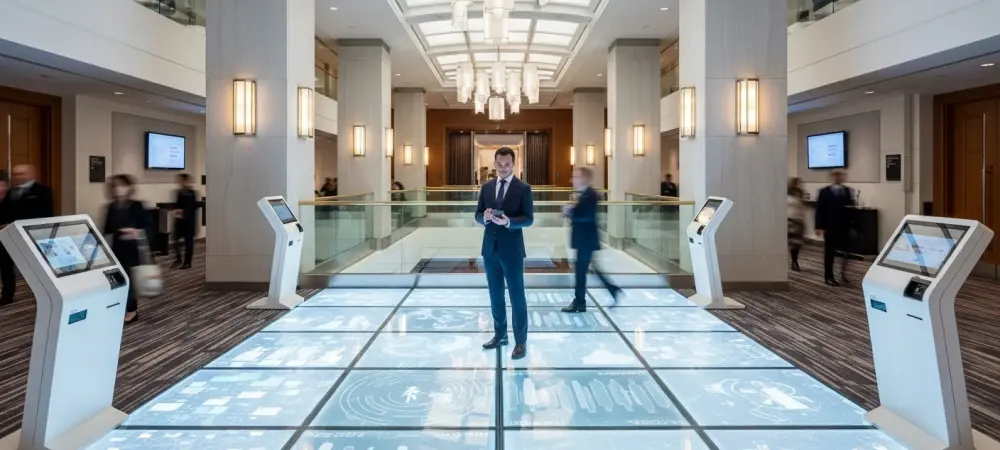
The silent transformation of the hospitality landscape has reached a boiling point where the distinction between human planning and machine execution is no longer a matter of theory but a foundational element of global business strategy. The events industry is currently witnessing a paradigm shift as Artificial Intelligence moves beyond simple content generation into the realm of agentic execution. This evolution, characterized by AI systems capable of autonomously performing complex workflows, is being spearheaded by a massive $1 billion research and development commitment from industry leaders. This article explores how autonomous intelligence is redefining the event lifecycle, shifting the professional’s role from a manual operator to a strategic director. We will examine the data driving this change, real-world applications across the planning and hospitality sectors, and expert insights on the future of human-AI synergy.
The Rapid Acceleration of Agentic AI Adoption
Statistical Indicators of Industry Transformation
The sheer scale of financial commitment within the sector serves as a primary indicator of a long-term industry pivot toward AI-first infrastructure. A multi-year $1 billion investment in research and development, supported by an engineering force of nearly 2,000 professionals, underscores a transition that is structural rather than superficial. This level of resourcing has allowed for the rapid introduction of over 70 product innovations, many of which are designed to be activated immediately within the global event ecosystem. This aggressive timeline reflects a confidence in the market’s readiness to move past experimental pilots and into a phase of standardized autonomous operations.
The effectiveness of these intelligent systems is fundamentally fueled by a massive “network effect” derived from datasets of unprecedented scale. Current systems are now processing over 12.7 billion attendee interactions annually, providing the deep predictive intelligence necessary for agentic systems to function with high precision. This data density allows algorithms to recognize patterns that were previously invisible to human organizers, such as micro-fluctuations in session popularity or subtle shifts in attendee sentiment during a keynote. By grounding these tools in over 25 years of proprietary event data, the industry ensures that autonomous solutions move beyond generic responses and toward context-aware intelligence.
Furthermore, the integration of these capabilities has shifted from being a specialized feature to a core architectural requirement. The introduction of dozens of net-new AI capabilities, scheduled for rollout from 2026 through the end of the decade, demonstrates a focused strategy to maintain a competitive edge in a landscape that rewards speed and data accuracy. Organizations are increasingly looking at these statistical benchmarks as evidence that the digital foundations of the industry have matured. Consequently, the reliance on historical data benchmarking has become a prerequisite for any firm seeking to utilize autonomous tools for complex decision-making processes.
Real-World Applications of Autonomous Event Skills
Planners are now experiencing a fundamental shift in how events are conceived and launched, moving away from manual template selection toward automated creation. It has become common practice for an organizer to upload a raw budget or a promotional brief to an AI agent, which then generates a fully branded event draft in minutes. This process includes the automatic application of brand standards, color palettes, and internal templates, effectively eliminating the “blank page” problem that has historically slowed the initial phases of planning. This transition allows teams to focus on the nuances of the attendee experience rather than the administrative setup of the digital platform. The sourcing of venues has also undergone a radical transformation through the use of natural language processing and agentic search. Instead of manually filtering thousands of properties based on rigid checkboxes, professionals now describe their requirements in conversational terms, detailing the desired ambiance, specific audience needs, and logistical constraints. The AI then queries massive supplier networks to produce curated shortlists that are ranked not just by availability, but by historical performance and alignment with the organization’s past preferences. This level of sophisticated matching reduces the time spent on RFP management from weeks to days, allowing for a more agile response to market opportunities.
Moreover, the rise of headless AI architecture is allowing these intelligent “skills” to exist outside of a single proprietary interface. By embedding event intelligence directly into external platforms like Salesforce Agentforce, sales and marketing teams can utilize deep event insights without ever leaving their primary daily software. This integration ensures that attendee data and interaction scores flow seamlessly into the broader corporate CRM, creating a unified view of the customer journey. Additionally, dynamic attendee management tools now handle complex change requests, such as hotel adjustments or session swaps, by mapping changes across the entire event platform for a single-click review, thereby removing the friction of manual data entry for both the organizer and the guest.
Expert Perspectives on Operational and Strategic Shifts
Leadership Insights on the Human-AI Synergy
Industry leadership has been vocal about the necessity of utilizing AI to scale the “human magic” that defines successful in-person connections. While technology can never replicate the emotional resonance of a face-to-face meeting, experts such as CEO Reggie Aggarwal argue that AI is the only tool capable of making those emotional moments measurable and scalable. The strategic focus has moved toward identifying touchpoints where technology can remove friction, allowing the human element to shine through more clearly. This synergy is not about replacing the professional but about elevating their capacity to manage increasingly complex and global event portfolios.
The technical transition from generative AI to agentic AI is perhaps the most significant strategic shift discussed by technology leaders. CTO David Quattrone has highlighted that while generative AI was largely focused on content creation, agentic AI is focused on outcomes. This shift from “generation” to “execution” represents a major leap in operational efficiency, allowing technology to complete entire task packages rather than just assisting with individual components of a project. This shift allows technology to complete entire task packages rather than just assisting with individual components of a project. This evolution inevitably redefines the event professional as a strategic director rather than an administrative operator. Experts suggest that by automating the more tedious aspects of the job—such as room block management and RFP data entry—professionals are finally free to focus on the creative heart of their work. The new mandate for event teams involves overseeing these autonomous agents, setting the strategic guardrails, and making high-level decisions based on the insights provided by the AI. This transition is seen as essential for managing the growing demand for highly personalized and data-driven event experiences in a competitive global market.
The Primacy of Proprietary Context in Decision Making
A recurring theme among strategic thinkers is the necessity of a “System of Context” to ensure that AI integration is both safe and effective. Generic AI models, while powerful, often lack the specific nuance required to handle the brand sensitivities and internal policies of a major corporation. By operating within secure, company-specific data environments, agentic AI can avoid the errors and irrelevance often associated with general-purpose tools. This “hallucination-free” environment is built on the understanding that an organization’s past performance, attendee preferences, and internal standard operating procedures are its most valuable assets when training an intelligent system.
The movement toward unified event data is another critical component of this strategic consensus. Thought leaders argue that for agentic AI to be truly effective, it must have access to a comprehensive record that includes field events, webinars, and large-scale conferences. When these disparate channels are brought into a single system of record, the AI can provide a holistic view of the event strategy as a cohesive business channel. This allows for more accurate attribution of revenue and more informed decisions about where to allocate marketing resources. Without this unified data layer, AI tools remain siloed and unable to provide the high-level strategic guidance that modern executives require.
Furthermore, the reduction of operational risk through governed AI systems is a top priority for global organizations. These systems are being designed to act as governance tools, guiding planners through the event setup process while ensuring compliance with both internal policies and external regulations. By embedding standard operating procedures directly into the AI’s logic, companies can maintain a high level of quality and consistency across their entire event program, regardless of the experience level of the individual planner. This approach to governed growth ensures that as an organization scales its event output, the risk of non-compliance or brand dilution remains minimal.
Future Implications and the Evolutionary Horizon
Longitudinal Data and the Personalization Revolution
The shift toward event-led growth is transforming how organizations view the attendee lifecycle over long periods. Instead of treating each event as a siloed interaction, AI is now being used to track behavior across multiple years, creating a “longitudinal” understanding of discovered interests. This allows for a level of hyper-personalization that was previously impossible. For example, an AI system might notice a specific attendee’s shifting interest from technical workshops to leadership sessions over a three-year span and automatically adjust its recommendations for exhibitors and networking opportunities to reflect that professional growth.
In the realm of networking, technology is increasingly focused on lowering the social barriers that often hinder meaningful connection. Features like “Warm Introductions” utilize AI to match attendees based on their stated goals and demonstrated interests, even drafting conversation starters to help initiate the dialogue. This facilitates a more efficient exchange of value at events, ensuring that participants maximize their time on-site. As these systems become more sophisticated, they will likely move toward real-time facilitation, suggesting specific people to talk to based on who is currently nearby or participating in the same session.
The future of attendee engagement also involves a seamless merger of digital and in-person experiences through advanced AI tools. The integration of high-end digital event platforms allows for the automated repurposing of live content into personalized social clips and highlight reels, extending the life of an event long after the doors have closed. This continuous loop of content and engagement ensures that the event is not just a moment in time but a constant engine for community building and lead generation. Organizations that embrace this data-rich approach to personalization will likely see significantly higher retention and satisfaction rates among their core audiences.
Overcoming Barriers to Global Scalability and Governance
As organizations look toward global expansion, the role of AI in managing multilingual and digital integration becomes paramount. Real-time translation capabilities are now being embedded into event platforms, allowing for the delivery of content in dozens of languages simultaneously. This not only increases the accessibility of the event but also allows for a more diverse range of perspectives to be shared across borders. The ability to automate the translation of both spoken word and written materials ensures that global event programs can be executed with a level of consistency that was once cost-prohibitive.
The supply side of the industry is also undergoing its own revolution, particularly within the hospitality and venue sectors. Hospitality professionals are increasingly relying on AI for dynamic profile scoring to ensure their properties are visible to the right planners at the right time. Response assistants are being used to manage the massive influx of RFPs, allowing hotel sales teams to focus on relationship-building and high-value negotiations rather than manual data entry. This optimization of the supply chain benefits the entire ecosystem, leading to faster response times and more accurate matching of event needs with venue capabilities.
Finally, the long-term trend points toward a model where AI agents act as the primary interface for both governance and execution. These tools will increasingly be used to manage complex logistics like room block automation and banquet event orders, bringing manual documents into a fully digital workflow. By automating the hand-off between sales and operations, venues can reduce the likelihood of errors and improve the overall experience for the planner. As these systems become more interconnected, the entire event lifecycle—from initial sourcing to post-event analysis—will function as a streamlined, data-driven process that prioritizes efficiency and strategic impact above all else.
Summary and Industry Outlook
Recapping the Shift to Workflow-Driven Intelligence
The industry successfully transitioned from innovation for the sake of novelty toward solving specific, tangible friction points that have long hindered the event sector. By focusing on workflow-driven intelligence, organizations moved past the limitations of simple text generation and began utilizing AI as a robust partner in execution. This shift was characterized by a move toward integration, where the most effective tools were those that functioned across multiple platforms rather than being confined to a single user interface. The most significant advantage for those who adopted these technologies early proved to be the access to proprietary data, which served as the foundation for all strategic decision-making.
Furthermore, the alignment between marketing goals and event execution became more pronounced as AI enabled a unified view of the customer journey. The ability to track interactions across different event formats—ranging from small field events to massive international conferences—allowed for a more sophisticated understanding of business impact. This outcome-driven approach replaced traditional metrics with more nuanced insights into attendee behavior and long-term interest. As a result, the event channel solidified its position as a primary driver of growth, supported by a technological infrastructure that prioritized scalability and data integrity.
Final Forward-Looking Statement
The massive capital investment that defined the middle of the decade successfully established a new standard for how events are planned, executed, and measured. Event professionals who embraced these autonomous tools were able to successfully transition from administrative roles to become the strategic architects of high-value human experiences. The integration of agentic AI did not diminish the importance of face-to-face connection; instead, it provided the necessary framework to make those connections more frequent, personalized, and impactful. The industry has effectively entered an era where technology is no longer a separate consideration but the essential heartbeat of the modern event ecosystem. Professionals must now focus on refining their strategic oversight to ensure that these powerful tools are used to create experiences that are both ethically sound and commercially transformative.