

The current landscape of corporate technology has shifted fundamentally as generative artificial intelligence moves from being a speculative novelty to a central pillar of global production infrastructure. Today’s enterprises are no longer merely experimenting with automation or basic chatbots; they are actively integrating sophisticated “smart workers” directly into their most sensitive IT frameworks to maintain a competitive edge. This evolution necessitates a rigorous and unsentimental evaluation of available tools to ensure they can scale securely across massive, multi-regional operations while simultaneously meeting internal standards for performance, transparency, and high-level reliability. Choosing between a tool like Claude and a platform like GitHub Copilot is less about selecting a single superior product and more about deciding on a specific philosophy of digital workspace organization that will define an organization’s output for years to come. Decision-makers, particularly CTOs and technical leads, must determine whether their primary need is a tool for immediate, tactical coding assistance or a system-wide cognitive analyst capable of handling complex reasoning and architectural design. This strategic comparison explores how each platform serves distinct objectives within a high-level corporate environment, focusing on their respective strengths in the current development cycle.
Designing for Workflow: Integrated Speed Versus Conceptual Depth
GitHub Copilot functions as a specialized digital assistant that lives directly within the developer’s Integrated Development Environment, functioning as an extension of the engineer’s own thought process. Its primary goal is the minimization of context switching by offering real-time suggestions and boilerplate code as the programmer works, effectively acting as an intelligent autocomplete for entire functions. This specific architecture prioritizes the “flow state,” a psychological condition where engineers remain deeply focused on their active files without needing to exit their primary workspace to search for documentation or handle repetitive syntax tasks. By indexing local files and understanding the immediate patterns of a project, Copilot reduces the cognitive load associated with mundane coding chores, allowing developers to focus on the immediate logic of the module they are currently crafting. This integration is seamless, making it an indispensable asset for rapid-fire development where speed and micro-productivity are the primary metrics of success for a software engineering team.
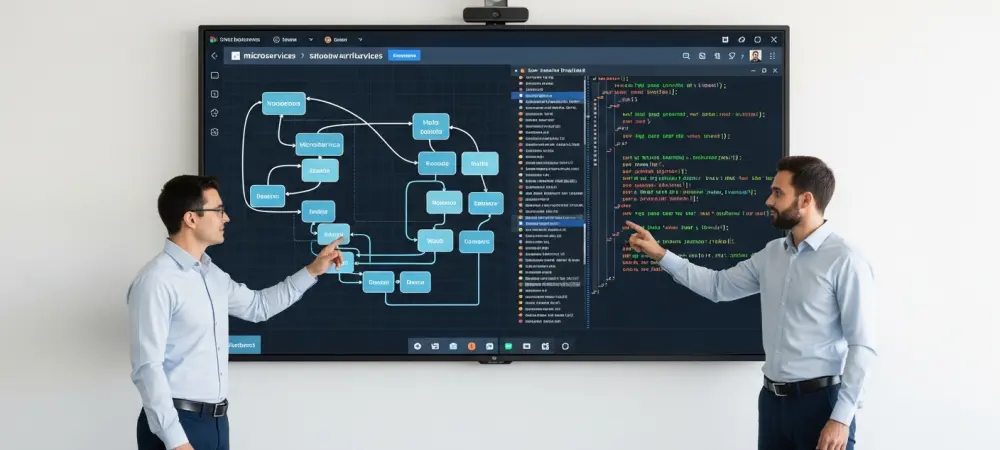
Claude represents a more complex cognitive system that operates as a high-level systems analyst rather than a simple in-line autocomplete tool, offering a broader perspective on the development lifecycle. Through unique features like Artifacts, it allows for the sophisticated visualization of complex interfaces, interactive diagrams, and live code previews that exist outside the traditional text-only chat interface. This facilitates a top-down approach to software design, making it an ideal partner for the conceptual and planning phases of development where the focus is on architectural integrity and logical reasoning rather than just line-by-line coding. When an architect needs to map out how a new microservice will interact with an existing database schema, Claude provides the reasoning capabilities to identify potential bottlenecks and design flaws before a single line of code is written in the IDE. This makes it a powerful tool for high-level strategy, where the ability to synthesize vast amounts of technical information into a coherent plan is more valuable than simple code generation.
The Battle of Context: Granular Precision Against Holistic Understanding
A major technical differentiator between these two platforms is the size and management of their context windows, which ultimately dictates how much data the AI can process and “remember” during a single session. GitHub Copilot excels at local tasks within specific modules, providing highly accurate suggestions for the immediate code block based on neighboring tabs and recently edited files within the repository. It is designed to be lean and responsive, ensuring that its suggestions do not lag or disrupt the rhythm of the developer’s typing. However, this focus on the “here and now” often means it lacks the capacity to fully grasp the intricate, sprawling architecture of a massive corporate monolith consisting of millions of lines of interconnected code. Consequently, while Copilot is a master of granular, localized efficiency, it may struggle when asked to make sweeping changes that require an understanding of dependencies located in a completely different part of the enterprise infrastructure. Claude offers a massive context window of up to 200,000 tokens, which enables it to ingest entire repositories, massive documentation sets, and complex architectural specifications in a single, comprehensive session. This capability is absolutely vital for enterprises dealing with decades of legacy code, as it allows the model to identify hidden vulnerabilities and propose global refactoring strategies that a smaller window would miss entirely. While Copilot helps the programmer navigate the immediate task at hand, Claude’s broad perspective allows it to guide the engineer through the entire lifecycle of a complex system, from initial migration plans to final security hardening. This “big picture” capability ensures that when a senior developer is tasked with modernizing an ancient mainframe application, they have a tool that can actually hold the entire codebase in its active memory, providing insights that are consistent across every single module and service in the stack.
Security Protocols: Ecosystem Loyalty Versus Data Sovereignty
The way these tools scale within a corporate infrastructure varies significantly between a closed, integrated ecosystem and a modular, API-driven approach favored by diverse tech stacks. GitHub Copilot Enterprise offers a streamlined and highly polished experience for those organizations that are already heavily invested in the Microsoft and GitHub ecosystem, providing a ready-to-use solution that automatically indexes internal repositories for customized suggestions. This deep integration allows for a “turnkey” deployment where permissions, user management, and security protocols are already aligned with the existing corporate directory. For many large firms, the convenience of having a tool that “just works” with their current version control system is the deciding factor, as it minimizes the administrative overhead required to manage new AI-driven workflows across thousands of individual developer workstations. Claude provides a more flexible, modular model through platforms like Amazon Bedrock or Google Vertex AI, allowing businesses to build proprietary AI agents within their own isolated virtual clouds for maximum control. This approach is often preferred by organizations that demand high levels of data sovereignty and want to avoid being locked into a single provider’s stack for all their development needs. Security and legal liability are paramount for large-scale organizations, and Claude’s focus on a privacy-first model ensures that customer data is never used for training external models, which is a critical requirement for highly regulated sectors. For industries like banking, defense, and healthcare, the ability to deploy Claude in a “clean room” environment where data never leaves the corporate perimeter is a fundamental necessity for meeting strict compliance requirements such as GDPR, HIPAA, and internal risk management standards.
Establishing a Dual-Tool Strategy for Modern Engineering Teams
Ultimately, the most effective enterprise strategy in the current market often involves a synergistic approach that utilizes the strengths of both platforms rather than forcing a choice of one over the other. GitHub Copilot remains the undisputed gold standard for daily micro-productivity, saving significant time for junior and mid-level engineers by handling routine coding tasks, unit tests, and syntax corrections. By automating the “boring” parts of the job, it allows the workforce to stay energized and focused on solving actual business problems. Meanwhile, Claude provides the strategic depth and reasoning capabilities required for high-level architects and senior leads to modernize legacy systems and design complex, multi-layered software architectures. This division of labor ensures that the business remains agile and competitive by addressing both the speed of execution and the quality of the underlying system design simultaneously.
Microsoft and Anthropic have both recognized the need for enterprise-grade protection, though they offer different mechanisms to achieve this peace of mind for their corporate clients. Microsoft provides a robust legal shield through its IP indemnity program, which protects corporate users against potential copyright claims related to the code generated by Copilot, a feature that significantly lowers the risk profile for legal departments. On the other hand, Anthropic’s emphasis on “Constitutional AI” ensures that the model’s outputs are aligned with human values and corporate safety guidelines from the ground up, reducing the risk of generating biased or harmful content. By deploying Copilot for the tactical heavy lifting and Claude for the strategic and sensitive reasoning tasks, an enterprise can create a comprehensive AI environment that maximizes efficiency while minimizing legal and operational risks.
Evaluating the Long-Term Impact of Artificial Intelligence Integration
The evaluation of these two platforms revealed that the choice was never truly binary but rather a question of organizational alignment with specific development philosophies and infrastructure goals. Organizations that prioritized immediate developer throughput and stayed within the Microsoft ecosystem found that GitHub Copilot offered an unmatched level of convenience and integrated speed. Conversely, those firms that required deep reasoning, massive context handling, and platform flexibility discovered that Claude provided the necessary cognitive horsepower to tackle their most complex architectural challenges. This period of transition demonstrated that the successful integration of artificial intelligence required a nuanced understanding of how different models serve different tiers of the engineering hierarchy. Leaders who recognized these distinctions were able to foster a more resilient and creative development culture that leveraged AI as a true force multiplier rather than a simple replacement for human effort.
Moving forward, enterprises should begin by conducting a comprehensive audit of their current development bottlenecks to determine where AI can provide the most immediate value. If the primary delay is caused by repetitive boilerplate and slow unit test creation, a pilot program centered on GitHub Copilot’s IDE integration will likely yield the highest return on investment. However, if the organization is struggling with a lack of architectural documentation or the daunting task of refactoring massive legacy codebases, investing in Claude’s large-context reasoning capabilities should be the strategic priority. The most forward-thinking companies will establish a multi-model infrastructure that allows developers to switch between tools based on the specific requirements of the task at hand. By formalizing this “right tool for the right job” approach, businesses can ensure they are not just adopting the latest technology, but are building a sustainable and scalable foundation for the future of software engineering.