

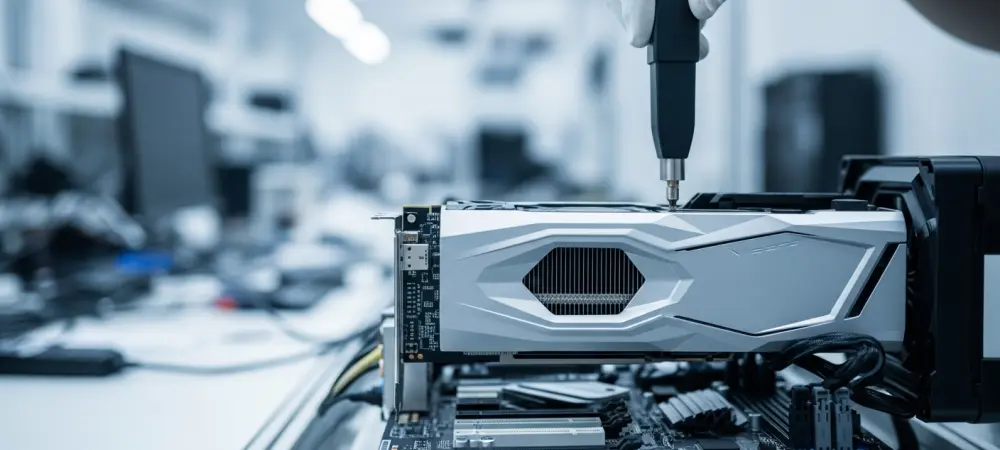
The digital landscape of high-performance computing is currently grappling with a baffling resurgence of hardware that many enthusiasts thought had been relegated to the annals of history. Despite the rapid advancement of visual fidelity and the integration of complex artificial intelligence in gaming, 2026 has seen the unexpected reintroduction of 4GB Video Random Access Memory (VRAM) buffers in new graphics cards. This regression is not merely a technical curiosity but a significant hurdle for the average consumer who expects modern software to function at a baseline level of competency. While the industry pushes toward higher resolutions and more intricate world-building, the persistence of these low-capacity memory solutions creates a jarring disconnect between marketing promises and the actual user experience in the current gaming ecosystem.
The bottleneck represented by a 4GB VRAM capacity has become a critical failure point for contemporary software and gaming titles. In the current year, the memory requirements for textures, geometry data, and shader programs have escalated to a point where four gigabytes is no longer a buffer but a cage. When a graphics card runs out of dedicated memory, it must reach across the slow PCIe bus to utilize system RAM, a process that invariably leads to massive performance degradation, stuttering, and visual artifacts. This limitation is particularly devastating in an era where high-definition assets are the standard, and even entry-level titles demand a level of resource overhead that these aging configurations simply cannot provide without making catastrophic sacrifices in quality and stability.
The transition from the controversial legacy of the Radeon RX 6500 XT to the modern release of the RX 9050 highlights a concerning pattern in hardware manufacturing. Several years ago, the 6500 XT was widely panned for its restrictive 4GB buffer and narrow bus width, yet its ghost continues to haunt the market in the form of new, ostensibly “current-generation” products. The RX 9050, despite its more advanced architecture, is being crippled by the same memory limitations that made its predecessors so difficult to recommend. This trajectory suggests that some manufacturers are prioritizing short-term profit margins in the prebuilt market over the long-term viability of their products, effectively selling hardware that is obsolete the moment it leaves the assembly line.
The Statistical Decline and Market Persistence of 4GB VRAM
Adoption Trends and the Reintroduction of 4GB Buffers in 2026
Analyzing the data surrounding the decision to release the Radeon RX 9050 in a 4GB configuration reveals a strategic, albeit problematic, focus on the Original Equipment Manufacturer (OEM) market. Large-scale system integrators often prioritize low component costs to hit specific price points in retail environments, and a 4GB card allows for a “current-gen” badge at a lower production cost. While budget-conscious buyers might be tempted by the lower entry price, the actual utility of these cards is rapidly diminishing as the industry moves toward more sophisticated rendering techniques that view 8GB as the absolute minimum for a functional experience.
The growing requirements of modern game engines like Unreal Engine 5 further illustrate the precarious position of low-VRAM hardware. Features such as Nanite and Lumen, which are now standard in most high-profile releases, rely heavily on the ability to swap massive amounts of geometry and lighting data in and out of the GPU memory. Hardware adoption statistics show that while 4GB cards still exist in the wild, their performance in modern engines is statistically significant only in their failure rates. The gap between the hardware that people are buying in prebuilt systems and the hardware that software developers are targeting is wider than it has ever been, creating a “performance canyon” that many unsuspecting consumers will eventually fall into.
Evaluating the historical performance of the RX 6500 XT provides a clear view of the “canary in the coal mine” effect for entry-level hardware. Even at its launch, that card struggled with titles that utilized high-resolution textures or complex open worlds, and those struggles have only magnified as we move through 2026. The 6500 XT proved that a fast GPU core is essentially useless if it cannot access the data it needs to process quickly enough. By reintroducing this same bottleneck in the RX 9050, the industry is ignoring the lessons of the past in favor of fulfilling OEM contracts, leading to a situation where the statistical “floor” of gaming performance is being artificially suppressed by intentional hardware limitations.
Real-World Failure Points in Modern AAA Title Benchmarking
Examing the performance data from recent high-profile titles like 007 First Light and Crimson Desert provides a stark demonstration of these hardware limitations in action. In benchmarking scenarios, the 4GB cards are not just slightly slower; they are fundamentally broken. When attempting to run 007 First Light at 1080p, the memory buffer is instantly overwhelmed by the game’s detailed environment and shadow maps. This leads to what enthusiasts call “slideshow” performance, where the frame rate frequently dips below 20 frames per second. The experience is characterized by a complete lack of fluidity, making it impossible for a player to react to the fast-paced action that defines the genre, effectively rendering the game unplayable on hardware that is marketed as current.
Concrete evidence of these failures is found in the way modern games handle memory overflow in 1080p environments. In titles like Crimson Desert, the 4GB card must constantly shuffle assets between its internal memory and the system’s DDR5 RAM. This results in horrific “1% low” frame rates, which represent the most severe stutters during gameplay. Even if the average frame rate appears somewhat acceptable on paper, the constant hitching and massive delays in texture loading create a disjointed and frustrating experience. Visual assets often fail to load entirely, leaving players looking at low-resolution, blurry surfaces that look more like a game from two decades ago than a modern masterpiece.
Contrasting the performance of scalable engines against memory-heavy remakes shows exactly where these 4GB cards hit a hard wall that no amount of setting adjustments can fix. While a title like Kingdom Come: Deliverance II might offer enough granularity in its settings to remain somewhat playable on low-end hardware, more modern remakes that rely on high-fidelity asset streaming simply cannot be optimized down to a 4GB level. These games require a baseline amount of memory just to function at the lowest possible settings. In these cases, the 4GB card does not just offer lower graphics quality; it offers a fundamentally different and inferior version of the game, missing critical visual information and suffering from input latency that ruins the intended artistic experience.
Expert Perspectives on the Ethical Dilemma of Underpowered Hardware
Hardware analysts have raised significant alarms regarding the “built-in obsolescence” of 4GB cards sold through prebuilt OEM systems. Experts argue that these products are designed with a limited lifespan in mind, intentionally pushing consumers toward an upgrade cycle much sooner than should be necessary for a modern purchase. By equipping a 2026-era GPU with a memory buffer that was considered entry-level half a decade ago, manufacturers are essentially selling a product that cannot keep pace with the software it is designed to run. This creates a cycle of waste and frustration, as buyers find themselves owning a machine that is technically “new” but functionally incapable of playing the latest games with their peers.
Professional opinions on the “FSR and Frame Generation Trap” suggest that software upscaling is often used as a deceptive cover for fundamental hardware shortages. Technologies like FidelityFX Super Resolution (FSR) are brilliant tools for extending the life of older cards, but when they are used to justify the release of underpowered new hardware, they become a crutch. Experts point out that upscaling requires a certain amount of VRAM overhead to function correctly; when the base memory is already full, the upscaler cannot perform its job effectively. The result is an image that is not only blurry but often filled with visual noise and artifacts, proving that software tricks cannot compensate for a lack of physical, high-speed memory.
Ethical concerns are also mounting regarding the targeting of uninformed buyers with current-generation model numbers that lack baseline competency. A consumer walking into a retail store and seeing a “9000-series” graphics card will naturally assume it is a powerful, modern piece of equipment. They may not understand the nuances of VRAM capacity or bus width, relying instead on the brand name and the series number to guide their purchase. Analysts argue that using these prestigious model numbers on cards that fail to meet the basic requirements of current software is a form of deceptive marketing that preys on the lack of technical knowledge among the general public, damaging the overall trust in the hardware ecosystem.
The Trajectory of Resource Scarcity in Future Gaming Engines
As the industry moves toward mandatory hardware ray tracing and the use of ultra-high-resolution assets, the alienation of low-memory GPUs will only intensify. Ray tracing, in particular, is a memory-intensive process that requires large structures to be stored in the VRAM to calculate light and shadow in real-time. On a 4GB card, there is simply no room for these structures alongside modern textures and geometry. This means that a core feature of modern graphics architecture is effectively locked away from users of these cards. As more developers make these features mandatory for their games to run at all, the 4GB card will transition from being “slow” to being completely incompatible with the future of the medium.
The technical implications of the PCIe 4.0 x4 bottleneck exacerbate these performance issues, creating a “traffic jam” for data within the computer. Most entry-level cards with low VRAM also utilize a reduced number of PCIe lanes to save on manufacturing costs. When the 4GB of on-board memory is exhausted and the card tries to use system RAM, it is forced through a narrow pipe that cannot handle the volume of data required by modern games. This results in catastrophic stutters where the entire system seems to freeze for a fraction of a second while the data is transferred. This bottleneck makes the experience of playing on a 4GB card feel even worse than the frame rate would suggest, as the delivery of those frames is erratic and unpredictable. The market is likely to see a “floor shift” where 8GB or 12GB becomes the non-negotiable minimum for entry-level gaming in the very near future. As software developers continue to push the boundaries of what is possible with global illumination and complex physics simulations, the baseline for hardware will naturally rise. The persistence of 4GB cards is a temporary anomaly driven by supply chain economics rather than technical viability. We are approaching a point where a graphics card with less than 8GB of memory will be viewed in the same way we now view a computer with a spinning hard drive as its primary boot device: a relic of the past that significantly hinders the performance of every other component in the system.
The negative impact on brand reputation when “budget” solutions act as barriers rather than gateways cannot be overstated. When a new gamer’s first experience with a brand is one of frustration, crashes, and unplayable performance, they are unlikely to remain loyal to that brand in the future. Instead of acting as an affordable entry point that invites people into the PC gaming hobby, these underpowered cards serve as a wall that keeps them out. Manufacturers who continue to prioritize these compromised configurations risk long-term damage to their image, as they become associated with products that do not deliver on their basic promises of entertainment and functionality.
Final Assessment of the Entry-Level Landscape
The investigation into the state of entry-level graphics hardware in 2026 revealed a significant disconnect between manufacturer output and software requirements. It became clear that the 4GB VRAM buffer, once a respectable standard for 1080p gaming, was no longer capable of sustaining the demands of modern AAA titles. The benchmarks demonstrated that even with aggressive settings adjustments, the physical lack of memory created a hard ceiling for performance that resulted in unplayable frame rates and severe visual degradation. The analysis confirmed that these cards were not merely slower versions of their more powerful counterparts but were fundamentally different tools that failed to provide the necessary resources for a contemporary gaming experience.
It was also determined that modern upscaling technologies, while impressive, did not act as a panacea for hardware that lacked sufficient physical memory. The testing showed that technologies like FSR and frame generation required their own memory overhead, which often pushed a 4GB card even further beyond its limits. Instead of saving the experience, these tools often highlighted the inadequacies of the hardware by producing blurry images and high input latency. The conclusion was reached that software cannot fix a physical deficit; a card with an insufficient memory buffer will always be at a disadvantage, regardless of the clever algorithms used to mask its shortcomings.
Looking forward, the necessity for consumers to demand higher hardware standards is paramount for ensuring long-term value and playability in the PC market. The trend of reintroducing underpowered cards showed that as long as there was a market for these products in the OEM space, manufacturers would continue to produce them. However, the path to a healthier ecosystem involves moving toward a higher baseline, where 8GB or 12GB is seen as the starting point for any serious gaming device. Future buyers should look beyond model numbers and focus on the technical specifications that actually dictate performance, ensuring that their investment remains viable as the industry continues to evolve toward more demanding and immersive digital experiences.
The findings suggested that the most effective way to combat the proliferation of obsolete hardware was through increased consumer education and a shift in purchasing habits. By rejecting cards that do not meet the minimum functional requirements of the current software era, enthusiasts and casual buyers alike can send a clear signal to manufacturers. The industry must prioritize products that serve as genuine gateways to the gaming world, providing enough headroom for players to enjoy the latest innovations without fear of immediate obsolescence. Moving away from 4GB buffers is not just a technical necessity; it is a step toward a more transparent and sustainable market where hardware is built to last.
Ultimately, the era of the 4GB graphics card was seen to have passed its expiration date, and its continued presence in the 2026 market was a symptom of economic convenience rather than technical progress. The transition toward more robust memory configurations was identified as an inevitable and necessary change for the continued growth of the gaming industry. As developers continue to utilize more advanced engines and assets, the hardware must follow suit to prevent a stagnation of the medium. The focus should now remain on establishing a new standard that respects both the creative vision of developers and the expectations of consumers who deserve hardware that works as advertised.