

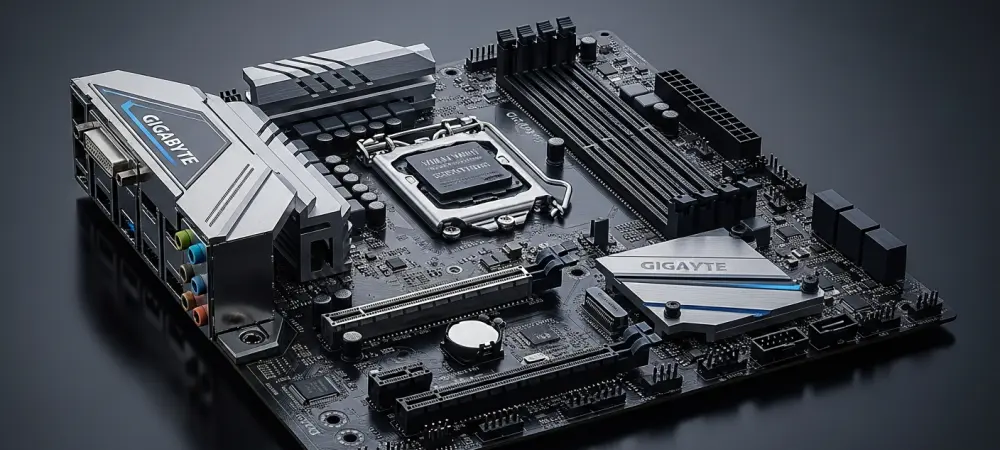
Navigating the current hardware landscape often feels like a balancing act between the desire for cutting-edge Arrow Lake performance and the harsh reality of rising component prices. As silicon manufacturing costs climb and specialized memory becomes a standard requirement, enthusiasts are searching for a bridge that connects affordability with the new LGA 1851 architecture. The Gigabyte B860 DS3H WiFi 6E emerges as a strategic solution for those entering this ecosystem, offering a refined entry point that does not compromise on essential modern connectivity. While high-end Z890 boards capture the headlines with their astronomical price tags, this mid-range contender focuses on delivering a functional and reliable foundation for everyday productivity and gaming. By stabilizing the entry cost at approximately $129.99, it effectively democratizes access to the latest Intel processors, allowing builders to allocate more of their budget toward high-performance GPUs or larger storage arrays without sacrificing the stability of their core system components.
Engineering for Stability and Performance
Establishing a solid foundation for a modern computer requires a deep understanding of how power is distributed and managed across the various circuits of the motherboard. For the B860 series, the engineering focus has shifted toward ensuring that even the most demanding Core Ultra processors can operate without the threat of sudden voltage drops or electrical noise. This level of precision is achieved through a combination of digital controllers and high-quality capacitors that work in unison to maintain a steady flow of energy. When a system is under a heavy load, such as during high-resolution video rendering or intense gaming sessions, the motherboard must act as a vigilant gatekeeper, balancing the electrical demand with the physical limits of the hardware. This proactive approach to power management not only enhances the immediate performance of the machine but also contributes to the overall lifespan of the silicon, preventing the premature wear that often plagues boards with inferior electrical designs and lower-quality components.
Power Delivery and Voltage Regulation
The 8+1+2 phase hybrid digital VRM design serves as the primary defense against voltage fluctuations that could otherwise lead to system instability or unexpected crashes. This specific configuration acts as a sophisticated power-management layer, meticulously filtering the electrical current derived from the power supply before it reaches the sensitive silicon of the CPU. Such precision is necessary because even minor deviations in power delivery can result in micro-stuttering during gaming or data corruption during intensive computational tasks. By distributing the thermal and electrical load across multiple power phases, the board maintains a consistent energy flow, which is crucial for supporting high-end chips like the Core Ultra 7 270K. This robust engineering ensures that even under sustained workloads, the processor receives the exact voltage needed to maintain peak clock speeds without overheating the surrounding circuitry. Consequently, users can expect a level of reliability that was previously reserved for much more expensive hardware tiers.
Thermal Management and Heat Dissipation
Managing the thermal output of high-performance components is an ongoing challenge that is addressed through a series of strategically placed heatsinks and cooling surfaces. These cooling elements are designed to draw heat away from the MOSFETs and other critical power components, preventing the buildup of hot spots that can degrade hardware over time. Without effective heat dissipation, a motherboard might resort to thermal throttling, a safety mechanism that intentionally slows down the processor to prevent permanent damage from excessive heat. By incorporating dedicated cooling solutions, the board ensures that the system remains responsive even during hours of continuous operation. This approach to thermal management is particularly beneficial for users who inhabit environments where ambient temperatures may fluctuate, as the extra thermal headroom provides a safety net for the internal hardware. Furthermore, the design of these heatsinks allows for optimal airflow within the chassis, working in harmony with case fans to create a more efficient cooling loop.
Advanced Connectivity and System Diagnostics
Modern computing is fundamentally defined by how well a system connects to external devices and how easily it can be maintained by the end user. In an era where data transfer speeds and wireless reliability are non-negotiable, the motherboard must serve as a high-speed hub for all peripheral interactions. This involves integrating the latest standards for both wired and wireless communication, ensuring that the user experience is not hindered by aging technology. At the same time, the complexity of modern hardware necessitates better diagnostic tools that can assist in the assembly and troubleshooting process. By providing clear visual feedback and accessible ports, the motherboard reduces the technical friction that often accompanies new PC builds. This synergy between high-speed data lanes and user-friendly maintenance features creates a platform that is both powerful and approachable. Whether for professional networking or home entertainment, the focus remains on delivering a seamless and frustration-free environment for the user.
Memory Standards and Platform Longevity
Investing in a motherboard is as much about the future as it is about the present, and the transition to the LGA 1851 socket represents a major milestone for platform longevity. Because this socket is at the beginning of its development cycle, builders who adopt it now are positioning themselves for a seamless upgrade path that will likely span several iterations of Intel processors. This prevents the frequent need to replace the motherboard every time a new chip is released, providing a much higher return on investment from 2026 to 2028 and beyond. Beyond the socket itself, the inclusion of PCIe 5.0 slots for storage and graphics cards signifies a move toward high-bandwidth standards that were once exclusive to the most expensive enterprise-level hardware. Performance is further bolstered by the support for DDR5 memory modules capable of reaching speeds of 9,066 MT/s. With a total capacity of up to 256GB, the system remains equipped to handle the increasingly memory-intensive applications of the modern software landscape.
Strategic Insights for System Integration
The emergence of the B860 chipset successfully redirected the conversation from raw price increases to long-term hardware utility and sustainable building practices. Builders prioritized the LGA 1851 platform for its clear upgrade path, effectively bypassing the obsolescence that often plagued older architectures during rapid transition periods. Those who adopted this specific motherboard found that focusing on essential power delivery and modern networking was more beneficial than overpaying for aesthetic flourishes. Future upgrades were simplified by the inclusion of PCIe 5.0 and high-speed DDR5 support, which ensured that the system remained relevant as new peripheral technologies entered the market. The most effective strategy involved pairing the board with a balanced set of components to maximize the value-to-performance ratio. By choosing a foundation that prioritized diagnostic ease and thermal stability, users avoided the hidden costs of troubleshooting and early hardware failure. This approach proved that a well-engineered mid-range board could serve as a reliable anchor for a high-performance build.